Every week, the MSP team breaks down the dental marketing news that actually matters, from Google updates and AI search changes to social media trends, SEO shifts, and reputation management surprises.
This Week’s Drilldown:
- Google’s September 2026 spam update is done rolling out
- AI answers favor brands with an active social media presence
- 57% of beauty consumers don’t start with Google Search
- Quick hit: Anthropic’s new rules on faking the sources AI draws from
- Quick hit: Google Ads AI Max gets previews, new columns, and a promo test
- Quick hit: Voice AI hasn’t had its “ChatGPT moment” yet
The September Spam Update Is Done, and It Took Its Sweet Time
What happened: Google confirmed that its September 2026 spam update finished rolling out on October 8, wrapping up at 4:37 a.m. ET. It started on September 24, which means it ran for almost 14 days. That is a long haul compared to recent spam updates, which wrapped up in about two days. Google described it as a “normal” spam update, with nothing new beyond running its spam systems again. Ranking tools picked up volatility starting September 25 and through that first weekend, with a smaller bump around September 30 and a final burst between October 4 and 7. No one has published solid numbers on how much traffic moved, so for now this is more weather report than post-mortem.
Why dentists should care: Spam updates are aimed at sites breaking Google’s spam rules, so most dental websites are not the target. But legitimate sites occasionally get caught in the net, and a two-week rollout means any traffic wobble in that window could be the update, a seasonal dip, or something unrelated. Now that it’s officially over, you can finally look at the data without wondering if the goalposts are still moving.
What to do next:
- Open Search Console and compare September 24 through October 8 against the same stretch before it
- If traffic and calls look steady, great. Do nothing, and do not “fix” things that aren’t broken
- If you see a real drop, give it a few days to settle before changing anything, and remember (as we flagged in an earlier issue) that recovery from ranking drops usually takes months, not days
- Ask your SEO provider whether anything on your site, like thin pages or mass-produced content, could look spammy. Our SEO team does this kind of check regularly
AI Answers Love Brands With an Active Social Media Presence
What happened: A study from SE Ranking looked at 100,000 keywords to see which sources show up in Google’s AI features and in ChatGPT. Social platform links appeared in about 67.7% of Google AI Overviews, about 32.4% of AI Mode answers, and about 8.4% of ChatGPT answers. YouTube was the most cited source in AI Overviews, while Facebook, YouTube, and Reddit led in AI Mode. The takeaway from the researchers is that each AI platform pulls from different places, so there is no single playbook for showing up everywhere.
Why dentists should care: If you have ever wondered whether your social media is “worth it,” this is one more data point for yes. Your Facebook page, YouTube videos, and Instagram posts are not just for followers anymore. They are material AI tools can read, quote, and link to when someone asks about dentists in their area. It also lines up with the Reddit and AI search stories we have been tracking over the last few weeks.
It’s worth remembering that this is one vendor’s study, and the article’s own numbers on Reddit and LinkedIn in ChatGPT do not line up cleanly. Treat the headline percentages as a direction, not a guarantee.
What to do next:
- Make sure your practice’s social profiles are complete, with the same name, address, phone number, and services as your website
- Post short, helpful videos (answers to common patient questions work great), since YouTube is a heavy hitter in AI Overviews
- Keep captions and video descriptions clear and specific instead of just clever, because AI tools read them
- Don’t chase every platform. Pick two or three you can keep up with consistently.
Where AI Pulls Social Links From (SE Ranking Study)
| AI Platform | How Often Social Links Appeared | Platforms Cited Most |
| Google AI Overviews | About 67.7% of responses | YouTube leads |
| Google AI Mode | About 32.4% of responses | Facebook, YouTube, Reddit |
| ChatGPT | About 8.4% of responses | Reddit and LinkedIn |
Beauty Shoppers Don’t Start With Google (Cosmetic Dentistry, Take Notes)
What happened: A survey of 511 beauty consumers, run by marketing firm Stella Rising, found that only 43% say Google is their first stop for beauty questions. Instagram (11.9%), YouTube (11.2%), TikTok (10.6%), and AI tools (9.8%) split most of the rest. But there’s a twist. Those other platforms are feeding Google rather than replacing it. Of people who find a product on TikTok, 72% then search for it on Google, and only 7% buy right on TikTok. About 41% made a beauty purchase in the last six months because of something they saw on TikTok or YouTube. And while just 9.8% start with AI, 59.5% use it at some point along the way.
Why dentists should care: This is a beauty study, not a dental one, so we are reading the pattern, not claiming dental numbers. But the pattern fits cosmetic dentistry well. A patient sees a smile makeover on Instagram or a whitening video on TikTok, gets curious, and then Googles to decide whether they trust you. Social creates the interest, and Google (plus your reviews and website) closes the deal. If your Google presence is weak, the interest you built on social can walk right past your practice.
Keep the fine print in mind, though. The survey was self-reported, the sample was small, and the firm that ran it also wrote about it. It is a useful signal, not a rulebook.
What to do next:
- Treat social and Google as a team. Every cosmetic post (with patient permission) should lead somewhere searchable, like your website or Google Business Profile
- Make sure what patients find when they Google you backs up the story social told: strong reviews, clear before and after galleries, and easy booking
- Track “how did you hear about us” at the front desk, since social influence often shows up as a branded search or a direct visit and not a neat click
- Don’t forget younger patients. In the study, about 24% of people in their 20s started with Google, versus roughly 45% in their 40s
Quick Hit: Anthropic Draws a Line on Faking the Sources AI Reads
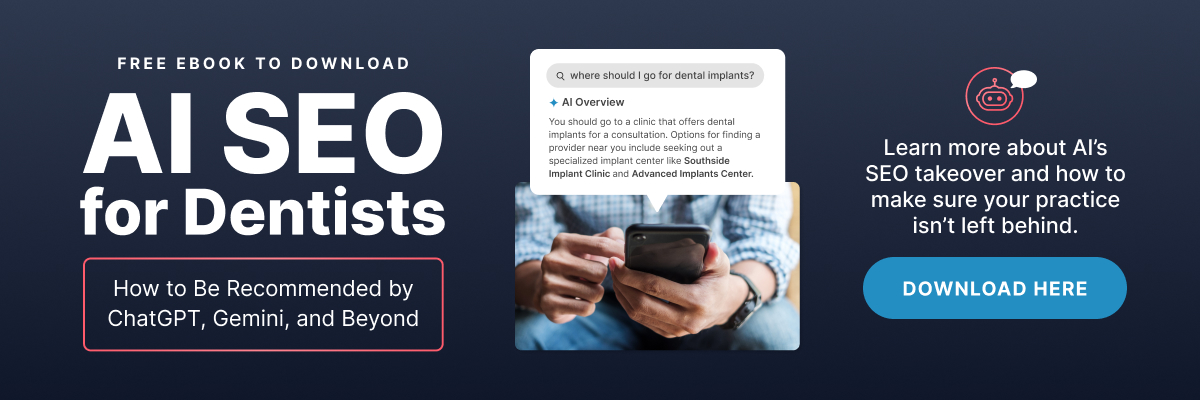
Anthropic updated its usage policy (effective November 12) to bar using Claude to manipulate the sources search engines or AI systems draw answers from, such as networks of sites posing as unrelated outlets, fake personas, and fake reviews. The update followed research on roughly 70 fake “local news” sites pumping out thousands of articles. Why does this matter for you? If an agency ever offers mass-produced content spread across a pile of “independent” sites, that is exactly the kind of manufactured authority platforms are cracking down on, and it echoes Google’s fake author warning from last week’s issue. Real content from your real practice remains the safest play.
Quick Hit: Google Ads AI Max Gets Previews, New Columns, and a Promo Test
A handful of Google Ads updates landed this week, mostly for AI Max. You can now preview up to 10 AI-written headlines and descriptions based on your landing page before turning on text customization, with no opt-in needed. Three new reporting columns (Locations of interest, Optimized targeting, and Brand inclusions) are rolling out, and a beta “Direct Offer” asset lets advertisers show a promotion inside Google’s AI Mode with a “Claim one-time code” option. Google also added AI-written summaries to campaign experiment results and video impressions to conversion paths. If your practice runs Google Ads, ask your ads manager whether they are using the previews to chehuman xck what Google would say on your behalf.
Quick Hit: Voice AI Isn’t Quite There Yet, but Honesty Is Non-Negotiable
At the HumanX conference, executives from PolyAI and Otter said voice AI has not had its “ChatGPT moment” yet, mostly because speech recognition still mishears key details and the technology needs to sound natural enough that callers trust it. Both also stressed that people should know when they are talking to an AI. For a dental practice, that is a handy checklist for any AI phone tool. Does it capture names and phone numbers accurately, does it sound human enough, and does it tell callers what it is? If you are curious, our AI receptionist is a good place to see how we approach it.
Action Items
| Update | What It Means | What To Do | Priority |
| September spam update finished (Oct 8) | The rollout is over, so the data is finally stable enough to review | Compare Sept 24 to Oct 8 traffic against the prior period before reacting | High |
| AI answers cite social platforms | Your social profiles can show up in AI Overviews, AI Mode, and ChatGPT | Complete your profiles and post helpful, specific content consistently | Medium |
| Beauty shoppers start on social, then Google | Social builds interest and Google decides trust, likely true for cosmetic dentistry | Make sure your Google presence backs up what social promises | Medium |
| Anthropic bans faking AI sources | Manufactured authority is a growing risk | Question any agency offering mass content across “independent” sites | Medium |
| AI Max previews and new columns | You can see what Google may write for your ads before opting in | Ask your ads manager to review the previews and new reports | Low |
| Voice AI still maturing | Accuracy and honesty matter most for AI phone tools | Check any AI call tool for accuracy and caller disclosure | Low |
MSP’s Take
This week’s theme is that discovery and trust now happen in different places. Patients may find you on Instagram or YouTube, get a summary from an AI tool, and then check Google before they book. That means no single channel carries the whole load, and a gap in one (a stale profile, a thin review count, an inconsistent listing) can undo the work you did in another. The spam update wrapping up is a good reason to take a calm look at your numbers, and the Anthropic news is a reminder that the shortcuts to “looking authoritative” are getting closed off. The good news is the fix is the same as it has been all year. Be real, be consistent, and show up everywhere your patients are looking.
Learn More
- Google September 2026 spam update done rolling out – Search Engine Land
- AI favors brands with an active social media presence – Social Media Today
- 57% of beauty consumers don’t start with Google Search – Search Engine Land
- Claude’s new rules on faking sources for AI answers – Search Engine Journal
- Google Ads lets advertisers preview AI Max generated ad copy before opting in – Search Engine Land
- Google Ads adds new AI Max columns for deeper campaign analysis – Search Engine Land
- Google Ads tests new Direct Offer asset for AI Mode promotions – Search Engine Land
- Google Ads adds AI-powered insights to experiment reporting – Search Engine Land
- Google Ads adds video impressions and funnel reporting to Overview page – Search Engine Land
- These execs think voice AI hasn’t reached its ChatGPT moment yet – TechCrunch
Frequently Asked Questions
Was my dental website affected by Google's September spam update?
Most dental sites were not the target, since spam updates focus on sites breaking Google’s spam rules. The rollout ran from September 24 to October 8, so compare your Search Console traffic across those dates to the period before. If everything looks steady, no action is needed.
Does my practice's social media presence affect how it shows up in AI answers?
It can. A recent SE Ranking study found social platform links in roughly two thirds of Google AI Overviews and about a third of AI Mode answers, with YouTube, Facebook, and Reddit among the most cited. It’s one study, so treat the numbers as a direction, but complete profiles and helpful, consistent posts are a smart investment either way.
Do patients really research cosmetic dentistry on TikTok and Instagram first?
A survey of beauty consumers (not dental patients specifically) found that fewer than half start on Google, with Instagram, YouTube, TikTok, and AI tools filling in the rest. Most people who discover something on TikTok then search for it on Google. It’s a reasonable guide to how cosmetic patients behave, but it’s not dental-specific data.
Is it okay to use AI to create content for my practice's website and social media?
Yes, as long as there’s a real human layer on top. The thing platforms and AI companies are cracking down on is manufactured authority, like fake personas, fake reviews, or networks of sites pretending to be independent. Accurate content from your real practice, edited by your real team, is exactly what they want.
Should my practice use an AI phone answering tool?
It can be a smart way to stop missing calls, as long as it captures names and numbers accurately, sounds natural, and tells callers they’re speaking with an AI. Voice AI is improving but isn’t perfect yet, so look for a tool built specifically for dental practices and test it before you rely on it.

Adrian Lefler is the CEO and Co-Founder of My Social Practice and a recognized dental marketing expert with nearly two decades of experience. He is a trusted voice in dental marketing, AI in dentistry, and emerging technology, and he hosts BYTE SIZED, a podcast focused on dental AI, innovation, and technology.