What You’ll Learn
- The real statistics on dental embezzlement and why lifetime risk approaches 70%
- The difference between “need” thieves and “greed” thieves
- Behavioral red flags that indicate something might be wrong
- How to compare collections to deposits as a basic safeguard
- What proper pre-employment screening actually looks like
- Why the most trusted employee is often the one stealing
The Difficult Numbers
In 2019, the ADA surveyed nearly 19,000 dentists. The findings should have been a wake-up call for the entire industry.
47% had already been stolen from.
David Harris has spent 37 years investigating dental embezzlement as CEO of Prosperident. He’s seen every version of this story. And his analysis of the data suggests that number undersells the problem.
“If you take that 47% and you net out the dentists who are new to practice, who probably haven’t been stolen from yet, and the dentists who’ve been stolen from and don’t know it, lifetime probability of being embezzled approaches 70%,” David told Adrian Lefler on a recent episode of the Byte Sized Podcast.
The average loss is over $100,000. Not a few hundred dollars. Not a one-time slip. Six figures, often accumulated over years.
“This is a crime that not only is prevalent, but what gets taken is substantial,” David said.

Why Dentists Don’t See It Coming
Embezzlement thrives in dental practices because, unsurprisingly, dentists are busy doing dentistry.
“They’re in the back doing clinical work,” David explained. “They don’t really see what’s going on in the front. And they have this misplaced trust in people.”
That trust isn’t irrational. Most people are honest. But the math works against you. If you employ five people for 30 years, you’ve employed 150 people over your career. Even if 95% of them are completely honest, you’ve still encountered several who aren’t.
“You can be right about almost everybody and still get burned,” David said.
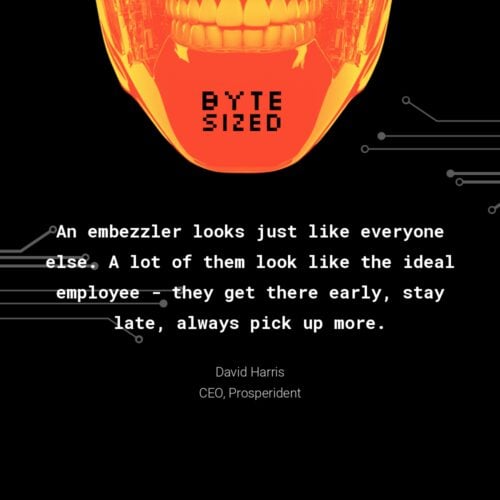
The other problem is that thieves are often the last people you’d suspect. They’re competent. They’re reliable. They’re the ones who stay late and come in early. They’ve built trust over years.
“The embezzler is frequently the most trusted person in the practice,” David said. “That’s not coincidence. That’s strategy.”
Need Thieves vs. Greed Thieves
Not all embezzlers look the same. David’s investigations have revealed two distinct profiles.
Need thieves steal because of financial pressure. Divorce. Medical bills. A spouse who lost a job. Gambling debts. Addiction. Something in their life created a financial hole, and they started taking small amounts to fill it.
“They rationalize it as borrowing,” David said. “They tell themselves they’ll pay it back. Of course they never do.”
Need thieves often feel guilty. They don’t live extravagantly. The money disappears into whatever crisis triggered the theft in the first place.
Greed thieves are different. They steal because they want more. More lifestyle. More status. More stuff.
“These are the ones showing up with a new car every year,” David said. “Taking vacations they shouldn’t be able to afford. Their lifestyle doesn’t match their paycheck.”
Greed thieves feel entitled. They’ve convinced themselves they deserve more than they’re being paid. Taking money isn’t theft in their minds. It’s compensation they’re owed.
| Profile | Motivation | Lifestyle Signs | Emotional State |
| Need thief | Financial crisis | None visible | Guilt, anxiety |
| Greed thief | Entitlement | Unexplained luxury | Justified, confident |
The Behavioral Red Flags
Embezzlers share certain behaviors, not because they’re careless, but because the crime requires them.
Refusing to take time off. If someone won’t take a vacation, that’s a red flag. They’re afraid that their absence will reveal what they’ve been doing. Someone else will handle deposits. Someone else will look at the books. They can’t risk it.
“We call it ‘vacation avoidance,'” David said. “When somebody hasn’t taken a week off in three years, you should wonder why.”
Guarding access. Embezzlers protect their territory aggressively. They don’t want anyone else doing their job. They get defensive when you ask questions about financials. They position themselves as the only person who understands how things work.
“If you have someone who won’t cross-train, who gets territorial about their responsibilities, that’s concerning,” David said.
Working odd hours. Coming in early. Staying late. Working weekends when no one else is around. These patterns give embezzlers time alone with the systems they’re exploiting.
Lifestyle changes. This applies more to greed thieves. Suddenly they’re driving a nicer car. Taking expensive trips. Wearing designer clothes. The math doesn’t add up based on what you’re paying them.
How They Actually Steal
The methods are surprisingly simple and that’s part of what makes them effective.
Skimming cash. A patient pays cash. The employee pockets it and deletes the transaction from the system. There’s no record it ever happened.
Intercepting checks. A patient mails a check. The employee takes it, endorses it, and deposits it into their own account. They adjust the books to make it look like the patient never paid.
Refund fraud. The employee creates a fake refund to a patient who never actually gets the money. The refund goes to an account the employee controls.
Payroll manipulation. Adding hours they didn’t work. Creating fake employees. Paying themselves bonuses that were never authorized.
“The creativity is endless,” David said. “But most schemes boil down to a few basic categories. They’re taking money that came in, or they’re creating fake money going out.”
The Collections-to-Deposits Check
David recommends a simple safeguard that every practice should implement. Compare what you collected to what you deposited.
“At the end of every day, somebody should be looking at how much money came in versus how much went to the bank,” he said. “If those numbers don’t match, you have a problem.”
This sounds basic, but most practices don’t do it. Or they have the same person doing collections and deposits, which defeats the purpose.
The key is separation of duties. The person taking payments shouldn’t be the same person making deposits. The person making deposits shouldn’t be the same person reconciling the books.
“When one person controls the entire flow of money, you’ve created the perfect environment for embezzlement,” David said.
Even a small practice can implement basic controls. Have the dentist review the deposit slip against the day sheet. Require two signatures on checks over a certain amount. Rotate responsibilities periodically so no one has permanent sole control.
Pre-Employment Screening That Actually Works
Most dental practices do minimal screening before hiring. They check references, maybe run a basic background check, and call it good.
That’s not enough.
“A background check only tells you what someone’s been caught doing,” David said. “It doesn’t tell you what they’ve done and gotten away with.”
Prosperident recommends a more comprehensive approach:
Credit checks. Financial stress is a major predictor of embezzlement. Someone drowning in debt is at higher risk. This isn’t about judging people for having debt. It’s about understanding who’s in a vulnerable position.
Criminal background checks. But understand their limitations. Someone can steal from five practices and never be prosecuted because dentists typically just fire and move on.
Reference checks with the right questions. Don’t just ask “would you hire them again?” Ask “did they handle money in your practice?” Ask “were there any discrepancies during their employment?”
Verification of credentials. People lie on resumes. Verify education. Verify certifications. Verify previous employment dates.
“The time you spend screening is an investment,” David said. “It’s a lot cheaper than losing $100,000.”
Why Prosecution Rarely Happens
The cycle is perpetuated because most dentists don’t prosecute.
They discover embezzlement. They fire the employee. Maybe they recover some money through a settlement. Then they move on and try to forget it happened.
“They don’t want the publicity,” David explained. “They don’t want to go through a trial. They just want it to be over.”
The problem is that unprosecuted embezzlers go on to steal from someone else. They know they got away with it. They have no criminal record. The next dentist who hires them has no idea what happened.
“We have cases where we can trace someone through four or five practices,” David said. “Same person, same crime, nobody prosecuted.”
This creates a moral dilemma for every dentist who discovers theft. Prosecution is time-consuming, emotionally draining, and uncertain. But not prosecuting means setting someone loose to victimize other dentists.
What Investigation Actually Looks Like
When Prosperident gets called in, they start with records. Years of records.
“We’re looking at every transaction,” David said. “We’re comparing what should have happened to what did happen. We’re reconstructing the entire flow of money through the practice.”
The process typically takes weeks. They examine software data, bank records, credit card statements, payroll records, and anything else that shows where money moved.
“Most embezzlement isn’t one technique,” David said. “It’s multiple techniques layered together. Someone might be skimming cash and doing refund fraud and manipulating payroll all at once.”
The final report documents everything. Total loss. Methods used. Timeline of theft. Evidence that would hold up in court if the dentist chooses to prosecute.
“We give them a complete picture,” David said. “Then they decide what to do with it.”

What You Can Do Today
Preventing embezzlement isn’t about paranoia. It’s about building systems that remove temptation and create visibility.
Separate duties. Don’t let one person control money from start to finish. Even in a small practice, you can create checks and balances.
Review everything. Look at your deposits. Look at your day sheets. Look at your production reports. Know your numbers well enough to notice when something’s off.
Require vacations. Make it mandatory that every employee takes at least one week of continuous vacation per year. If someone refuses, that’s a red flag.
Screen thoroughly. Invest in proper pre-employment screening. It’s uncomfortable, but it’s cheaper than the alternative.
Trust but verify. You can trust your team and still have oversight. Good employees won’t be offended by accountability systems. Bad ones will.
“The goal isn’t to treat everyone like a criminal,” David said. “It’s to build an environment where stealing is hard and getting caught is likely. That protects everyone, including the honest people on your team.”
In This Episode:

David Harris, CEO of Prosperident
David Harris is the CEO of Prosperident, the largest firm in North America dedicated exclusively to dental embezzlement investigation and prevention. With 37 years in the field, he has worked hundreds of cases, built the forensic frameworks the industry now relies on, and has spent decades studying both how theft happens in dental practices and why perpetrators almost always leave a trail long before anyone looks for it.

Adrian Lefler, CEO and Co-founder of My Social Practice
Adrian Lefler, CEO of My Social Practice, is a seasoned expert in the dental marketing industry with 14 years of experience. He is widely recognized for his engaging and informative presentations. Based in Suncrest, Utah, Adrian shares his life with his wife, four children, and a lively mix of pets. My Social Practice is a leading dental marketing company, and Adrian is passionate about helping dental professionals succeed in this dynamic field.
Frequently Asked Questions
How common is embezzlement in dental practices?
A 2019 ADA survey found that 47% of dentists had already been stolen from. When you account for new dentists and undetected theft, lifetime probability approaches 70%. The average loss exceeds $100,000.
Who typically commits dental embezzlement?
Often the most trusted employee in the practice. Embezzlers fall into two categories: “need thieves” driven by financial crisis, and “greed thieves” who feel entitled to more than they’re paid. Both profiles can steal substantial amounts over time.
What are the warning signs of embezzlement?
Refusing to take time off, guarding access to financial responsibilities, working odd hours alone, and lifestyle that doesn’t match salary. Any resistance to oversight or cross-training is concerning.
How can I protect my dental practice from embezzlement?
Separate financial duties so no one controls money from collection to deposit. Review deposits against day sheets regularly. Require continuous vacations. Screen employees thoroughly before hiring. Build accountability systems that make theft difficult and detection likely.
Should I prosecute if I discover embezzlement?
This is a personal decision with real tradeoffs. Prosecution is time-consuming and emotionally difficult. However, unprosecuted embezzlers often go on to steal from other practices. Prosperident can document losses and provide evidence regardless of whether you choose to prosecute.