Updated July 2026 by Adrian Lefler
Quick Answer: Dental conversion rate optimization (CRO) is the process of improving your dental website so more visitors take a meaningful action, like calling the office, booking an appointment, or filling out a contact form, instead of just driving more traffic. Dentists improve it by clarifying their most valuable conversions, removing friction on mobile, adding trust signals like reviews and team photos, placing clear calls to action, and using tools like Annie AI to catch missed calls.
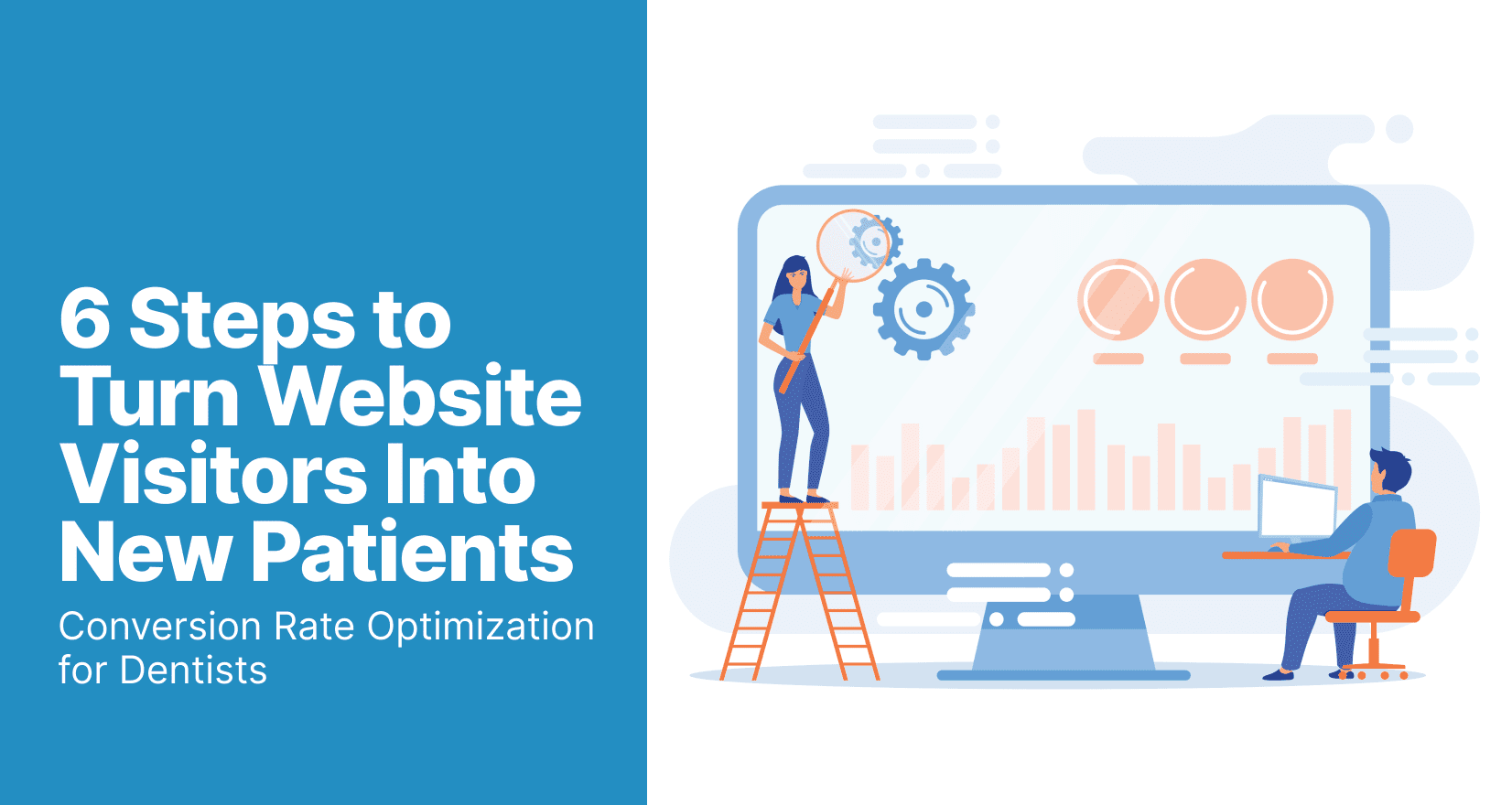
Dental conversion rate optimization (CRO) is the process of improving your dental website so more visitors take a meaningful action, calling the office, booking an appointment, or filling out a contact form, instead of just driving more traffic. In plain terms, it turns the visitors and ad clicks you already have into real, booked patients.
Here is the part most practices miss. If your website is getting traffic but your phone isn’t ringing, your ads aren’t delivering new appointments, or your front desk is missing calls, you don’t have a visibility problem. You have a conversion problem. That is exactly what CRO fixes.
At My Social Practice, we help dental teams solve the conversion puzzle with high-performing tools like:
- Beautiful, mobile-first dental websites built to rank high and convert fast
- Dental advertising campaigns that drive high-intent patients to the right action
- Annie AI, our 24/7 virtual receptionist that answers calls, manages chats, and reactivates unscheduled hygiene patients, so no lead slips through the cracks
Whether you’re investing in dental SEO, running Google Ads, or growing through word of mouth, none of it works if your site doesn’t convert. This guide walks you through the six essential steps of CRO for dental practices and shows you how to use modern tools to maximize every visitor, every click, and every call.
Table of Contents
What Is Dental Conversion Rate Optimization?
Dental conversion rate optimization is the process of improving your website, digital ads, and patient communication tools so more visitors turn into booked appointments. It is not about getting more traffic, it is about making the most of the traffic you already have.
A conversion could be:
- A prospective patient filling out a “Request Appointment” form
- Someone calling your practice directly from your mobile site
- A visitor clicking to start a chat or schedule a virtual consultation
- A virtual receptionist tool reactivating a hygiene patient who hasn’t been in for six or more months
If your website attracts visitors but few of them ever book, that is a diagnosable problem, not bad luck. For a deeper look at the symptoms, see our companion post on why your dental website isn’t converting visitors into patients. This article is the fix-it guide.
Why Does CRO Matter for Dental Practices?
CRO matters because it directly affects how many new patients your marketing produces, without spending a dollar more on ads or SEO. Too often, dentists focus on ranking higher in search or increasing ad spend without realizing their website isn’t set up to convert. A site that’s slow, clunky on mobile, or missing key trust signals like reviews or real team photos can quietly leak opportunities every day.
That’s why our dental website design process is built from the ground up for conversion:
- Optimized for SEO, mobile speed, and Google’s ranking requirements
- Clear, clickable CTAs placed where users are most likely to take action
- Seamless integration with scheduling, online forms, social media, and patient reviews
- Built-in blogging for content-driven growth and ongoing search visibility
Even the most beautiful dental website is useless if it doesn’t convert visitors into patients. If you want to see what conversion-first design looks like in practice, browse our roundup of the top 10 best dental websites for real examples.
How Do You Measure Your Conversion Rate?
Your conversion rate is the percentage of website visitors who take the action you care about. Here is the quick formula:
(Number of Conversions ÷ Number of Website Visitors) × 100 = Your Conversion Rate
Say 400 people visited your site last month and 20 requested an appointment. That’s a 5% conversion rate. Most dental practices fall somewhere between 1% and 4%, which means there’s usually room for improvement, especially when supported by the right tools.
When you add Annie AI into the mix to catch missed calls and re-engage inactive patients, that conversion potential multiplies.

What Is the 6-Step Dental CRO Framework?
The dental CRO framework is a repeatable six-step process for turning more traffic into booked patients: identify your key conversions, map the patient journey, understand what drives and blocks visitors, form smart hypotheses, test, and then review and repeat. Whether you’re launching a new website or running dental ads, it starts with understanding how patients interact with your digital presence and what’s stopping them from taking action.
Here’s the process we use at My Social Practice.
Step 1: Which Conversions Matter Most to Your Practice?
Start by naming the actions that matter most, because not all conversions are created equal. Depending on your goals, a conversion might be:
- A patient requesting an Invisalign consultation
- A parent calling to book a first-time pediatric visit
- A hygiene patient scheduling their overdue recall
Every practice is different, so tailor your website and advertising strategy around the specific outcomes you care about most.
Step 2: Where Are Patients Dropping Off in the Journey?
Next, figure out where people lose interest or get stuck. Map the full patient journey using a combination of:
- Website performance data from tools like Google Analytics and Hotjar
- Call tracking and form completion metrics
- PPC campaign insights from your dental advertising dashboard
- Missed-call data and appointment logs from Annie AI
This helps you pinpoint leaks in your funnel, whether it’s a clunky form, a slow mobile page, or confusing navigation, and fix them fast.
Step 3: What Drives, Blocks, and Converts Your Visitors?
Focus on three big factors: what drives visitors to you, what blocks them from booking, and what hooks them into saying yes.
Drivers: How are people finding you?
- SEO traffic, paid ads, or social media referrals?
- A great dental advertising platform helps you drive high-quality traffic across search, display, and social at the exact moment people are searching for care.
Barriers: What’s stopping them from booking?
- Slow site speed, confusing appointment options, or a lack of trust signals?
- Conversion-optimized websites eliminate these friction points with clear CTAs, responsive layouts, and built-in review and social proof.
Hooks: What convinces them to say yes?
- Real patient stories, limited-time offers, or before-and-after photos?
- Showcase what makes your practice the choice, both through your site and your ads.
Step 4: What Should You Test First?
Once you understand how patients interact with your site, turn your observations into testable hypotheses:
- Would more people book if your Invisalign page had a special offer?
- Would adding video testimonials on your homepage increase form submissions?
- Could Annie AI booking unscheduled hygiene patients lead to a 10% boost in visits?
Step 5: How Do You Test and Optimize?
Make one change at a time, monitor the results, and double down on what works:
- A/B test new ad creatives or landing pages
- Adjust call-to-action placement or messaging on your site
- Track Annie AI’s performance on missed calls and chat conversions
Your CRO strategy should evolve with your practice.
Step 6: How Often Should You Review Your CRO?
Review your numbers every month, because CRO is ongoing, not a one-time project. Each month, compare:
- Website traffic vs. form submissions
- Ad spend vs. booked appointments
- Missed-call recaptures from Annie AI
Strategic tweaks compound over time, so your marketing gets more efficient and your schedule stays fuller.

What Quick-Win CRO Tips Actually Work for Dentists?
You don’t need to rebuild your entire website to improve conversions. A few strategic updates can dramatically increase how many visitors turn into patients. Here are six proven tips to boost your dental website’s performance and reduce missed opportunities.
- Place calls to action where patients can’t miss them. Your “Schedule Now” or “Call Us” button should be visible above the fold, on every key page, and sticky on mobile. Our dental websites are built with CRO in mind, so CTAs are always within reach no matter the device.
- Use real photos of your team and office. Trust starts with authenticity. Replace generic stock photos with real images of your team, your practice, and your happy patients so your site feels warm, approachable, and personal.
- Show off your social proof. Embed Google reviews, highlight 5-star ratings, and feature patient testimonials right next to your contact forms or service pages. You can automatically integrate reviews and social feeds to keep your content fresh.
- Add clear, localized offers to key pages. Nothing drives urgency like a great offer. Highlight new-patient specials, limited-time promotions, or free consults, especially on high-traffic service pages like implants or ortho. Our ad platform can promote these across Google, Facebook, Instagram, and even streaming platforms.
- Speed up your website, especially on mobile. If your site takes longer than three seconds to load, most users are already gone, and Google is watching. [VERIFY: three-second load benchmark, confirm current mobile expectations.] Make sure your site is built for speed and SEO, secure and HIPAA-compliant, and running on fast, reliable hosting.
- Let Annie AI catch what you can’t. Even the best staff can’t answer every call or follow up with every overdue patient. Annie AI answers missed calls 24/7, books appointments via chat or phone, reactivates unscheduled hygiene patients with smart outbound calls, and handles FAQs about insurance and procedures with lifelike, multilingual responses. If your team is busy or short-staffed, Annie helps make sure you’re never missing a conversion.

Why Shouldn’t You Just Copy Other Dental Websites?
Because what worked for another practice won’t necessarily work for yours. It’s tempting to borrow ideas when you see a competitor’s flashy homepage, pop-up offer, or sleek booking form and think, “We should do that too.” But copying a template skips the one thing that actually moves conversions: knowing your own patients.
How Should You Optimize Instead of Copying?
Optimize from your own data, not from “best practices,” because honestly, best practices are just past practices. Instead:
- Talk to your team about patient behavior
- Analyze your actual website traffic, ad performance, and call data
- Review what Annie AI hears daily from real patients, so you can optimize based on actual intent and hesitation, not theory
Your CRO strategy should reflect your practice, not your competitor’s. Looking at the best dental websites is useful for inspiration, as long as you adapt the ideas to your patients rather than cloning them.
Why Does One Size Not Fit All in Dental CRO?
Because your patients, team, brand, location, and specialties are all unique, and none of that can be captured in a generic template or by an agency that treats every dentist the same. Dental conversion rate optimization only works when it’s:
- Tailored to your ideal patient types
- Designed around your specific services and priorities
- Integrated with tools that support your unique workflow
How Do Smarter Conversions Get You More of the Right Patients?
Smarter conversions get you more patients from the traffic you already pay for, which is the whole point. Most dentists assume they need more traffic, more ads, or more social media. The truth is you don’t need more eyeballs, you need more patients.
That’s the power of dental conversion rate optimization. It helps you:
- Get more patients from the traffic you’re already paying for
- Maximize the ROI of your website and ad campaigns
- Fill your schedule more efficiently without adding stress to your front desk
At My Social Practice, we’ve built a full suite of tools designed to improve your conversion rate from every angle:
- Custom dental websites that are fast, mobile-friendly, secure, and designed to convert
- Dental advertising campaigns that reach patients actively looking for your services and lead them to take action
- Annie AI, your 24/7 virtual receptionist, ready to recover missed calls, manage Webchat, and reactivate hygiene patients while your team focuses on care
Curious what a conversion-ready site costs to build? See our breakdown of dental website costs before you budget.
Ready to Turn More Clicks into Appointments?
Whether you’re starting from scratch or just want to get more out of your current site and ad spend, our team is here to help you convert with confidence.
Schedule a free consultation today. We’ll show you exactly where your current CRO strategy is leaking and how to fix it fast.
Frequently Asked Questions
What is dental conversion rate optimization?
Dental conversion rate optimization (CRO) is the process of improving your dental website so more visitors take meaningful actions, like calling your office, booking an appointment, or filling out a contact form. Instead of chasing more traffic, CRO turns your existing visitors into patients by improving user experience, trust signals, and calls to action.
How can a dentist improve their website's conversion rate?
Dentists improve conversion rates with simple, strategic changes that guide visitors toward booking: real patient testimonials, mobile-friendly design, clear call-to-action buttons, and low-friction contact forms. Tracking behavior with tools like Google Analytics or Hotjar shows where visitors drop off, so you can fix the biggest leaks first.
What is a good conversion rate for a dental website?
Most dental practices convert somewhere between 1% and 4% of website visitors into appointment requests, and anything above that is strong. Rather than fixating on a single number, track your own rate month over month and aim for steady improvement as you remove friction and strengthen trust signals.
How can dentists use conversion optimization to stand out from competitors online?
Dentists stand out by optimizing around their own patients instead of copying competitors. Use real team photos, localized new-patient offers, fast mobile pages, and prominent reviews, then let a tool like Annie AI capture the calls and chats competitors let slip. Differentiation comes from a smoother booking experience, not a flashier template.
How long does dental CRO take to show results?
Some quick wins, like adding a sticky “Book Now” button or speeding up your homepage, can lift conversions within weeks. Larger gains come from ongoing testing over several months as you review data, form hypotheses, and refine. CRO is a compounding process, so the practices that review monthly see the biggest long-term returns.
Does conversion rate optimization work with dental SEO and ads?
Yes, and it makes both far more profitable. SEO and paid ads bring visitors to your site, while CRO ensures those visitors actually book. Without CRO, traffic without conversion is wasted spend. Pairing strong SEO for dentists with a conversion-optimized site turns more of every click into a real appointment.

Adrian Lefler is the CEO and Co-Founder of My Social Practice and a recognized dental marketing expert with nearly two decades of experience. He is a trusted voice in dental marketing, AI in dentistry, and emerging technology, and he hosts BYTE SIZED, a podcast focused on dental AI, innovation, and technology.