Why Dentists Should Think Like Creators
Updated September 2026 · By Adrian Lefler
Quick Answer: Google’s search now rewards human expertise over AI-generated filler, and for dental practices that is an opportunity. Google increasingly surfaces content that shows real experience and craft: dentist-authored articles, original clinic videos, and detailed, trustworthy treatment pages, with AI Overviews acting as an on-ramp that points patients to that richer content. To stay visible, publish short educational videos, answer real patient questions in depth, and show first-hand expertise on your own site instead of generic 600-word blog posts. Creating human content for dental SEO is now the clearest path to staying visible in AI search.
Table of Contents
- What is actually changing in Google search?
- What are the key takeaways for dental marketing?
- What does this mean for dental SEO right now?
- How should a dental practice create content Google’s AI rewards?
- What compliance and quality guardrails still apply?
- Why should dentists think like creators?
- Frequently Asked Questions

What is actually changing in Google search?
Google is rewarding real human expertise over mass-produced AI content, and it is surfacing that content in new places. The biggest disruptor is not an algorithm tweak, it is how people search. Younger patients increasingly turn to short videos, forums, and creator voices, with AI Overviews acting as the fast on-ramp that points them toward richer, more human content. Translation for dentists: the path to your next patient is more likely to run through a 45-second explainer video and a trust-building page on your site than a generic blog post.
Google’s own search leadership has made the same point publicly, noting that people are doing more searches overall, that AI Overviews are built to feature deeper and more human content, and that quality shows up as fewer bounced clicks. For a wider view of how this reshapes the channel, see how the AI search shift is reshaping dental marketing.
For local practices, this shift is opportunity disguised as change. Google still wants expertise, experience, and craft, it just wants them in formats patients actually consume. AI features such as Google AI Overviews for dentists and Google’s AI Mode increasingly summarize answers at the top of the page, then link out to the sources they trust. If your website reads like a brochure while competitors show up with authentic videos, detailed FAQs, and real-world case insights, those AI features and younger searchers will reward the competitors first. Let’s make sure they reward you instead.
What are the key takeaways for dental marketing?
The search revolution is not just about AI. How people use search is changing, and the dentists who adapt their marketing to these new habits will win visibility and patients. Here is what matters most:
1. Behavior drives visibility now.
Younger audiences are not typing long text queries or scrolling through pages of results. They turn to short-form video, forums, and creator content for answers. A 25-year-old searching “Is Invisalign painful?” is more likely to watch a 30-second clip from a local dentist than read a long article.

2. AI Overviews amplify human expertise.
Google’s AI Overviews are designed to feature deeper, richer content that feels genuinely human, meaning content created with time, craft, and perspective. Your practice’s real experience, including photos, doctor quotes, and patient stories, now helps you rank better than generic, AI-written pages.
3. Google is rewarding creators, not copycats.
Think less like a traditional business and more like a trusted local educator. Whether you are breaking down dental implant healing timelines or showing what to expect at a first pediatric visit, Google is looking for content that shows your personal touch.
4. Engagement signals matter more than ever.
Fewer bounced clicks is a sign of quality. Google measures when users stay on your site and interact. A video, an interactive FAQ, or a well-structured service page keeps users engaged longer, telling Google your content satisfies intent, which boosts rankings.


What does this mean for dental SEO right now?
It means Google’s ranking system is looking for evidence of real human expertise, depth, and engagement, and thin AI filler no longer competes. Users want content that feels crafted, not copied. In a time when it is easy to churn out generic word-salad with AI, that evidence of a real person behind the content is what wins. Here is how that translates for your practice’s SEO:
1. E-E-A-T Isn’t Optional Anymore
E-E-A-T stands for Experience, Expertise, Authoritativeness, and Trustworthiness, the framework Google uses to evaluate healthcare content. In practice your website should include clear author bylines (for example, “Written by Dr. Sarah Nguyen, DDS”), a detailed “Meet the Doctor” section with credentials, original images from your practice rather than stock photos, and HIPAA-compliant testimonials and case examples. This is also the heart of how AI decides which dental practices to recommend.
2. Depth Beats Volume
Google’s AI Overviews prefer content that helps users learn, not just skim. A “Dental Implants” page with two short paragraphs will not compete against one that explains what to expect before, during, and after treatment and includes cost ranges, healing timelines, and a 60-second video overview. Strong, engaging and trustworthy content is what gets cited.
3. Video is the New SEO Currency
User preference for short-form and creator content keeps rising. Dentists who produce consistent, short, educational videos have an edge, because each clip adds keyword-rich metadata, boosts dwell time, and can live on multiple platforms. See how to put short-form video to work for dental SEO.
4. Google’s AI Overviews Link to Rich Results
If your content is engaging and trustworthy, it is more likely to be referenced inside AI Overviews, the summary boxes at the top of search results. That is prime real estate for credibility and patient discovery.
5. Local SEO is Still the Core
Behavioral shifts do not replace local intent. “Dentist near me,” “emergency dentist,” and “Invisalign in [city]” remain key drivers of patient traffic, and your Google Business Profile, patient reviews, and consistent NAP data still anchor your visibility. If your goal is to be actively named by AI tools, that is the focus of GEO for dentists and LLMO for dentists.
Paid search can support this while your organic visibility builds, but it is not the focus here. The durable win is human content, so that is where the rest of this guide goes.
How should a dental practice create content Google’s AI rewards?
Create content that only a real practice could make, then make it easy for both patients and AI engines to extract. The goal is depth, first-hand experience, and formats people actually consume. Work through these steps:
1. Show Real Expertise and Experience
Put a named, credentialed dentist behind each piece, and add details only your practice would know: what a specific procedure feels like day by day, the questions patients ask most, and outcomes you have seen first-hand.
2. Publish Short Educational Video
Film 30 to 60 second answers to common patient questions and embed them on the matching service page. One clip answering “How long does Invisalign take?” on your Invisalign page raises dwell time and signals that your content satisfies intent.
3. Answer Real Patient Questions in Depth
Turn the questions your front desk hears every week into full, plain-language answers with clear headings, so the page is easy for patients to skim and for AI engines to quote. This is exactly the kind of content Google’s AI actually rewards.
4. Keep it Accurate and Reviewed
Have a licensed dentist or hygienist review clinical content before it goes live, cite trusted sources, and refresh pages when procedures, pricing, or guidance change. Accuracy is a trust signal, and trust is what earns the citation.
5. Cover Local, in a Human Way
Tie content to your city and community, and lean into what AI cannot summarize: team stories, patient testimonials, and local involvement. For more angles, see five ways to make dental content for AI and how to earn placement through AI recommendation optimization.
If producing this consistently is not realistic in-house, that is the whole point of AI for dental SEO services built for this environment.

What compliance and quality guardrails still apply?
All of the rules of healthcare marketing still apply, and arguably matter more now that Google is rewarding richer, human content. The opportunity to stand out only works if you produce and present that content responsibly. Keep these guardrails in place:
1. Avoid “AI Slop” and Thin Content
Google is cracking down on low-value, mass-produced content. Do not use AI to churn out filler blogs. Use it for outlines or editing help, then add your own clinical insight, examples, and local perspective, and personalize every post so it sounds like your practice, not a bot.
2. Protect Patient Privacy (HIPAA 101)
Never share photos, reviews, or treatment details that could identify a patient without written consent. Anonymize case studies, use only first names or initials with permission, and store all media release forms securely. Our guide to AI and HIPAA compliance in dentistry covers this in depth.
3. Stick to Educational, Not Medical, Claims
Provide general information, not diagnosis or guarantees. Instead of “Dental implants are permanent,” say “Dental implants can last for many years with proper care,” and focus on helping patients understand their options and next steps.
4. Maintain Accessibility and Transparency
Include video captions, image alt text, and mobile-friendly design, because Google rewards accessibility, and disclose sponsorships, promotions, and financial offers clearly.
5. Prioritize Accuracy and Review
Have all clinical content reviewed by a licensed professional before publication, cite trusted sources such as the ADA or CDC, and check your website quarterly for outdated procedures, pricing, or links.
Why should dentists think like creators?
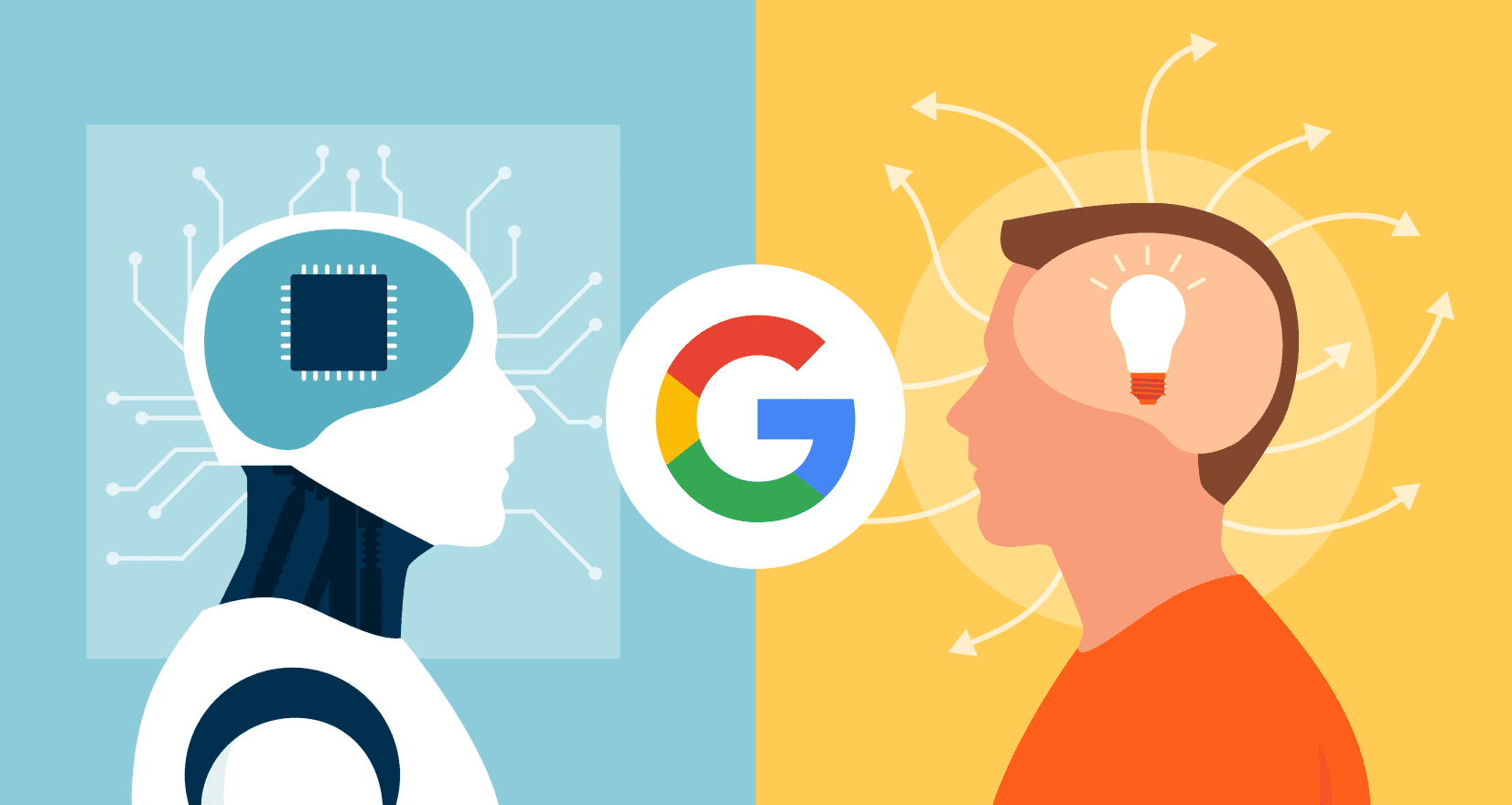
Because Google is not replacing humans with AI, it is rewarding the humans who show up. Your expertise, your personality, and your patient stories are more valuable than ever. Search is shifting from matching keywords toward matching intent, trust, and voice. AI might summarize answers, but it still points patients toward the people they want to hear from.
For dentists, that is good news. You are already in the business of trust, and every patient wants reassurance from a real professional who listens, educates, and cares. The same rule applies online: if your content feels authentic, detailed, and human, you are aligned with Google’s direction. So film the quick video, write the deeper article, and tell the behind-the-scenes story of your practice. The dentists who lean into their humanity will rise above the noise of AI-generated sameness.
Frequently Asked Questions
How will Google's AI Overviews affect my dental website traffic?
Google’s AI Overviews summarize answers directly in search results, which can reduce clicks to low-value or generic pages. Sites that feature deeper, richer, more human content, such as dentist-authored blogs, original videos, and detailed treatment pages, tend to hold and even grow engagement. The practices that get cited in AI answers are the ones that turn curious searchers into patients.
What kind of content does Google now consider "high quality" for dental practices?
Google rewards content that shows time, craft, and real expertise. In practice that means detailed treatment explanations written or reviewed by a dentist, real photos and videos from your office, patient-education posts in your own voice, and clear answers to the questions patients actually ask. Avoid AI-generated filler and jargon, because patients and Google both want authenticity.
Should my dental practice focus more on video or written content for SEO?
Both matter, but short-form video is quickly becoming essential. Younger audiences prefer short videos and forums over long articles, so dentists who pair educational video with strong written pages perform best. A 45-second video answering “How long does Invisalign take?” embedded on your Invisalign page raises dwell time and signals to Google that your content satisfies real search intent.
What is E-E-A-T and why does it matter for dental SEO now?
E-E-A-T stands for Experience, Expertise, Authoritativeness, and Trustworthiness, the framework Google uses to judge healthcare content. It matters now because AI-driven search leans on those signals to decide which pages to trust and cite. Named dentist authors, credentials, original media, and reviewed, accurate content are what tell Google a real expert stands behind your site.

Adrian Lefler is the CEO and Co-Founder of My Social Practice and a recognized dental marketing expert with nearly two decades of experience. He is a trusted voice in dental marketing, AI in dentistry, and emerging technology, and he hosts BYTE SIZED, a podcast focused on dental AI, innovation, and technology.