What You’ll Learn
- How undocumented sales promises create implementation disasters
- What “AI theater” means and how to spot it before you buy
- Why voice AI products fail without scheduling infrastructure
- The questions every DSO should ask before signing any vendor contract
The Dental Technology Bottleneck Has Shifted
The dental industry has more technology coming into it than ever before. AI diagnostics. Voice receptionists. Automated insurance verification. Revenue cycle management tools. Patient engagement platforms.
And yet DSOs have never been less equipped to actually put any of it to work.
Dave Salciccioli has spent years sitting between vendors and DSO operations teams, first as a fractional COO and VP of operations, now as the leader of Relay, a consulting firm that helps both sides of the transaction actually deliver results. On a recent episode of the Byte Sized Podcast, he broke down what’s going wrong and why the problem isn’t usually the product.
“Tons of really good tech,” Dave told Adrian Lefler. “And we don’t have the ability right now to ingest that much new innovation across our practices to try to lift same store growth.”
Overjet CEO Wardah Inam made the same point at a recent AI summit when he said that the bottleneck has changed. Vendors can now ship more product in three months than they could in three years. The constraint is no longer development. It’s adoption.
AI Theater and the Design Partner Problem
Not every product being sold actually exists yet.
Dave uses the phrase “AI theater” to describe what’s happening with some new market entrants. What’s being presented in front of the curtain looks impressive. Behind the curtain, the product may not be fully developed. No real users are running it in front of patients.
“What they’re really looking for is somebody who’s called a design partner,” Dave said. “Basically, who’s my first DSO that will let me work with them through implementation, get a ton of feedback, and improve my own product.”
Being a design partner isn’t inherently bad. Some DSOs like MB2 actively seek out early stage founders because they want something customized to their needs. They’re willing to provide feedback and iterate. They usually get lower pricing and a bespoke solution in return.
The problem is when a DSO thinks they’re buying a finished product and they’re actually signing up to be a beta tester. That’s a different commitment with different expectations.
“You just need to know what you’re buying,” Dave said. “And what it looks like.”
The Messy Middle
When technology fails inside a DSO, both sides usually point fingers. The vendor says they delivered what was promised. The DSO says they did their part. Both are technically right.
The failure happens in what Dave calls the messy middle, which is the gap between a signed contract and operational outcomes. Somebody has to own that space and usually, nobody does.
From the vendor side, two gaps show up consistently.
First, implementation windows are too short. Vendors are incentivized to get software installed quickly, so onboarding timelines run 8 to 12 weeks. That’s not enough time to drive true adoption. Training comes in heavy doses rather than spaced repetition. A four hour training session might result in one hour of retained knowledge.
Second, sales promises don’t make it to the implementation team. Reps say yes to everything to close the deal. Customizations. Integrations. Timelines. Those promises don’t get documented. They don’t get communicated in the handoff. The implementation team delivers the standard package. Months later, the DSO feels shortchanged and the vendor calls it extra scope.
“It took us having to sit down and have a real level set conversation,” Dave said about one current project. “With everybody involved. Okay, like what was communicated? What can we do now?”
The DSO Side of the Problem
Vendors aren’t the only ones creating failures. DSOs often aren’t ready to implement the products they’re buying.
Take voice AI as an example. Everybody wants an AI phone receptionist right now. At least 150 companies are selling one. But implementing a voice AI product requires operational infrastructure that many DSOs haven’t built.
“You have to have a lot of scheduling intelligence built into your PMS before you can layer on a voice AI product,” Dave said. “If you don’t have scheduling blocks, nor know where the doctor’s time is within those scheduling blocks, you don’t have overflow columns for where patients can schedule if these three or four get filled up, it’s not going to matter.”
The product can work perfectly. If the scheduling foundation doesn’t exist, the AI agent has nothing reliable to schedule against.
Adrian Lefler saw this firsthand helping develop Annie AI. The team launched with a couple dozen test practices and discovered that scheduling worked completely differently at almost every location. Two columns instead of one. Fifteen minute appointments mixed with 45 minute appointments. Variations everywhere.
“You can’t ask the practice to change the way they schedule,” Adrian said. “That’s just not going to happen. So you have to build into the software a way for this agent to schedule appropriately.”
Working out those kinks took months. A vendor coming into the industry cold wouldn’t know to ask about overflow columns or double operatory scheduling. A DSO wouldn’t know to mention it.
What to Ask Before Signing
Dave recommends four questions for any DSO evaluating new technology.
Do you have other customers currently using this in front of patients today? If the answer is no, you’re a design partner whether you wanted to be or not. That can be valuable if you go in with open eyes.
Can I talk to somebody else who’s using your product? Push for the referral. If the vendor is nervous about connecting you with an existing customer, that tells you something. A conversation with another operator will surface implementation challenges faster than any sales demo.
What have you seen in other customers that made this process more difficult? This forces the vendor to be honest about what you need to have in place before the product can succeed. If they say you need standardized scheduling templates across 30 locations, you’ll know to spend six months on that first.
Do you have read-only access or read and write access to the PMS? Many platforms can pull data from a practice management system. Fewer can write data back. If bidirectional integration matters for your use case, confirm it exists right now, not on a roadmap.
| Question | What You Learn |
| Are real customers using this today? | Whether you’re buying a product or funding development |
| Can I talk to an existing customer? | Real implementation challenges and timeline |
| What made this hard for others? | Whether your operations are ready |
| Read-only or read-write PMS access? | Whether the integration actually works both ways |
The Middle Management Gap
One reason DSOs struggle with implementation is structural. The people who would normally manage technology projects don’t exist anymore.
Margin compression hit hard over the past few years. Supplies cost more. Staffing costs more. Insurance reimbursements stayed flat. To protect margins, DSOs gutted middle management. Project managers and resource managers were cut. The roles that would normally own a technology transition evaporated.
“This middle management layer has just been gutted,” Dave said. “There’s no more project managers. There’s no resource managers.”
Some DSOs have cobbled together cross-functional technology committees mixing IT, operations, and finance. That’s the model Dave sees working best. But it requires executive attention to form and maintain.
Meanwhile, practice managers are being asked to run implementations on top of their actual jobs. They’re dealing with patient emergencies and staffing issues and involuntary terminations. Getting back to a vendor about a data mapping question isn’t the top priority.
“You have no idea the craziness that’s going on,” Dave said. “Like the last thing on their mind is, I need to get back to that vendor.”
Build vs. Buy
Some DSOs have decided the answer is building their own tools. Claude and ChatGPT made it feel possible. Vibe coding became a thing. Suddenly everyone thought they could replace vendor subscriptions with custom internal software.
Dave has watched this play out. The results are often worse than paying for existing products.
“I have seen some groups go down the path where they’re like, okay, we’re going all in,” Dave said. “We’re going to build everything on Claude or Codex. And they’re trading a $300 a month subscription for a $10,000 a month cost.”
Token pricing adds up. Maintenance becomes a job. Bug fixes require developer time. The DSO accidentally becomes a software company that happens to do dentistry on the side.
Dave’s recommendation is to never try to replace a system of record like a PMS. Build narrow “systems of action” only when no product on the market solves your specific problem. Keep humans in the loop. And do the math on what custom development actually costs before assuming it’s cheaper than a subscription.
“Pick,” Dave said. “Are you going to be someone who grows practices, or are you going to be a software company?”
The Relay Model
Dave’s company Relay works both sides of the vendor-DSO relationship.
For vendors, particularly those coming from outside dental or moving from single practice sales to enterprise, Relay helps with go-to-market strategy and implementation capacity. The advice starts with basics: lead with the problem you solve, not the features you have. Understand entity structures and how much authority doctors have at each location. Build capacity for enterprise implementation instead of repeating single practice processes 40 times.
For DSOs, Relay runs tech stack diagnostics, manages RFQ processes, and sits in the messy middle during implementation. They hold vendors accountable to dates and deliverables. They provide additional training and on-site support. They own the execution so practice managers can focus on running practices.
The companion publication, DSO Compass, provides the information layer. Matt McGaw writes an honest, non-biased newsletter covering what’s happening in dental technology. No revenue share from vendors. No paid placements. Just analysis.
“We want to make sure that we’re giving non-biased recommendations,” Dave said. “But then we want to actually get involved and help them execute.”

In This Episode:

Dave Salciccioli, CEO and Co-founder of Relay
Dave Salciccioli leads Relay, a consulting firm that helps technology vendors sell into and implement with enterprise dental groups, and helps DSOs evaluate, select, and roll out new technology. Since entering dental in 2018, Dave has served as a fractional COO for founder-led and doctor-led DSOs and held VP of operations roles at larger national groups, focused on change management and adoption. Relay works alongside DSO Compass, founded by Matt McGaw.

Adrian Lefler, CEO and Co-founder of My Social Practice
Adrian Lefler, CEO of My Social Practice, is a seasoned expert in the dental marketing industry with 14 years of experience. He is widely recognized for his engaging and informative presentations. Based in Suncrest, Utah, Adrian shares his life with his wife, four children, and a lively mix of pets. My Social Practice is a leading dental marketing company, and Adrian is passionate about helping dental professionals succeed in this dynamic field.
Frequently Asked Questions
Why do DSO software rollouts fail after the contract is signed?
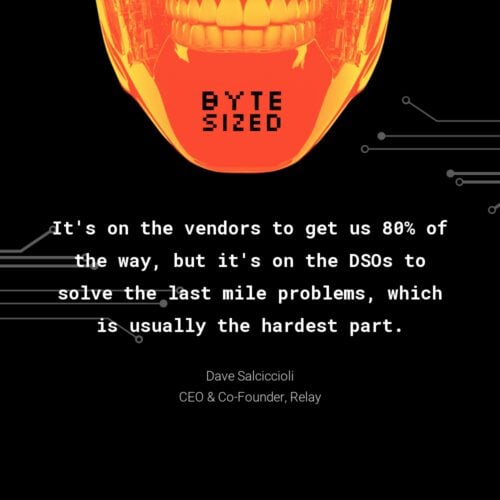
A common cause is a broken handoff between sales and implementation. Reps promise customizations to close the deal. Those promises never get documented. The implementation team delivers the standard package. Months later the DSO feels shortchanged and the vendor calls it extra scope. Documented scope and recorded sales calls prevent this. Only 20-30% of the work is done when the contract is signed, and the rest happens during implementation that’s often understaffed.
What does "AI theater" mean in dental technology?
AI theater describes vendors who present impressive capabilities in demos or marketing materials while the actual product isn’t fully developed behind the scenes. No real users are running it in front of patients yet. These vendors are often looking for a “design partner,” meaning a DSO willing to provide feedback while the product gets built. Being a design partner can be valuable if you know that’s what you’re signing up for and negotiate accordingly.
What operational foundation does a DSO need before implementing voice AI?
Voice AI products require scheduling intelligence built into the PMS before they can work effectively. That means defined scheduling blocks, clarity on where provider time sits within those blocks, and overflow columns for when primary slots fill up. The DSO also needs a defined use case: inbound calls, outbound scheduling, outbound billing, or some combination. Without this infrastructure, the AI agent has nothing reliable to schedule against.
Should a DSO build its own software instead of paying for vendor subscriptions?
Usually not for core systems. Groups replacing a $300 per month subscription with custom builds can end up carrying $10,000 a month in labor and token costs, plus ongoing maintenance and bug fixes. Never rebuild a system of record like the PMS. Build narrow systems of action only where no product exists on the market, keep humans in the loop, and calculate the true cost before assuming custom development is cheaper.
What questions should a DSO ask a technology vendor before signing?
Ask whether real customers are using the product in front of patients today and whether you can speak with one directly. Ask what made implementation difficult for other customers and what your group needs to fix first. If PMS integration matters, ask whether the product has read-only access or true read and write access right now. These questions surface whether you’re buying a finished product or funding development, and whether your operations are ready.