What You’ll Learn
- Why AI adoption stalls in clinical settings and what actually causes resistance
- The difference between AI adoption in the US versus Latin America
- Why there is no governing body vetting AI products for healthcare
- What clinical due diligence means and why doctors must lead it
- How the Global Medical and Dental AI Summit is building a framework for ethical AI governance
The Real Barrier Is Not the Technology
Everyone assumes AI resistance in healthcare comes from fear. Fear of job loss. Fear of change. Fear of technology replacing human judgment.
Dr. Val Torres sees something different.
“Healthcare has always been the slowest to innovate,” Val told Adrian Lefler on a recent episode of the Byte Sized Podcast. “It’s so siloed.”
Val serves as Chief Operating Officer of the Health Board Advisors, CEO of the Latino Executive Exchange, and leads the Latin American arm of the Global Summits Institute. He works across 160 countries helping healthcare professionals become AI literate. His perspective is genuinely global.
The barrier to AI adoption is not the technology itself. It is trust. It is culture. It is the absence of anyone telling doctors which products are safe to use and which ones will get them sued.
“Right now, there’s no ethical governing body that is overseeing the inflection point of AI coming into the medical industry,” Val explained. “It’s a free-for-all.”
Students Use AI Without Understanding It
Val works extensively with premed, medical, and dental students across Latin America. What he sees is a generation comfortable with AI tools but blind to the risks.
“Most premed, medical school, and dental students, they’re completely unaware of AI outside of what can help them get their coursework done faster,” Val said. “They’re using tools like ChatGPT. There’s some blind trust. But there’s gaps in the middle, like real literacy.”
Students know how to prompt. They do not know how data privacy works. They do not understand hallucinations or how to verify outputs. They use AI to write papers without understanding the ethical boundaries.
The older generation presents a different challenge. Doctors over 50 who built their careers on paper systems struggle with basic adoption. The learning curve feels steep. The benefit feels unclear.
“Teaching young people is surprisingly easy compared to teaching the older generation,” Val noted. “Those 50 and above who are used to everything on paper, those are the people that are most challenging.”
The solution is meeting both groups where they are. For students, that means teaching safety, privacy, and verification alongside prompting skills. For experienced practitioners, it means demonstrating the time savings in terms they care about.
“You tell them, ‘Hey, something that takes you two days to get done, you’re done in a couple minutes.’ More golfing time for you,” Val said. “That’s how you hook the older guys.”
The US and Latin America Adopt AI Differently
Val’s global perspective reveals how economic systems shape technology adoption.
In the United States, AI adoption is driven by capitalism. Stock prices surge on AI announcements. Venture capital floods into startups. The profit motive accelerates development, sometimes faster than safety protocols can keep up.
“AI is money,” Val said. “You see the stock markets, you see all of these things. There’s a lot of money versus Latin America where the markets are not as saturated.”
Latin American countries approach AI differently. Regulations are lower, but so is the urgency. Doctors make decisions based on how a product feels, whether patients will trust it, and whether it fits the culture. Profitability matters less than sustainability.
“Latin Americans are more emotionally driven,” Val explained. “How I feel about the product. Do I like it? Does it make me feel good? Does it really help my patient? That’s really how it works there versus the US where it’s strictly dollars and cents.”
Neither approach is entirely right. The US model moves fast but creates regulatory gaps. The Latin American model is more cautious but risks falling behind. Both need the same thing: a framework for evaluating which AI products actually deliver what they promise.
The Questions Nobody Knows to Ask
The dental industry has seen hundreds of AI products launch in the past two years. Some are excellent. Some are disasters waiting to happen.
The problem is that most dentists cannot tell the difference. The questions required to evaluate AI software are questions nobody in dental school ever learned to ask.
Consider a simple example. An AI system listens to phone calls between front desk staff and patients. It analyzes conversations to identify missed opportunities or training gaps. Useful product. But what happens to that data?
“Can an AI that’s listened to this call use information to train on another call?” Adrian asked during the conversation. “That could be a huge cybersecurity issue. I don’t know. Might be.”
That uncertainty is the problem. When a software company builds a product, they may train their models on data from one practice and apply those learnings to another. Patient health information could flow between systems in ways that violate HIPAA without anyone realizing it.
Lawsuits are already happening. Companies are being sued for exactly these kinds of violations. The legal precedent is being established not by thoughtful regulation but by courtroom battles after the damage is done.
“The precedent is the legal system,” Adrian observed. “It’s like, ‘Oh, I guess we’re just going to find out who gets sued and we won’t do that kind of thing.'”
Why Doctors Must Lead Governance
Val believes the solution cannot come from technology companies. It cannot come from government regulators who do not understand clinical workflows. It must come from doctors themselves.
“Nobody’s coming to save us,” Val said. “We need to do what’s best for the patient, and it’s all up to us.”
This is why Dr. Kianor Shah founded the Healthcare Intelligence Board, a doctor-led, doctor-operated global AI governance body. The board spans multiple countries and specialties. Only those with doctoral degrees have voting rights on standards and recommendations.
The logic is simple. Doctors are incentivized to do the right thing. Malpractice insurance, professional licenses, and reputations all depend on avoiding harm. A technology company chasing venture capital has different incentives than a physician who will face a patient’s family if something goes wrong.
“Doctors don’t want to do anything wrong to jeopardize their medical licenses and their reputations,” Val explained. “Whether or not they have ethics, they’re forced to do the right thing for personal self-interest.”
The board focuses on what Val calls clinical due diligence. When a product is meant for healthcare, the experts who will use it should evaluate it. An orthopedic surgeon should not vet dental software. A marketer should not assess clinical safety.
| Who Should Lead | What They Evaluate |
| Practicing clinicians | Clinical workflow fit |
| Cybersecurity experts | Data privacy and HIPAA compliance |
| Legal specialists | Liability and regulatory exposure |
| Patient advocates | End-user experience and trust |
What Happens at the London Summit
The Global Medical and Dental AI Summit in London this June represents exactly the kind of collaboration Val describes. Over a hundred doctors, dentists, and healthcare professionals will gather to establish frameworks for ethical AI implementation.
Val will speak about the human side of AI, the topic nobody else addresses.
“A lot of doctors talk about the products and services and how cool AI is,” he said. “I speak from the heart where it’s about the people and the patient. We’re using AI to humanize healthcare.”
The summit offers something no podcast or blog post can provide: a room full of practitioners wrestling with the same challenges, sharing what works, and collectively building standards before the lawsuits force them to.
For dentists still on the fence about AI, the message is clear. The technology is moving whether you engage with it or not. The only question is whether you help shape how it enters your profession or let someone else decide for you.
In This Episode:

Dr. Val Torres, MD, MBA, FIADFE
Val Torres is a physician, MBA, and Fellow of the International Academy of Dento-Facial Esthetics with deep expertise at the intersection of medicine, dentistry, and technology. He is a speaker at the Global Medical and Dental AI Summit in London, where he will challenge clinicians to rethink what the role of a doctor looks like in an AI-driven future. Val is known for cutting through the hype and speaking plainly about the business model problems that slow AI adoption in healthcare.
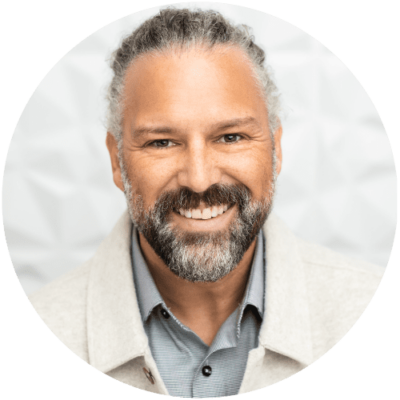
Adrian Lefler, CEO and Co-founder of My Social Practice
Adrian Lefler, CEO of My Social Practice, is a seasoned expert in the dental marketing industry with 14 years of experience. He is widely recognized for his engaging and informative presentations. Based in Suncrest, Utah, Adrian shares his life with his wife, four children, and a lively mix of pets. My Social Practice is a leading dental marketing company, and Adrian is passionate about helping dental professionals succeed in this dynamic field.
Frequently Asked Questions
Why does AI adoption fail in healthcare settings?
AI adoption fails primarily due to lack of trust, siloed organizational structures, and the absence of clear governance frameworks. Healthcare has always been slow to innovate, and without a governing body vetting products for safety and compliance, practitioners have no reliable way to evaluate which AI tools are safe to implement.
What is clinical due diligence for AI products?
Clinical due diligence means having the appropriate experts evaluate AI products before implementation. Practicing clinicians should assess workflow fit, cybersecurity experts should evaluate data privacy, legal specialists should review liability exposure, and patient advocates should consider end-user experience. This process ensures products meet actual clinical needs rather than just marketing promises.
How can dentists evaluate whether an AI product is safe to use?
Ask specific questions about data handling: Where is patient information stored? Is data used to train models that serve other practices? What HIPAA compliance certifications does the company hold? Has the product been reviewed by practicing clinicians? If the vendor cannot answer these questions clearly, that is a red flag.