What You’ll Learn
- Why Adrian Lefler walked away from a bankrupt business and into dental marketing
- How narrowing focus to one industry became MSP’s biggest competitive advantage
- What it actually looks like when a company rolls out AI (and why employees push back)
- Why judgment, not efficiency, is the one thing AI still can’t do
- What separates a good dental practice from a great one, according to 17 years of watching them
MSP’s CEO Talks AI, Leadership, and the Human Element on The Edge Podcast
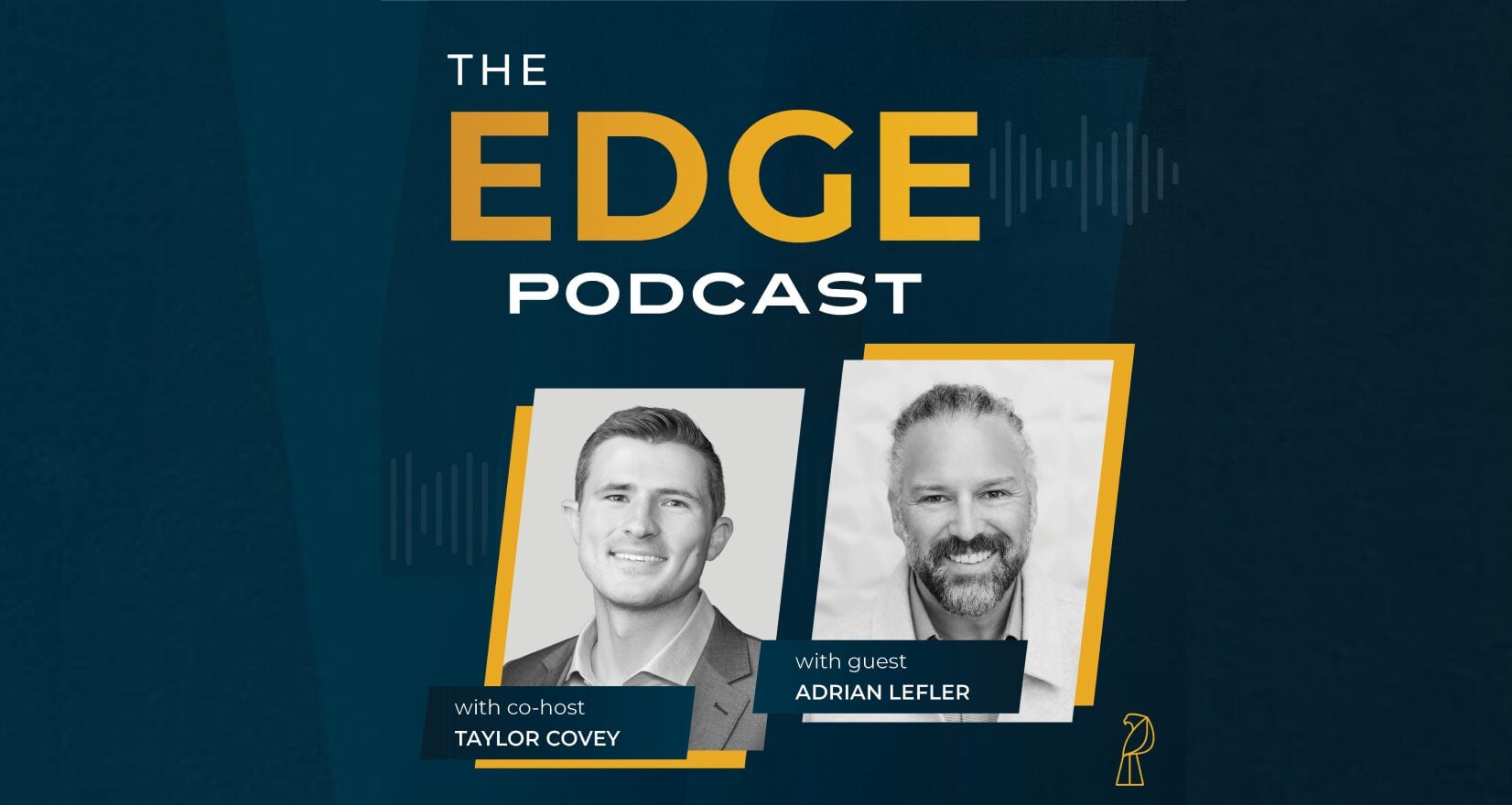
Adrian Lefler, CEO and co-founder of My Social Practice, doesn’t exactly fit the mold of a typical marketing executive. He’s a self-proclaimed film snob, a Utah Utes convert (BYU fans, look away), and the guy behind a 2011 movie about LARPing. But when Taylor Covey sat down with him on The Edge Podcast, the conversation went somewhere every dental practice owner should pay attention to. What happens when you bring AI into a business full of real people?
Adrian’s answers weren’t the usual “AI will change everything, blah blah blah, the future is here” hype. They were grounded, a little blunt, and packed with lessons dentists can apply whether they’re running a two-op practice or a multi-location group. Here’s what stood out.
From Bankruptcy to Booming Business
My Social Practice didn’t start with a five-year plan. What really kicked it off was when Adrian went totally broke.
Back in 2009, during the credit crash, a company Adrian had started collapsed. Around the same time, he’d figured out how to get a business ranking on the newly launched Google Maps section of search results. A former coworker happened to have just lost his job at a dental marketing company, and he had one very useful thing left over: 3,500 dentist contacts.
That combination, a scrappy SEO trick and a list of dental practices, became the foundation of My Social Practice. Nearly 17 years later, the company has grown from a single SEO product into a full suite of dental marketing services, including SEO, website design, social media management, and more.
Why Staying Niche Was the Smartest Move MSP Ever Made
Sometimes, growing companies try to chase every opportunity that knocks. MSP has had plenty of chances to expand outside dentistry, including offers from optometry chains, dermatology companies, and other healthcare verticals. Every time, the answer was no.
That focus is deliberate. By staying entirely inside the dental industry, MSP has been able to build a deep, specific understanding of what actually moves the needle for dental practices, rather than spreading itself thin across industries that all have different patients, different sales cycles, and different marketing needs.
For dentists evaluating marketing partners, it’s worth remembering that a company that only works with dental practices is going to understand your business in a way a generalist agency simply can’t.
The Real Secret Behind a Business Partnership That Works
Adrian credits a lot of MSP’s staying power to his business partner, Seth Daly. Adrian describes himself as the visionary who “shoots for the stars” and sometimes misses. Seth is the grounded, organized one who keeps the company from chasing every shiny idea.
That dynamic didn’t happen overnight. Early on, the two clashed hard, including some fights in front of employees that Adrian now looks back on with cringe-worthy embarrassment. What changed things was a shift in mindset. They began assuming good intent, giving each other room to operate in their own lane, and consistently investing more into the relationship than either was taking out of it.
It’s a leadership lesson that applies well beyond business partners. Dentists managing office managers, hygienists, and front desk teams face the same dynamic. Trust and goodwill have to be built up before they can be drawn on.
How My Social Practice Is Actually Using AI
This is where the episode gets especially useful for dental practice owners wondering how to approach AI without blowing up their team.
Adrian’s first attempt at AI rollout followed the common “bottom-up” model of handing employees the tools and asking them to figure out how to improve their own jobs. Shockingly (or not), it didn’t work. Employees dragged their feet and, in Adrian’s words, one workflow project even got quietly sabotaged, because most employees aren’t wired to look for ways to innovate themselves out of their current role.
The fix was giving two trusted, long-tenured employees a new job entirely. Their task was to figure out how to implement AI across the company’s workflows. That strategic approach has already cut significant costs, without a single layoff.
One example stands out. MSP used to have two full-time copywriters producing 500-600 pages of content per month combined. Now, one writer handles two to three times that output using AI-assisted workflows. The second copywriter wasn’t let go, her job changed instead.
| Old Role | New Role |
| Copywriter #1 | Still writing, producing 2-3x more content with AI tools |
| Copywriter #2 | Now an “automation editor,” reviewing and refining AI-drafted copy |
| Editing time per page | Roughly a tenth of the original time |
That table is exactly the kind of thing dentists can apply to their own front office. AI doesn’t have to mean fewer people. In an ideal scenario, it can mean the same people doing more, differently.
The Human Judgment AI Still Can’t Replace
Adrian was direct about where AI hits a wall, and that’s with good, old-fashioned judgment.
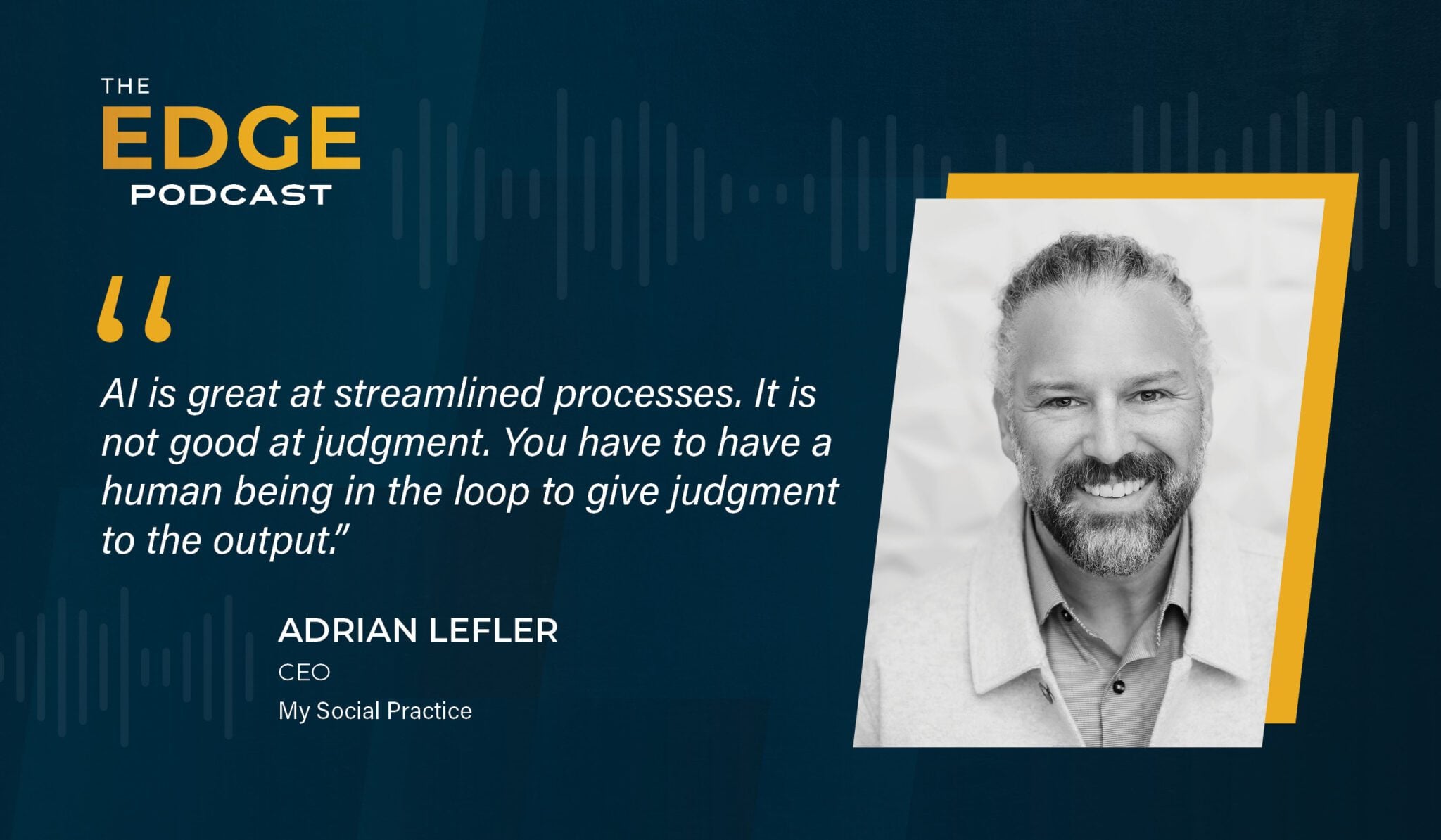
“AI is great at streamlining processes. It is not good at judgment,” he explained. Practices and businesses that treat AI purely as a headcount-reduction tool, rather than a way to boost output while keeping skilled people in place, are missing the bigger opportunity.
He also pushed back on the doom-and-gloom narrative that AI is about to replace all human labor, pointing out that the loudest of those claims tend to come from companies that need that story to justify massive fundraising. On the ground, at MSP at least, that’s not what’s actually happening.
This is a philosophy baked directly into how MSP builds AI-powered tools for dental clients too. Take Annie AI, MSP’s AI receptionist and recare agent. She handles missed calls, webchat, and recare outreach around the clock, but she’s designed to support a front desk team, not replace it. The judgment calls, the tricky patient situations, the relationship building, those still belong to humans.
What Separates a Good Dental Practice from a Great One
After 17 years working exclusively with dental practices, Adrian’s answer to what separates good practices from great ones was leadership.
Dentists come out of school as clinicians, not business owners. Nobody teaches them how to run a team, manage conflict, or lead a room full of employees while also drilling and filling all day. The rare dentist who happens to also be a strong leader, Adrian says, tends to run circles around the competition.
It’s part of why dental-specific business consulting exists as its own industry. Clinical skill and leadership skill are two completely different muscles, and most dental programs only train one of them.
The Bottom Line for Dental Practice Owners
Whether it’s a business partnership, an AI rollout, or a front desk team, the throughline in Adrian’s story is that people are still the asset worth protecting. Technology and automation are tools to make good people more effective, not replacements for the judgment, taste, and trust that only humans bring.
If your practice is thinking through how to bring AI into daily operations without creating panic on your team, or how better marketing and reputation management can free up your staff to focus on patients, that’s exactly the kind of strategic thinking My Social Practice brings to dental practices every day.
Frequently Asked Questions
Does bringing AI into a dental practice mean staff layoffs?
Not necessarily. As Adrian Lefler’s experience shows, AI can increase output from existing team members rather than replace them. Job roles often shift instead of disappearing entirely.
Why do employees resist AI tools in the workplace?
Most employees aren’t naturally looking for ways to innovate themselves out of a job, so asking them to “figure out how AI improves your role” on their own often backfires. A more strategic, top-down approach tends to work better.
What can AI not do well in a dental practice or business?
According to Adrian, AI struggles with judgment. It can streamline repetitive processes, but decisions that require nuance, context, or taste still need a human involved.
Why do dental marketing companies specialize instead of working across industries?
Staying niche allows a dental marketing company to build deep expertise in one industry’s specific challenges, patient behavior, and marketing needs, rather than spreading resources across unrelated fields.
What makes a dental practice successful beyond clinical skill?
Leadership. Dentists are trained clinically but rarely receive business or leadership training, which is often the real differentiator between an average practice and a thriving one.

Adrian Lefler is the CEO and Co-Founder of My Social Practice and a recognized dental marketing expert with nearly two decades of experience. He is a trusted voice in dental marketing, AI in dentistry, and emerging technology, and he hosts BYTE SIZED, a podcast focused on dental AI, innovation, and technology.