Updated: September 11, 2026
Quick Answer: Google AI Overviews are AI summaries that answer a search at the top of the results page, and in 2026 they help push about 68% of U.S. Google searches to end without a click. For dentists, that mainly hits general informational content; local searches like “dentist near me” still send patients in. To get cited, keep your Google Business Profile, reviews, service and location pages, and blog current. Link cards now make those citations clickable.
Table of Contents
- What is zero-click search, and why do dentists worry about it?
- What did Google change about links in AI Overviews?
- What is Google AI Mode, and how big is it for dentists?
- Why do AI Overviews matter for your dental practice?
- Do you still have to be cited first?
- What can dentists do right now to show up in AI Overviews?
- What does this mean for the future of dental search?
- Frequently Asked Questions
Google AI Overviews and zero-click search have reshaped how patients find dental information, but the story is not all bad for practices that invest in local SEO. Here is what these AI results are, how they affect your website traffic, and how to get your practice cited and clicked.
If you’ve heard the phrase “zero-click search” tossed around in marketing conversations and quietly panicked a little, you’re not alone. For the past couple of years, dentists and dental marketing companies have watched Google’s AI Overviews answer patient questions without those patients ever needing to click through to an actual website. Searches like “how long does a crown take” or “best toothbrush for sensitive gums” were getting answered right on the results page, with no click, no visit, and no chance for your practice to make an impression. A dark time for niche dental website blog content indeed.
The good news: Google now shows pop-up link cards in both AI Overviews and AI Mode, and the format looks a lot more promising for dental practices trying to drive real web traffic. Below is what zero-click search actually means today, what changed, and how strong dental SEO positions your practice to benefit.
What is zero-click search, and why do dentists worry about it?
Zero-click search happens when Google answers a user’s question directly on the results page, so there’s no need to click through to any website. It matters to dentists because it is now the majority of all searches. In the first four months of 2026, 68.01% of U.S. Google searches ended without a click, according to SparkToro’s 2026 analysis of Similarweb clickstream data, up from 60.45% in 2024. That’s nearly 10 points in two years.
| Year | Zero-Click Share | Searches Generating a Click |
|---|---|---|
| 2019 | ~49-50% | ~50-51% |
| 2020 | 64.82% | ~35% |
| 2024 | ~58.5-60.45% | ~40-42% |
| 2026 (Jan-Apr) | 68.01% | ~32% |
Year-over-year comparisons use different data panels, so read the trend as directional. Source: SparkToro / Similarweb, 2026.
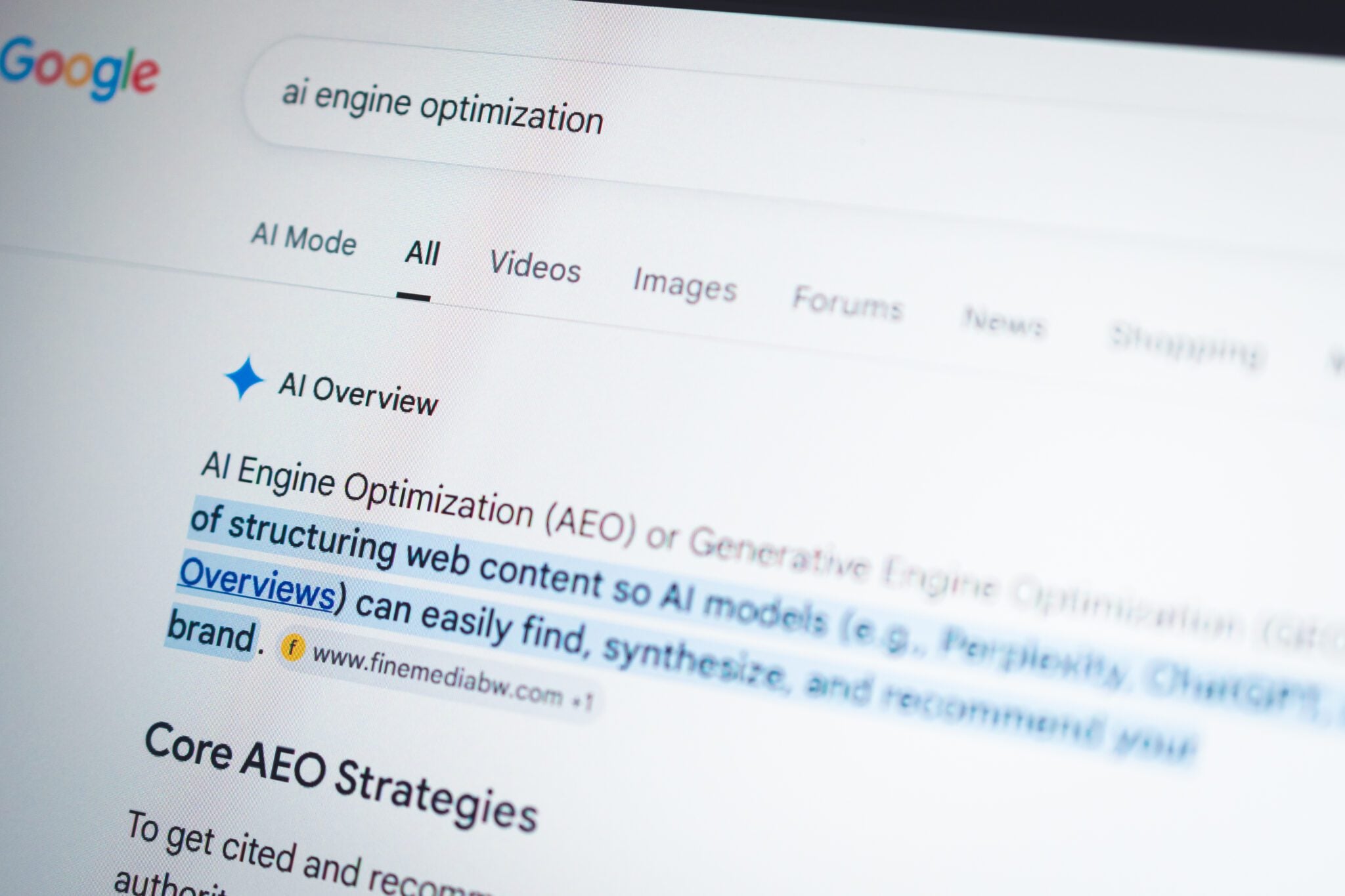
AI Overviews, the AI-generated summaries at the top of many results, are a big driver. They now appear on more than 20% of searches, and when one shows up, click-through to the links below drops by nearly 60% (SparkToro). That lines up with earlier Pew Research findings that about one in five Google searches returns an AI Overview.
Here’s the part that keeps dentists in the game: around 88% of AI Overviews pull from three or more sources to build their answer. Google isn’t leaning on one authoritative site. It’s casting a wide net, and your practice has a legitimate shot at being in it.
For dental practices, the worry was real. Your website might be the source of great content about dental implants, Invisalign, or pediatric dentistry, but if Google just summarized it at the top of the page, potential patients had no reason to visit your site, learn about your team, or book an appointment. Many dentists investing in SEO started to feel like they were putting up a billboard that Google kept putting its own sign in front of.
What did Google change about links in AI Overviews?
Google made the source links inside AI Overviews far more visible and clickable. Its AI Overviews and AI Mode now show pop-up link cards, so citations that used to be nearly invisible are now prominent. Here’s what that looks like:
- Pop-up link cards on desktop. When users hover over links within AI Overviews or AI Mode responses, a pop-up now appears with more information about the source website. That makes links far more noticeable than the tiny citation icons before.
- More descriptive link icons on mobile. The same update shows more prominent, descriptive link icons in AI responses across mobile devices, where a huge share of dental patient searches happen.
Google’s Robby Stein described the change directly, saying the new design makes it “easier to get to great content across the web,” and that testing shows it is “more engaging” for users. In other words, Google is actively trying to send more people to websites from these AI experiences, not fewer. Huzzah. There is much rejoicing in the dental marketing kingdom.
The table below shows how source links have evolved:
| Search Behavior | Before AI Overviews | With AI Overviews (Old Format) | With AI Overviews (New Format) |
|---|---|---|---|
| User sees result | Clicks website | Reads AI summary | Reads AI summary plus sees prominent link pop-ups |
| Website visit likelihood | High | Low | Higher |
| Link visibility | Clear | Minimal / buried | Prominent on hover (desktop) and mobile |
| Source attribution | URL listed | Small citation icon | Descriptive, visible link cards |
What is Google AI Mode, and how big is it for dentists?
Google AI Mode is Google’s conversational search experience, and it is the bigger long-term wildcard for dental visibility. Instead of a list of links, it returns a full AI answer you can ask follow-up questions about, by voice, text, or image.
Under the hood, AI Mode uses something called query fan-out: it runs multiple related searches at once behind the scenes and combines them into a single answer. That means one AI response can draw from many pages at the same time, which changes how your content gets found and cited.
How big is it? During the same January to April 2026 study, AI Mode was only about 0.34% of searches. But at Google I/O 2026, Google announced that AI Mode had passed 1 billion monthly users, with query volume more than doubling every quarter. Small today, scaling fast.
The playbook for getting your practice named and recommended inside these AI answers is its own topic. For the deeper strategy, see how to get your dental practice recommended by AI search.
Why do AI Overviews matter for your dental practice?
They matter because the searches that pull your practice into an AI Overview are exactly the ones patients use to choose a dentist. If your website shows up as a source for a search like “dental implants near me” or “family dentist Salt Lake City,” there’s now a much better chance the searcher clicks through to your site.
Now that those mentions show up as pop-up cards with real information instead of the tiny icon most people scrolled past (so sad, so lonely), your practice sits right in front of a patient who is already engaged and reading about your services.
There is also a local silver lining. SparkToro’s Rand Fishkin flagged the search types that still drive clicks, and they map neatly to how patients find a dentist:
- Local business queries, like “dentist near me” or “pediatric dentist in [city]”
- Branded searches, where someone already knows your practice name
- High-intent transactional searches, like booking or emergency care
AI summaries can’t replace Google Maps, your Business Profile, reviews, hours, and directions, so those local searches still send patients your way. What AI Overviews tend to absorb is general informational content. That means the practices most exposed to zero-click are the ones leaning on broad blog traffic, while the ones winning local search stay protected. Those informational searches themselves, the “how much do veneers cost” questions, the “what happens if you don’t treat a cavity” explainers, the post-op care lookups, are exactly where an AI Overview is most likely to appear, and where being the cited source pays off.
One quick tracking note: Google Search Console still doesn’t break out clicks from these AI link cards, so measuring the change falls to whoever is watching your traffic closely. If you want to get ahead of it, here’s how to track AI Mode and AI Overviews in Google Search Console.
Do you still have to be cited first?
Yes. The link cards only help if your practice is already being cited in AI Overviews and AI Mode. Google can’t send traffic through a pop-up card if your site isn’t being pulled into those AI answers in the first place.
That’s where dental SEO does its heavy lifting, and that spot in an AI answer just became a lot more valuable. The practices that get cited tend to share the same foundations: a complete, active Google Business Profile that signals local authority, well-written service and location pages built around local keywords, and a fast, mobile-friendly website. Reviews matter here too, and heavily. A practice with 200 reviews at 4.8 stars gets the call over one with 15, and strong review signals feed both local rankings and patient trust, which is where steady reputation management earns its keep. Build those foundations and you earn the citation.
What can dentists do right now to show up in AI Overviews?
The foundations above are the standing assets. Here is the do-now checklist that keeps them working:
- Audit your service content. Look for gaps or thin pages on your core treatments, and shore up the weakest ones first.
- Claim and optimize your Google Business Profile. Post updates and photos regularly, not just once.
- Set a blogging cadence and keep it. A steady stream of informative content gives Google fresh, relevant material to draw on.
- Lean into what AI can’t summarize. Patient testimonials, team stories, and local community involvement are the human, first-hand signals an AI summary can’t reproduce, and they are a big part of why Google now rewards human-created content.
- Run a site-speed and mobile check. Slow or clunky sites don’t get rewarded by Google, and they don’t impress patients either.
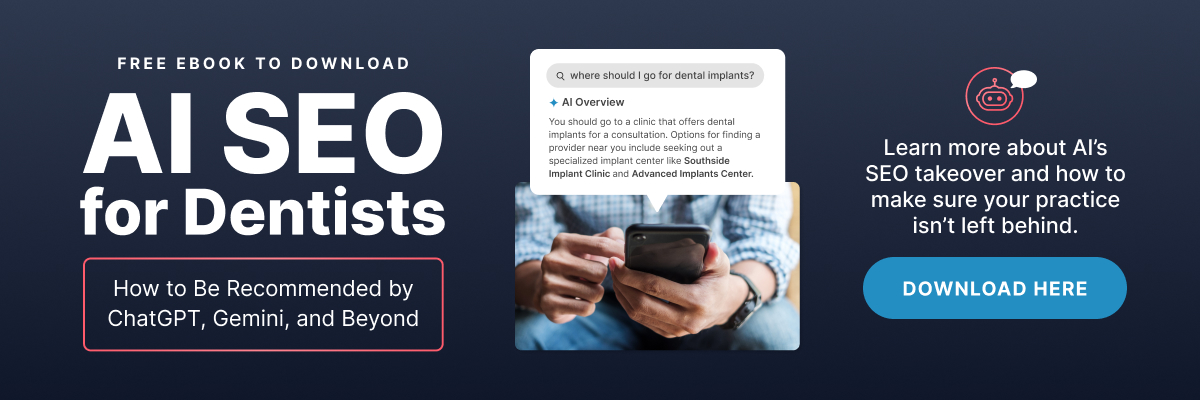
My Social Practice’s dental SEO services are built for practices trying to win in this environment, from Google Business Profile optimization to expert copywriting and technical SEO, so the right patients find your practice whether they arrive through a traditional result or a new AI Overview link card. If your goal is to be actively named and recommended by AI tools, that is the focus of GEO for dentists and LLMO for dentists.
What does this mean for the future of dental search?
Google and AI Overviews aren’t going away, but the direction is clearer than it was a year ago. Google still treats website visits as a core part of search and is building tools to drive those clicks rather than eliminate them. That’s good for practices that have invested in their online presence.
Zero-click search was always a concern, not a certainty. The practices that show up in AI results, and that have compelling, trustworthy websites to back them up, are the ones that turn curious searchers into actual patients. For the wider view of where this is heading, see how the AI search shift is reshaping dental marketing and the case for AI recommendation optimization.
Frequently Asked Questions
What is zero-click search, and how does it affect dental practices?
Zero-click search refers to search results where users get their question answered directly on the search results page without clicking through to a website. For dental practices, this became a bigger issue with the rise of Google AI Overviews, which summarize information from websites at the top of search results. If potential patients can read a summary about dental implant costs or cavity treatment without visiting your site, it reduces the chances they’ll ever land on your page. However, Google’s recent update to AI Overview links is designed to drive more clicks from these summaries back to original websites.
How does dental SEO help my practice show up in Google AI Overviews?
Google pulls content for AI Overviews from websites it considers authoritative, relevant, and well-optimized. Strong dental SEO practices, including optimizing your Google Business Profile, creating detailed service pages, publishing regular blog content, and improving technical site performance, increase the likelihood that Google will cite your website in AI-generated summaries. With Google’s new link visibility update, being cited in AI Overviews now has a much clearer path to turning into actual website traffic.
Will Google AI Mode hurt my dental website traffic?
For general informational searches, yes, AI Mode can answer patients before they ever click. For local and branded searches, much less so. The fix is the same one that works for AI Overviews: a strong Google Business Profile, steady reviews, and local SEO keep your practice visible in the searches where AI summaries can’t replace Maps, hours, and directions.
Do I need to change my SEO strategy because of this Google update?
Not drastically, but it does reinforce the value of content-focused SEO. The practices that will benefit most from Google’s new AI Overview link format are those that are already being cited in AI search results. That means continuing to build high-quality, locally relevant content, maintaining a strong Google Business Profile, and keeping your website technically sound are all still the right priorities. The update rewards good SEO work rather than requiring an entirely different approach.
Is SEO still worth it for a dental practice in 2026?
Yes, as long as it is local and conversion focused rather than broad and informational. AI Overviews absorb general how-to content, but they can’t replace your Google Business Profile, reviews, and location pages. SEO that targets “dentist near me” style searches and turns those visits into booked appointments still delivers strong, compounding returns for dental practices.
Will this update affect both desktop and mobile search results?
Yes. Google’s announcement specified that the new, more prominent link cards appear as pop-ups on desktop when users hover over them, and that more descriptive and visible link icons are also rolling out across mobile devices. Since a significant portion of dental patient searches happen on mobile, this is particularly relevant for practices trying to capture local patients who are searching on the go.ach.
How long does it take for dental SEO to start showing results?
SEO is a long-term investment rather than an overnight fix. Most dental practices start seeing meaningful movement in local search rankings within three to six months of consistent SEO work, though results vary based on competition in your area and the current state of your website. The upside of SEO compared to paid ads is that the benefits compound over time. A well-ranked website keeps driving traffic without requiring a continuous ad spend, making it one of the most cost-effective long-term marketing strategies for dental practices.

Adrian Lefler is the CEO and Co-Founder of My Social Practice and a recognized dental marketing expert with nearly two decades of experience. He is a trusted voice in dental marketing, AI in dentistry, and emerging technology, and he hosts BYTE SIZED, a podcast focused on dental AI, innovation, and technology.