What You’ll Learn
- Why the current lack of AI regulation in dentistry has led to lawsuits and compliance nightmares
- How a global coalition of healthcare professionals is creating the first ethical standards for dental AI
- The surprising reason dentists are now positioned at the forefront of predictive medicine
- Why AI could eliminate trillion-dollar insurance middlemen and what that means for your practice
- How to position yourself as a leader in ethical AI adoption rather than scrambling to catch up
The Wild West of Dental AI Is Ending and the Lawsuits Are Already Here
Every single day, a new AI tool hits the dental market. Some are brilliant. Some are sketchy. And right now, nobody can tell you with certainty which ones are actually legal.
That is not hyperbole. Multiple software companies have already faced lawsuits for HIPAA violations tied to AI implementations. Patient data is being transferred in ways that existing regulations never anticipated. Cybersecurity specialists are discovering vulnerabilities that did not exist before because the technology itself is fundamentally different from anything we have used.
Dr. Kianor Shah, founder of Global Summits Institute and organizer of the 2026 Global Medical Dental AI Summit, recently joined the Byte Sized Podcast to discuss why the dental industry desperately needs ethical AI standards and what is being done about it.
“There’s like a wild wild west,” Dr. Shah explained. “We don’t have regulation, advocacy, policy, governance around artificial intelligence. Products are coming into the market that are super cool products, but then there’s little things in the background kind of like way back behind the veil where information is being transferred.”
The problem is not that AI is bad. The problem is that nobody has established the rules yet.
Why Legacy Organizations Cannot Solve This Problem
If you are waiting for the ADA or other traditional dental organizations to establish AI governance standards, you may be waiting a very long time.
Adrian Lefler shared his own experience during the podcast. He approached the ADA with ideas about creating ethical standards for AI implementation in dentistry. The response was underwhelming.
“Apparently the ADA has no idea what I’m talking about,” he said.
Dr. Shah confirmed this is a systemic issue across legacy healthcare institutions.
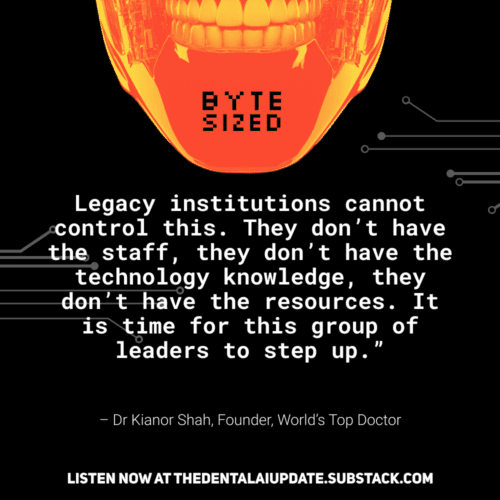
“Your legacy organizations, legacy institutions, they cannot control this,” Dr. Shah said. “They don’t have the staff. They don’t have the technology knowledge. They don’t have the resources.”
These organizations were built for a different era. They operate with volunteers, move slowly through bureaucratic processes, and lack the technical expertise to evaluate AI systems at the depth required. By the time they produce guidance, the technology will have evolved three generations beyond whatever they assessed.
This is why a grassroots movement of doctors and healthcare professionals is stepping up to fill the void.
The London Summit: 700 Healthcare Leaders Writing the Rules
In June 2026, something unprecedented will happen. Seven hundred healthcare professionals from over 160 countries will gather in London for the Global Medical Dental AI Summit. Their mission is to create the first comprehensive ethical framework for AI in healthcare.
This is not another trade show with vendors hawking products. This is a closed environment designed specifically for high-level collaboration.
“You picked a venue that’s closed,” Dr. Shah explained. “You’re not doing New York and Chicago where there’s 30, 40, 50,000 people all sort of kind of bumping into each other. This is 700 people that are passionate that are going to be interacting for three days in a closed environment.”
The summit includes several distinct tracks and initiatives:
| Track | Focus Area |
| Health Intelligence Board | Regulatory framework, policy, governance standards |
| Medical Track | AI applications in medicine |
| Dental Track | AI applications in dentistry |
| Hygienist Program | Diagnostic AI for frontline providers |
| Society of Physician Entrepreneurs | Software pitches and startup evaluations |
The Health Intelligence Board is particularly significant. This is where representatives from regulatory bodies, health ministers, and governance organizations will sit down to propose global standardization for AI. The goal is to create a seal of approval for organizations that adhere to established policies around data safety, patient equity, and regulatory compliance.
Why Dentists Are Now in the Forefront of Predictive Medicine
Here is something most dentists do not fully appreciate: you are positioned at the absolute forefront of AI-powered predictive medicine.
Think about it. Your patients come to see you twice a year, minimum. You update their medical records regularly. You have consistent touchpoints that most medical specialties simply do not have.
“As dentists now in predictive analysis, we’re in the forefront of medicine, not the other subspecialties,” Dr. Shah said. “These patients come to us twice a year at least and we update their medical records. And with AI, we can predict things about their future health status.”
This creates an enormous opportunity. AI tools can analyze patterns across your patient data to identify early warning signs of systemic health issues. Gum disease correlating with cardiovascular risk. Oral manifestations of diabetes. Sleep apnea indicators visible in dental structures.
But it also creates enormous responsibility. If you are going to be on the front lines of predictive healthcare, you need to understand how to implement these tools ethically. You need governance frameworks that protect both your patients and your practice.
Could AI Eliminate Insurance Middlemen?
Dr. Shah raised a provocative idea during the conversation that deserves serious consideration.
For approximately 3,000 years, healthcare was simple, involving a doctor, a patient, and whatever tools or technology existed at the time. Then, about 50 years ago, third parties inserted themselves into the equation. Insurance companies. Clearing houses. Administrative intermediaries. Management companies.
“All of the solutions that they provided in the last 50 years are our problems today,” Dr. Shah observed.
Now consider what AI could do. Verification of x-rays. Automated claims processing. Direct communication between doctors and government payers or employers. The entire administrative infrastructure that currently siphons trillions of dollars from the healthcare system could theoretically become obsolete.
“If somebody designed a nice app that essentially did all the work that they claimed to do with verifications of x-rays, with verifications of things with the government, they would become obsolete,” Dr. Shah said. “If you made the insurance industry obsolete, you would suddenly have trillions of dollars on the table that would be for patients and doctors.”
This is not going to happen overnight. But it illustrates why the stakes around AI governance are so high. The organizations currently benefiting from healthcare complexity have every incentive to slow down or capture AI regulation for their own benefit. Doctors need to be at the table writing the rules, or someone else will write them.
Why Some Dentists Are Holding Back
Let’s address the elephant in the room. Many dentists are hesitant about AI adoption because they are afraid.
Afraid the technology will replace them. Afraid of making a compliance mistake. Afraid of investing in something that turns out to be problematic. Afraid of looking foolish if they do not understand how it works.
Dr. Shah has a direct response to that fear.
“Why would anybody see it as a threat? They can’t hold a license, so it’s not a threat to us,” he said. “Even if they build the biggest, the best robotics in the world and figure out the empathy factor, they’re not going to recreate God’s work. They’re not going to have licenses to practice medicine and health. There’s always going to be somebody having to oversee them.”
The dentists who avoid AI out of fear are actually the ones most at risk.
“Don’t be afraid. Use it as a tool to better the industry because the ones that are afraid are the ones that are going to be out of a job because they don’t understand and use AI. Those that do, their practices are going to prosper, their lives are going to be better.”
The Problem with Profit-Driven AI Development
Here is the fundamental tension in dental AI right now. The market is being driven by sales, not by ethics.
Someone develops a concept in their basement. They go to market. If they can sell it, they attract funding. Growth becomes the priority. Patient safety and compliance become afterthoughts, if they are thoughts at all.
“This is the problem with all of these AI companies and third parties,” Dr. Shah said. “All they got in their mind is how can I profit, profit, profit. But when you have doctors engaged in these type of topics and discussions, they have the Hippocratic oath in the back of their mind. They’re not going to do something that they know is just a plain violation of everything we stand for.”
This is why doctor-led governance matters. Software developers and tech companies have different incentives than healthcare providers. They are optimizing for growth metrics, not patient outcomes. They are answering to investors, not to licensing boards.
The only way to ensure AI development serves patients and practitioners is to put doctors at the center of the governance conversation.
What Ethical AI Standards Will Actually Look Like
So what will these governance frameworks actually include? Based on the Health Intelligence Board’s objectives, expect standards addressing several key areas:
Data Safety How patient information is stored, transferred, and protected. What encryption standards apply. How long data can be retained. Who has access and under what circumstances.
Patient Equity Ensuring AI tools do not create or amplify disparities in care. Addressing bias in training data. Making sure benefits are accessible across different patient populations.
Regulatory Compliance Clear guidelines for how AI tools interact with existing HIPAA requirements. Frameworks for new situations that current regulations do not address.
Certification and Vetting A seal of approval for AI products that meet established standards. A way for dental practices to identify tools they can trust.
Oversight and Accountability Who is responsible when an AI system makes an error? How are problems reported and addressed? What recourse do patients have?
These standards will not emerge overnight. But the London summit represents the first serious attempt to create them through doctor-led collaboration rather than waiting for government agencies or legacy organizations to catch up.
How to Position Yourself as an Ethical AI Leader
You do not have to wait for the summit to start thinking about ethical AI implementation in your practice. Here are practical steps you can take now:
Audit Your Current AI Tools What AI-powered software are you already using? Do you understand how it handles patient data? Have you reviewed the privacy policies and terms of service? Many practices are using AI without realizing it because it is embedded in their practice management systems.
Ask Better Questions of Vendors When evaluating new AI tools, ask specifically about data handling. Where is patient information stored? Is it used to train models? Who has access? If vendors cannot give you clear answers, that is a red flag.
Document Your Decision-Making Keep records of why you chose specific AI tools and what due diligence you performed. If compliance issues arise later, documentation of good-faith efforts matters.
Stay Informed on Governance Developments Follow organizations working on AI standards. Subscribe to publications like AI Medent that focus on healthcare AI developments. The regulatory landscape will evolve rapidly over the next few years.
Consider Attending the Summit If you have the opportunity, the London summit offers direct access to the people shaping AI governance. The connections made in that closed environment could prove invaluable as standards emerge.
A Once-in-History Opportunity
Dr. Shah sees this moment as genuinely unprecedented.
“You lose the one chance we have had in history to connect and bridge the gap between medical and dental professionals to synchronize, use AI wisely for the benefit of humanity,” he said when asked what would happen if initiatives like the summit did not move forward.
That may sound dramatic. But consider the alternative. AI development continues with no governance. Profit-driven companies set the norms. Patients become data sources rather than people to protect. Doctors become implementers of whatever tools the market produces rather than leaders shaping what gets produced.
Or doctors can step up now. Establish the standards. Create the frameworks. Ensure that AI serves healthcare rather than exploiting it.
The wild west of dental AI is ending. The question is whether dentists will be the sheriffs writing the laws or the townspeople who have to live under whatever rules someone else creates.
In This Episode:
Dr. Kianor Shah, Founder of the Global Summits Institute
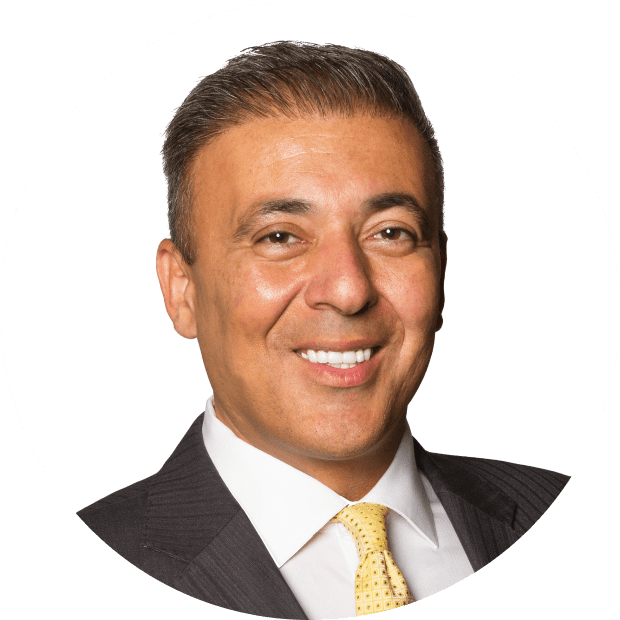
Dr. Kianor Shah is a practicing dentist, entrepreneur, and founder of the Global Summits Institute based in Palm Desert, California. He holds a DMD from Southern Illinois University and an MBA in international business from Brandman University, with fellowship credentials from multiple dental academies including Mastership status with the International Congress of Oral Implantologists. Having practiced in over 300 offices as a traveling healthcare provider, Dr. Shah now focuses on complex multi-specialty cases at his single practice while leading global healthcare initiatives across 160 countries.
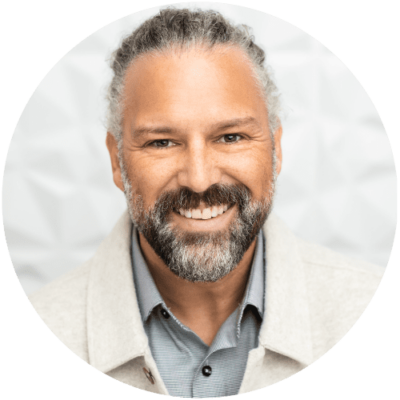
Adrian Lefler, CEO and Co-founder of My Social Practice
Adrian Lefler, CEO of My Social Practice, is a seasoned expert in the dental marketing industry with 14 years of experience. He is widely recognized for his engaging and informative presentations. Based in Suncrest, Utah, Adrian shares his life with his wife, four children, and a lively mix of pets. My Social Practice is a leading dental marketing company, and Adrian is passionate about helping dental professionals succeed in this dynamic field.
Frequently Asked Questions
Why do dental practices need AI governance standards?
Currently, there are no established regulations specifically addressing AI in dentistry. Multiple software companies have already faced lawsuits for HIPAA violations related to AI implementations. Without governance standards, practices cannot reliably evaluate which AI tools are compliant and which create legal risk. Standards will provide certification frameworks, data safety requirements, and accountability structures.
Can AI really eliminate insurance companies from healthcare?
While complete elimination is unlikely in the near term, AI has the potential to automate many functions currently performed by insurance intermediaries, including claims verification, x-ray analysis, and administrative processing. Dr. Shah argues this could redirect trillions of dollars currently absorbed by these middlemen back to patients and providers. The more immediate impact will be reducing administrative burden and streamlining reimbursement processes.
Should dentists be afraid of AI replacing them?
No. AI cannot hold a professional license, which means human oversight will always be required for diagnosis and treatment. The greater risk is avoiding AI entirely. Dentists who fail to understand and implement AI tools appropriately will find themselves at a competitive disadvantage compared to practices that leverage these technologies effectively and ethically.