What You’ll Learn:
- What the Google May 2026 core update is and when it rolled out
- Why this update is happening at the same time as Google’s biggest search redesign in 25 years
- How AI Mode is changing the way patients search for dentists
- What “ranking volatility” means for your practice and what NOT to do right now
- Practical steps dental practices can take to protect and improve their online visibility
Table of Contents
- What Is a Google Core Update, Exactly?
- What You Should NOT Do Right Now
- The Bigger Picture: Google Is Rebuilding Search Around AI
- What This Means for Your Dental Practice’s Online Visibility
- Isolating What Changed
- What Dental Practices Should Be Doing Right Now
- Google Is Quietly Rebuilding Search and Dental Practices Need to Pay Attention
- FAQ
A Big Week for Google (And a Potentially Bumpy One for Your Rankings)
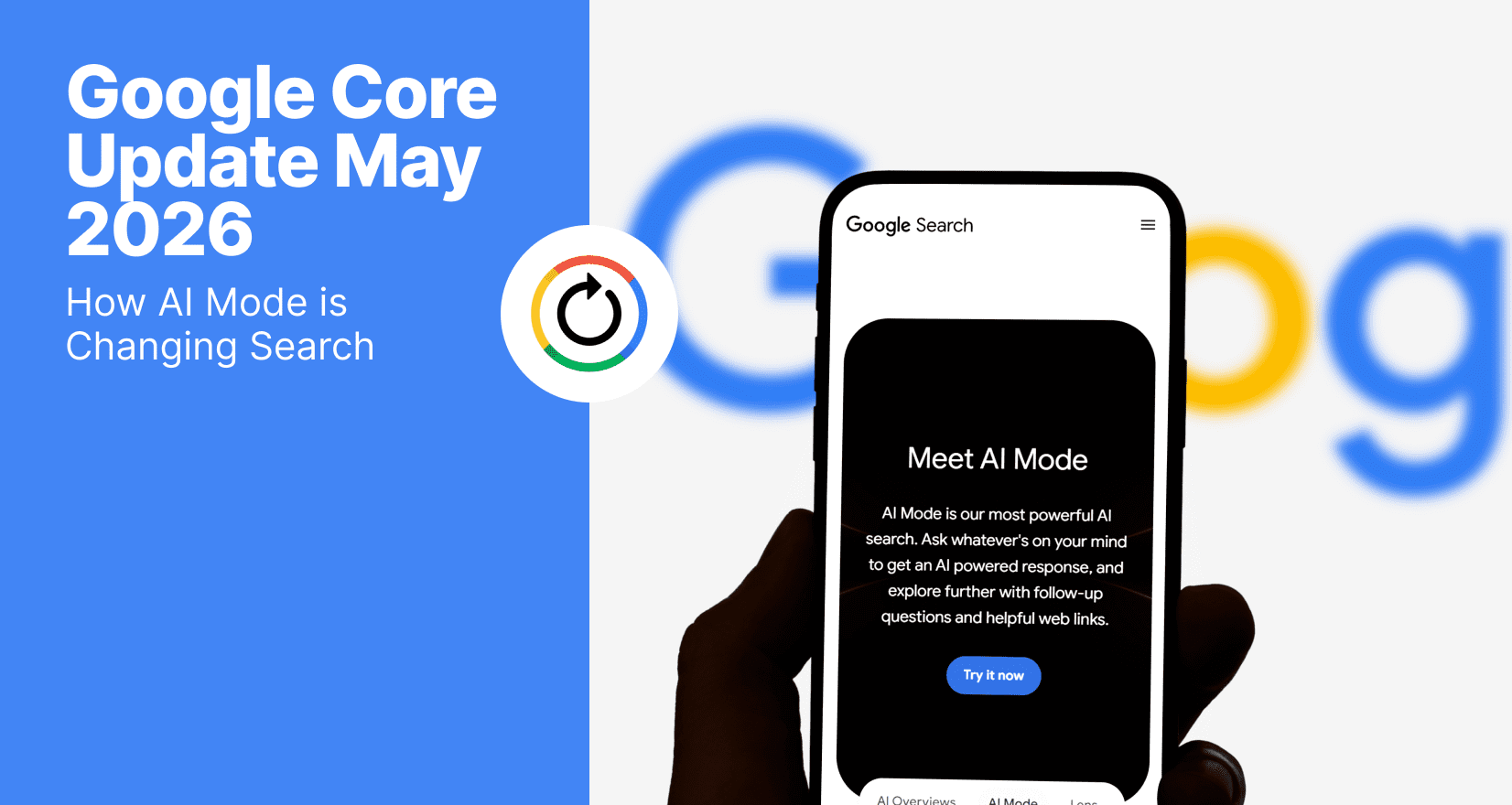
If you noticed something weird happening with your Google rankings in late May 2026, you are not imagining things. On May 21, Google officially began rolling out the May 2026 Core Update, the second broad core update of the year and the fourth confirmed ranking update of 2026 overall. And it landed during one of the most eventful weeks in Google’s recent history.
Here’s the thing about core updates: they aren’t surgical strikes aimed at spammy websites or shady SEO tricks. Rather, they are big, sweeping reassessments of how Google values content across the entire web. That means your dental practice website could see shifts in search visibility even if you’ve done nothing wrong. Rankings can go up, down, or sideways, and Google is pretty upfront about the fact that some of those shifts have nothing to do with mistakes you made.
But what makes this particular update especially interesting for dental practices is that it dropped in the middle of Google I/O, where Google announced what it called the biggest upgrade to the search box in over 25 years. So while rankings are fluctuating from the core update, the entire architecture of how patients search for a dentist is quietly changing underneath everyone’s feet. That’s a lot to unpack, but fortunately for you, we’re really good at the art of sifting through Google-speak.

What Is a Google Core Update, Exactly?
Think of Google’s ranking systems like a massive, constantly evolving scoring rubric. A core update is when Google rewrites large sections of that rubric all at once. Pages that used to score well might score differently. Pages that were undervalued might suddenly rise. Anarchy reigns, people.
The May 2026 Core Update began rolling out on May 21 and could take up to two weeks to fully complete. Google has not published a blog post explaining specific goals for this update, which is consistent with how they handled the March 2026 Core Update (which ran 12 days and finished April 8). The official announcement was brief: “Released the May 2026 core update. The rollout may take up to 2 weeks to complete.”
That’s about as informative as a fortune cookie, but it is what Google does. Alas.
Key facts about this update:
- It is the second core update of 2026 (following March’s update)
- It is the fourth confirmed ranking update this year overall
- The rollout window is up to two weeks
- No specific targets or goals were shared publicly
- Some sites will see ranking changes; others will not
- It made us sigh audibly but that’s okay because at least we’re employed
What You Should NOT Do Right Now
When dentists see ranking movement, the instinct is to panic and start making changes. Resist that urge. Google’s own guidance is to wait at least one full week after a core update finishes rolling out before reviewing your Search Console data and drawing conclusions. The update’s effects can shift throughout the rollout, and early data can be misleading.
Your baseline for comparison should be your performance from before May 21. Once the dust settles, then you can assess what happened and make thoughtful decisions. Don’t start panic-editing your entire website. Even at the best of times, dental SEO takes time.
The Bigger Picture: Google Is Rebuilding Search Around AI
The core update didn’t happen in a vacuum. The same week it launched, Google held its annual Google I/O conference and announced a slate of changes that amount to a fundamental reimagining of how search works.
Here is a quick summary of what Google announced:
| Change | What It Means |
| New AI-powered search box | The search bar now expands, accepts images and files, and offers AI-driven suggestions beyond basic autocomplete |
| Gemini 3.5 Flash in AI Mode | Google’s newest AI model now powers AI Mode results, leaning more heavily on AI-generated answers |
| AI Mode hits 1 billion monthly users | Patients are increasingly getting answers directly from AI summaries, not clicking through to websites |
| Search queries are getting longer | AI Mode users write queries 3x longer than traditional searches |
| Information agents coming this summer | Automated agents will browse the web continuously and deliver personalized updates to users |
One SEO expert summarized the shift well: search is moving toward a world of “visibility over clicks,” where being mentioned or cited in AI summaries matters as much as traditional ranking.
For dental practices, this is genuinely significant. When someone types “best family dentist near me who accepts Delta Dental and has Saturday hours,” that is not a keyword. That is a conversation. And AI Mode is built to handle conversations, not short keyword queries.
What This Means for Your Dental Practice’s Online Visibility
Let’s bring this back to earth with some practical implications.
Patients are searching differently. According to Google’s own data, AI Mode queries are now three times longer than traditional search queries, and follow-up questions have increased 40% month over month in the US. People are researching before they call. They are asking detailed questions. They are comparing practices. This is actually great news for dental practices with strong, detailed content on their websites because richer content is more likely to be cited in AI summaries.
Short-form, generic content is losing ground. A dental practice website that just says “We offer general and cosmetic dentistry in [City]” is not going to perform as well as one that genuinely answers patient questions. What does dental implant treatment involve? How long does Invisalign take? What should a new patient expect at their first appointment? That kind of content is what AI Mode feeds on.
Your Google Business Profile still matters enormously. Core updates affect organic website rankings, but local map rankings are a separate system. Most dental patients still find practices through Google Maps, and a well-optimized Google Business Profile with strong reviews and consistent information remains one of the highest-value assets a dental practice can have. If you’re investing in dental SEO, your Google Business Profile should be a central part of that work.
Reviews are not just reputation, they are ranking fuel. As AI Mode increasingly synthesizes information from multiple sources to answer patient questions, practices with strong review profiles across Google, Healthgrades, and other platforms are better positioned to show up in those summaries. This is where a robust reputation management strategy pays dividends that go well beyond social proof.
Isolating What Changed
Because the core update launched during the same week as Google I/O’s major announcements, any ranking shifts you see over the next few weeks could be coming from multiple sources. The core update itself, AI Mode changes powered by the new Gemini 3.5 Flash model, and normal seasonal fluctuations could all be contributing to what you see in Search Console.
This makes patience especially important. Don’t look at one week of data and assume you’ve figured out the cause of a traffic change. Give it time, track trends over multiple weeks, and look for patterns rather than single data points.
What Dental Practices Should Be Doing Right Now
Rather than scrambling to react to ranking changes mid-rollout, here is where to focus your energy:
- Keep your Google Business Profile updated. Hours, services, photos, and responses to reviews should all be current and accurate.
- Write content that answers real patient questions. Think about what patients actually ask your front desk and create web pages or blog posts that address those questions thoroughly.
- Do not make drastic website changes during a rollout. Wait until the update is complete and you have clear data before making significant edits.
- Build your review presence. A steady cadence of new Google reviews signals trust to both Google and prospective patients.
- Think about longer, more conversational search queries. As patients describe their needs in more detail, your content should reflect the kinds of specific concerns and questions they bring to your practice.

Google Is Quietly Rebuilding Search and Dental Practices Need to Pay Attention
The May 2026 Google Core Update is a reminder that search is never static. It’s always evolving, and right now it’s evolving faster than at almost any point in the last decade. Between the core update itself and Google’s sweeping AI-powered changes announced at I/O, dental practices that have been coasting on an old website and a thin content strategy are going to feel the pressure.
The good news? Practices that invest in genuinely helpful content, a strong local search presence, and a healthy review profile are exactly what Google’s AI-powered future is designed to reward. This is not a moment to panic. It is a moment to make sure you are building the kind of online presence that earns trust from both patients and algorithms.
If you are not sure where your practice stands, My Social Practice offers dental SEO services and reputation management tools built specifically for dental practices navigating this kind of change.
Frequently Asked Questions
Will the May 2026 Google Core Update hurt my dental practice's rankings?
It might, and it might not. Core updates are not targeted at specific industries or types of sites. They are broad reassessments of how Google values content across the web. Some dental practices will see improved visibility, others may see a temporary dip, and many will see little change at all. The most important thing is to avoid making reactive changes during the rollout. Wait until the update completes and you have at least a week of post-rollout data before drawing conclusions or making adjustments.
How is Google's new AI Mode changing the way patients search for dentists?
AI Mode is shifting patients toward longer, more conversational search queries. Instead of typing “dentist near me,” a patient might ask something like “what is the best dentist for dental implants in [city] that accepts my insurance.” Google’s own data shows AI Mode queries are three times longer than traditional searches. For dental practices, this means detailed, question-answering content on your website is increasingly valuable. Practices with thin or generic content may find themselves cited less frequently in AI-generated summaries that patients see before ever clicking on a website.
What should I do if I notice a drop in website traffic or rankings after the May 2026 update?
First, do not panic and do not make hasty changes. Google recommends waiting at least one full week after a core update finishes rolling out before reviewing Search Console data. Your baseline should be your pre-May 21 performance. If you do see a meaningful, sustained drop after the rollout is complete, focus on content quality: Are your service pages genuinely informative and helpful? Is your Google Business Profile complete and current? Are you actively building new patient reviews? These are the areas most likely to move the needle during and after a core update cycle.

Adrian Lefler is the CEO and Co-Founder of My Social Practice and a recognized dental marketing expert with nearly two decades of experience. He is a trusted voice in dental marketing, AI in dentistry, and emerging technology, and he hosts BYTE SIZED, a podcast focused on dental AI, innovation, and technology.