What You’ll Learn
- Why dental technology rarely saves time but can shift how that time is used
- How teledentistry works as a retention strategy for aging patients losing mobility
- Why online scheduling isn’t optional if you want new patients to actually book
- How to structure a teledentistry afternoon so the doctor is only needed for a few minutes
- Why mobile dentistry can triple patient volume without adding square footage
- What front desk team members need to hear when technology takes over part of their job
The Time-Saving Lie
Every dental technology gets sold the same way. It’ll save you time. It’ll make things easier. It’ll pay for itself.
Melissa Turner has heard this pitch hundreds of times across 20 years of clinical experience and work in over 100 dental practices. She’s the co-founder of the National Mobile and Teledentistry Conference and the American Mobile and Teledentistry Alliance. Her job is helping dental teams actually implement these tools after the sales rep leaves.
Her honest assessment is that technology doesn’t save time. Not the way vendors promise.
“What we really are talking about is what they’re doing in that time,” Melissa told Adrian Lefler on a recent episode of the Byte Sized Podcast. “It’s not saving time. It’s a different kind of energy that’s being spent.”
Think about AI-assisted X-ray analysis. If a hygienist was already diagnosing decay accurately, the tool doesn’t speed anything up. It might catch something she would have missed. It might provide documentation for insurance appeals. It might reduce the mental load of second-guessing herself. But she’s still spending the same amount of time with the patient.
The value isn’t fewer minutes. It’s what happens in those minutes.
Teledentistry Is a Retention Tool
When Melissa first got into teledentistry, the question everyone asked was, “how do I use this to get new patients?”
That’s the wrong question.
“For new patients, they can call anybody that does teledentistry,” Melissa explained. “That is the hardest market to capture. The easiest market to capture is your existing patient base.”
The real opportunity is retention, especially with aging patients. Baby boomers built your practice. They’ve been coming for decades, but they’re getting older. Mobility issues are setting in, transportation is becoming harder, and at some point, coming into the office becomes too difficult.
“We’re aging,” Melissa said. “Mobility becomes a bigger deal. Then you add in life circumstances that happen with older folks. Their spouse passes away, now they don’t have a ride to the practice. We can reach them where they are.”
These patients don’t want to leave your practice. They just can’t get there anymore. Teledentistry lets you maintain the relationship even when they can’t physically show up.
The math is simple. Losing a patient you’ve had for 30 years costs more than acquiring a new one. Teledentistry keeps them connected until they can come back in, or connects them to mobile services that come to them.
| Patient Scenario | Traditional Outcome | With Teledentistry |
| Patient recovering from surgery | Misses appointments, falls out of recall | Virtual check-in maintains relationship |
| Elderly patient loses transportation | Stops coming, eventually finds closer practice | Stays connected, schedules when able |
| Caregiver for family member | Can’t leave house for appointments | Virtual consult fits their constraints |
| Patient moves 45 minutes away | Too far for routine visits | Hybrid model keeps them in your practice |
Online Scheduling Isn’t Optional
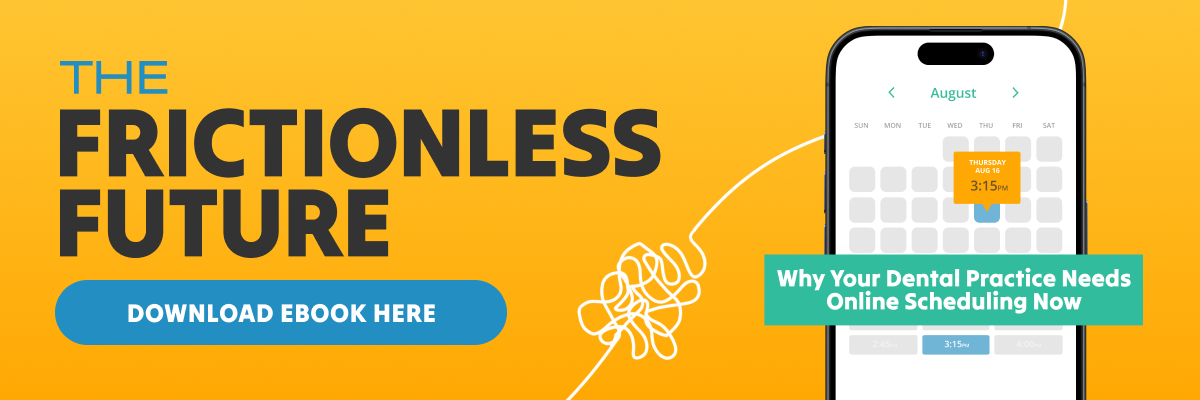
If you don’t have online scheduling, you’re losing new patients.
“There’s no question about it,” Melissa said. “The data tells us that if you’re not offering online scheduling, they’re just going to call the next practice that does.”
The argument against online scheduling usually sounds like this: “We need to talk to patients to schedule properly. The computer doesn’t know our scheduling preferences. It’ll mess up the flow.”
But that’s not how patients think. They found your website at 10pm while lying in bed. They want to book an appointment right now. If they have to wait until tomorrow to call during business hours, assuming they remember, there’s a good chance they won’t.
“They’re not just going to wait for you,” Melissa said. “You might be the best dentist in town, but that’s not how new patients make decisions. They went to a search engine. They found five practices. Yours doesn’t have online scheduling. Next.”
This doesn’t mean your front desk disappears. Someone still needs to confirm appointments, handle complex scheduling, and talk to patients who want to talk. But the baseline expectation has shifted. Online scheduling is table stakes now.
How Teledentistry Actually Works in Practice
The logistics of teledentistry confuse a lot of practices. How does it integrate with the schedule? When is the doctor involved? What can you actually do virtually?
Melissa recommends starting with a dedicated teledentistry afternoon. Pick a day. Block the time. Structure it intentionally.
The workflow looks like this: a patient gets set up virtually with a hygienist or treatment coordinator. They can do oral hygiene instruction, show the patient where plaque is accumulating, demonstrate brushing techniques, discuss home care products. All of that happens without the doctor.
When it’s time for the clinical portion, the doctor joins for two or three minutes. They assess what they can see, answer questions, and determine next steps. Then they’re out, and the next virtual appointment is already queued.
“That doctor is only in the virtual appointment for the two, three minutes that they would spend in a real appointment when they come in and check the patient,” Melissa said.
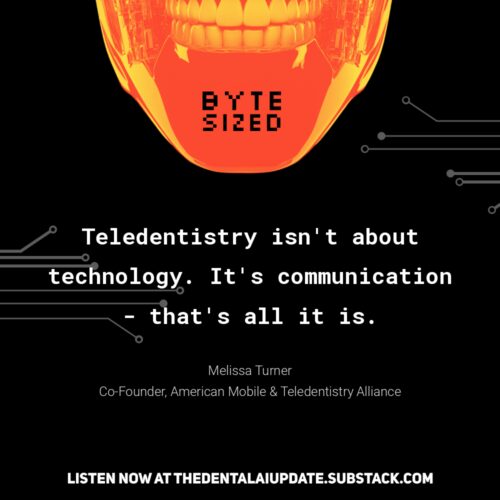
The key insight is that teledentistry isn’t about replacing in-person visits. It’s about handling the parts of care that don’t require hands in the mouth. A lot of what happens in a dental appointment is conversation, education, and relationship-building. That can happen anywhere.
Mobile Dentistry: Triple the Volume Without Adding Square Footage
Most practices think growth means more operatories. Build out, expand, lease more space. But there’s a ceiling to how many patients you can see in a physical location.
Mobile dentistry breaks that ceiling.
“Rather than just putting in another couple of chairs, what if we were to invest in a mobile unit?” Melissa asked. “You take your dentistry to them. You go to the nursing home, to the school, to the employer. You’re getting patients in those places.”
One mobile unit can see the same number of patients as building out additional operatories, but without the fixed costs of rent, utilities, and permanent staffing. You’re tripling patient access without tripling overhead.
The nursing home opportunity is especially compelling. These facilities are desperate for dental care. Residents can’t easily leave for appointments. Families are frustrated that their parents’ oral health is declining. Mobile dentistry solves a real problem that nobody else is addressing.
“When we say meeting the patient where they are, it’s the patient who’s sitting at the nursing home who hasn’t seen a dentist in five years,” Melissa said. “Their caregiver, their family, they’re frustrated. They’re Googling, trying to find somebody who will come to them.”
The Mindset Problem Nobody Talks About
Melissa has implemented technology in over 100 practices. The patterns are consistent, and the real barrier is almost never the software.
“Mindset will kill any initiative,” she said. “The dentist sees something, gets excited, buys it, comes back, puts it on the team. There’s no buy-in.”
The team didn’t ask for this. They weren’t involved in the decision. Now they’re being told to change how they work because someone went to a conference and got excited.
Even when the technology genuinely makes things better, the lack of buy-in creates resistance. People don’t resist change because they’re lazy. They resist because they weren’t part of the process.
The fix isn’t complicated, but it requires intention. Involve the team before you buy. Explain the why. Give people time to process. Let them raise concerns before implementation starts.
“If we present it like, hey, we’re going to add this thing, we’re going to make it a positive experience, you’re still going to be able to talk to patients, it shifts the conversation,” Melissa said.
What Front Desk Teams Need to Hear
When technology automates part of someone’s job, they feel threatened. Even if you’re not planning to fire anyone, they don’t know that.
Melissa’s advice is to get ahead of the fear with direct communication.
“I’ve met dental front office managers who are just brilliant at human-to-human connection and those people never need to be replaced,” she said. “Their role might change, but they’re going to learn how to work with AI. The ones that refuse, yeah, maybe those people aren’t going to be around.”
The message to the team isn’t “you’re being replaced.” It’s “your role is evolving.” The people who lean in, who learn the new systems, who figure out how to combine technology with their existing skills, they become more valuable, not less.
But that message has to be explicit. People won’t assume the best when their job feels uncertain. Tell them directly: we’re adding this tool to help you, not to replace you. Then show them what that actually looks like.
Start Small and Prove the Model
The practices that succeed with teledentistry don’t try to revolutionize everything at once. They pick one use case, prove it works, and expand from there.
Post-operative check-ins are a natural starting point. A patient had a procedure. You want to see how they’re healing. Instead of bringing them back in, you do a quick video call. It takes five minutes. The patient appreciates not having to drive across town. The doctor confirms everything looks good.
“This is incredibly low risk and low barrier to entry,” Melissa said. “You’re not diagnosing. You’re not doing the treatment. You’re just checking in.”
From there, you can expand. Orthodontic monitoring between adjustments. Hygiene follow-ups for patients with periodontal issues. Consultations for patients considering cosmetic work. Each use case builds on the last.
The goal isn’t to virtualize everything. It’s to figure out which interactions don’t require a physical presence and shift those online. The in-person visits become more focused on what actually requires hands-on care.
In This Episode:

Melissa Turner, Co-founder of the National Mobile and Teledentistry Conference and the American Mobile and Teledentistry Alliance
Melissa Turner is a hygienist, clinician consultant, and co-founder of the National Mobile and Teledentistry Conference and the American Mobile and Teledentistry Alliance, a 501(c)(4) membership organization. With two decades of experience working across more than 100 dental practices nationwide, Melissa helps dental teams and practice owners understand what technology adoption actually costs before it pays off, and how to implement change in a way that sticks. She is one of the most direct voices in the dental industry on the gap between buying a tool and building a team that can actually use it.
Adrian Lefler, CEO and Co-founder of My Social Practice
Adrian Lefler, CEO of My Social Practice, is a seasoned expert in the dental marketing industry with 14 years of experience. He is widely recognized for his engaging and informative presentations. Based in Suncrest, Utah, Adrian shares his life with his wife, four children, and a lively mix of pets. My Social Practice is a leading dental marketing company, and Adrian is passionate about helping dental professionals succeed in this dynamic field.
Frequently Asked Questions
Does teledentistry actually save time for dental practices?
Not in the way vendors often promise. Teledentistry shifts how time is used rather than reducing it. A hygienist still spends time with the patient, but the nature of that interaction changes. The value is in reaching patients you couldn’t otherwise see and reducing the energy cost of certain interactions, not in doing the same thing faster.
What's the best use of teledentistry for an established dental practice?
Patient retention, especially with aging patients. Baby boomers who built your practice are hitting mobility limitations. Teledentistry lets you maintain relationships with patients who can’t easily come to the office, keeping them connected until they can return or until mobile services can reach them.
Is online scheduling really necessary for a dental practice?
Yes. Data consistently shows that new patients who can’t book online will simply call the next practice that offers it. They’re searching at night, on weekends, when your phones are off. If they have to wait to call during business hours, many won’t follow through.
How do I get my team to adopt new dental technology?
Involve them before you buy. Explain why the change matters. Address the fear that technology means job loss by explicitly communicating how their role evolves rather than disappears. The mindset barrier is almost always bigger than the technical barrier.