What You’ll Learn
- Why most dental websites look identical and what it actually takes to differentiate
- The first question to answer before any branding work begins
- What to do if you don’t want to be the face of your practice
- Why 95% of patient decisions happen emotionally, not logically
- The realistic timeline for a brand strategy audit and implementation
The Sameness Problem in Branding for Dentists
Look at enough dental websites and a pattern emerges. Same stock photos. Same messaging. Same promises about gentle care and state-of-the-art technology. Same everything.
Christene Marie sees it clearly because she works mostly outside dentistry. As founder and CEO of The Knowing Agency, she’s built brands for Amazon, Toyota, and the NAACP. When she looks at the dental industry, she sees what patients see: practices that are virtually interchangeable.
“I get to come in from truly a customer perspective,” Christene told Adrian Lefler on a recent episode of the Byte Sized Podcast. “So often we’re thinking of it from a technical perspective of how do we move this person through every step of the process. What tools do we need? What software? The empathy side is really what allows for people to feel seen.”
Every practice can buy the same technology. Every practice can publish the same polished content. The practices that actually stand out are the ones with a clear story about who they are.

Start With Where You’re Going
Before any differentiation work happens, Christene asks one question: where do you want to take this thing?
“Do you want this to be something you pass down to your children? Do you want this to be your legacy? Do you want to sell? Do you want to scale? Do you want to open in multiple markets?”
The answer changes everything that happens downstream.
If you want to sell eventually, plastering your name and family photos all over the brand creates problems. The next buyer has to rebrand entirely or inherit someone else’s identity.
If you want to scale into multiple markets, tying the brand to a specific location limits expansion.
If you want to run one practice for 30 years and hand it to your kids, building your dental marketing brand around you and your family makes perfect sense.
“That’s going to inform the manner in which we differentiate,” Christene said. “It’s kind of like a fork in the road. There’s multiple paths, but I start with where do you want to end up and then reverse engineer from there.”
| Your Vision | Brand Implications |
| Sell in 5-10 years | Minimize personal branding, build transferable identity |
| Scale to multiple locations | Avoid location-specific naming, create replicable experience |
| Run one practice for life | Personal branding works well, family story is an asset |
| Pass to children | Family identity is central, legacy messaging resonates |
What If You Don’t Want to Be the Face?
This is common in dentistry. The doctor doesn’t want to be on camera. They don’t want their personal life on display. They just want to do great clinical work.
“From the customer’s perspective, they need something to emotionally connect to,” Christene said. “It doesn’t have to be a person.”
Look at Geico. They’ve got a gecko. Liberty Mutual has their own characters. Insurance companies have actually done branding well by creating personifications of the brand that aren’t the CEO.
“Let’s say he cares so much about the transformation,” Christene said. “Well, then how can we put our patients front and center where when you go to the website you just see transformation after transformation, happy customer after happy customer?”
The emotional connection point can be:
The team. Everything becomes about your people, their stories, their expertise.
The patients. Transformation stories, before and afters, testimonials that carry the narrative.
A mascot. Therapy dogs are popular in dentistry, especially pediatrics. One practice has a macaw that’s become their entire social media presence.
The experience itself. The promise you make about how it feels to be a patient there.
“It doesn’t have to be you,” Christene said. “I love it when it can be. But if it’s not you, that’s totally fine. It just needs to be something.”
Technology Is Not a Differentiator
Sometimes, practices think adopting new technology makes them special.
It doesn’t. As soon as a competitor buys the same tools, the advantage disappears and the experience becomes commoditized.
“Technology is table stakes,” Christene said. “Practices that build the brand on identity, whether that’s the doctor, the team, a mascot, or the experience itself, stay memorable and raise customer lifetime value.”
AI diagnostics, digital impressions, same-day crowns. These matter for clinical outcomes, but they don’t create lasting differentiation because anyone can buy them.
What can’t be copied is who you are. Your story. Your values. The specific experience patients have in your practice. That’s where differentiation lives.
95% of Decisions Are Emotional
Harvard research puts 95% of purchase decisions in the subconscious, where emotion lives.
“This is why empathy is such a critical piece,” Christene said. “The left hemisphere of the brain is the one making the decision by pushing the button to call. But it’s the right hemisphere doing the subconscious processing of why.”
Patients don’t call because of your feature list. They call because of an underlying motivation.
A parent calls because they want to protect their family. An executive calls because they believe their time deserves respect. Someone with dental anxiety calls because they want to feel safe.
“We as business owners need to understand that the language we put out there is so critical to speak to the part of the consumer who’s coming to look at our website,” Christene said.
This is why websites that list services and technology without any human connection fall flat. They’re speaking to the logical brain when the decision is happening emotionally.
The question isn’t “what do we offer?” It’s “what does the patient believe they deserve?”
Creating an Experience That’s Actually Different
If the doctor doesn’t have energy for constant emotional engagement, that’s fine. Build it into the experience design instead.
“Empathy does not look and sound and feel the same,” Christene said. “There’s no one-size-fits-all.”
Maybe you set up the practice like a spa. Nobody talks. Peaceful music. Warm lemon-scented towels. Quiet professionalism. That’s an experience that can differentiate you.
Maybe you build it for executives. In and out. No small talk. Efficient. Respectful of their time. You could even promise, “Hey, if we go over 20 minutes, we pay you for every extra minute.”
“What’s your promise?” Christene asked. “That could be so differentiated. I bet nobody is doing that.”
The point is that your constraints can become your brand. If you don’t have the energy for emotional labor all day, build a practice where that’s not required. Just make sure the experience you promise actually reflects who you are as a dental brand.
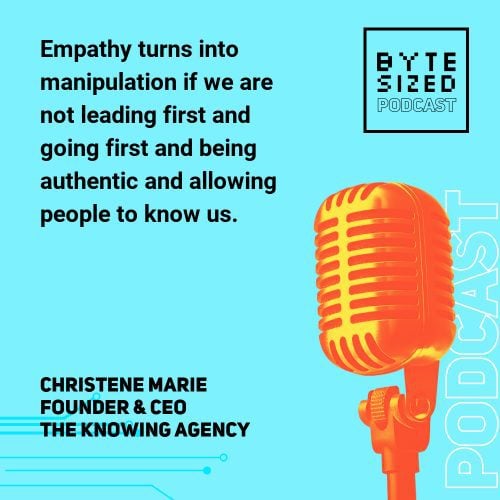
Empathy Without Authenticity Is Manipulation
There’s a warning here. If you market empathy but don’t deliver it, you’ve got a problem.
Christene shared a story about her father. He had a medical emergency, went to a doctor, had a great experience. Then he had a follow-up emergency where he was treated by the same doctor. But this time the bedside manner was off.
“He will never go back,” Christene said. “We’re like, ‘But dad, this is so important. This is such an emergency.’ And he’s like, empathy mattered more to him than even his own emergency.”
The promise has to match the reality. If your dental marketing speaks to pain points and emotional needs, the experience inside the practice has to deliver.
“If you’re getting to that pain point and then they step through the door and you don’t deliver with empathy, it falls apart,” Christene said. “It needs to be real.”
The Audit Process
For practices ready to do this work, Christene starts with an assessment of reality.
Team survey. What’s working? What isn’t? People are more honest with a third party than with the owner directly.
Patient survey. What do they love? Where do you shine? What’s missing?
Data review. What are the actual numbers? Where have you come from? What’s the trajectory?
Competitor landscape. When’s the last time you really dug into what competitors are doing? What’s working for them? What gaps exist?
Tech stack audit. With AI changing everything from marketing to diagnostics, your technology setup probably looks different than it did two years ago.
Right people, right seats. Do you have clarity about roles? Is anyone in the wrong position?
“Give yourself 60 days to do the analysis and auditing process,” Christene said. “A clear path forward can be mapped in about 30 days after that.”
Implementation and rollout usually take about six months. And change management is the part practices underestimate.
“You think it’s going to be easy to implement, but change management is a big problem,” Christene said. “Especially if you’re asking your teams to do something different.”

Why Smaller Practices Have an Advantage
If you’re small, this is the time to do the work.
“Before you get big, build the foundation,” Christene said. “Take the time. Make the investment. That’s the best thing you can do for your organization.”
Large practices have more inertia, more people to align, and more systems to change. Smaller practices can move faster, experiment more freely, and build identity into the foundation before scaling.
The boundary lines you create can either crush creativity or become the pasture where your team flourishes. If those boundaries are built with intention, they become an asset.
“The more you know who you are, the more your employees know where they fit,” Christene said. “Talk about retention.”
In This Episode:

Christene Marie, Founder and CEO of The Knowing Agency
Christene Marie is the founder and CEO of The Knowing Agency, a brand clarity and marketing strategy firm built around empathy-driven branding. She has led brand and marketing work for organizations including Amazon, Toyota, the NAACP, and the W.K. Kellogg Foundation, and she hosts Knowing retreats for executives who want to connect self-awareness to how they lead and how they market. Her framework for turning identity into strategy has produced measurable results for entrepreneurs competing in crowded markets, which is why Adrian brought her in to apply it to dentistry.

Adrian Lefler, CEO and Co-founder of My Social Practice
Adrian Lefler, CEO of My Social Practice, is a seasoned expert in the dental marketing industry with 14 years of experience. He is widely recognized for his engaging and informative presentations. Based in Suncrest, Utah, Adrian shares his life with his wife, four children, and a lively mix of pets. My Social Practice is a leading dental marketing company, and Adrian is passionate about helping dental professionals succeed in this dynamic field.
Frequently Asked Questions
How can a dental practice differentiate when every practice offers similar services?
Start with the owner’s long-term vision and build differentiation backward from it. Whether the plan is to sell, scale, or pass the practice down changes what the brand should look like. Practices that copy competitors end up interchangeable. The ones that stand out anchor messaging in something specific to them.
What should a dentist do if they don't want to be the face of their practice?
Give patients something else to connect with emotionally. A mascot, a therapy dog, the team, or patient transformations can all carry the brand. The connection point doesn’t have to be the doctor, but there has to be one. Think of how Geico uses a gecko.
Is technology a strong enough differentiator for a dental practice?
No. As soon as a competitor adopts the same tools, the advantage disappears. Technology is table stakes. Practices that build the dental brand on identity, whether that’s the doctor, team, mascot, or experience, stay memorable and raise customer lifetime value.
How much of a patient's decision to choose a dentist happens emotionally?
Harvard research puts 95% of purchase decisions in the subconscious, where emotion lives. Patients call because of underlying motivation, like protecting their family or believing they deserve to look good, not because of a feature list. Website and phone language should speak to that motivation first.
How long does a brand strategy project take for a dental practice?
Give the audit about 60 days, covering team surveys, patient feedback, data review, and competitor analysis. A clear path forward can be mapped in about 30 days after that. Implementation and rollout usually run around six months, and change management is the part most practices underestimate.