
By Adrian Lefler, Updated August 10, 2026
Quick Answer: What keywords should a dentist target for SEO? The most valuable dental keywords pair a service with local and intent modifiers, like “dentist near me,” “[city] family dentist,” “emergency dentist open now,” “dental implants cost [city],” and “Invisalign dentist [city].” Target the specific phrases real patients type, not clinical jargon. Below, we cover how to find these keywords, how to group them by search intent, and where to place them across your dental website and Google Business Profile.
If you’re a dentist stepping into digital marketing, you’ve probably been told to “use the right keywords.” But which ones? The truth is that the best dental keywords aren’t the medical terms you learned in school. They’re the everyday words patients type into Google when a tooth hurts or they’re new in town and need a dentist. Get those phrases right and you attract more qualified traffic (and more booked appointments). Get them wrong and you’re invisible to the exact people looking for you.
This guide breaks down what dental keywords are, how to sort them by what the searcher actually wants, how to find the phrases your future patients use, and where to place them on your website and Google Business Profile so both Google and patients can find you.
What Are Dental Keywords (and How Are They Different from Clinical Jargon)?
Dental keywords are the words and phrases people type into a search engine when they’re looking for dental information, a service, or a provider. The gap that trips up most practices is the difference between how you describe your services and how patients search for them.
Consider a page optimized around “periodontal disease treatment.” That’s medically accurate, but the patient searching “why do my gums bleed when I brush?” won’t find you, because that’s not the language they use. Clinical terms like “periodontal therapy” or “caries” describe the dentistry; patient-friendly phrases like “bleeding gums treatment” or “cavity filling cost” describe the search.
The takeaway is simple: if you want to rank higher and attract the right patients, your keywords have to reflect how they talk, not just how you would chart it. Real patient language is the foundation every other tactic in this guide builds on.

Why Does Search Intent Matter for Dental Keywords?
Two people can search for something dental and want completely different things. One wants to understand a symptom; another is ready to book today. That difference is called search intent, and matching your keywords to it is what turns a visitor into a patient. Most dental searches fall into four intent types.
Informational Intent
These searchers want answers, not a dentist yet. They type things like “why do my teeth hurt when I drink cold water” or “how to get rid of bad breath.” Best content: blog posts, FAQ pages, and educational service-page sections that answer the question in plain, friendly language.
Commercial Intent
Now they’re weighing options: “best dentist for crowns near me” or “dental implants vs. bridges.” Best content: comparison guides, service pages that spell out benefits, and patient testimonials that build trust.
Transactional Intent
These are your golden patients, ready to act. They search “schedule teeth cleaning Salt Lake City” or “walk-in dentist open today.” Best content: service pages with online scheduling, strong calls to action, and local optimization. Because these bottom-of-funnel terms convert best, they deserve their own strategy. Our deep dive on bottom-of-funnel keywords for dentists shows how to find and win them.
Navigational Intent
Sometimes people are just looking for you: “Dr. Kim Family Dentistry website” or your practice name plus “phone number.” Best content: branded pages, clean navigation, and contact info front and center.
Why does this matter? If you target a high-intent phrase like “dental emergency appointment” but the page only explains the signs of a dental emergency and offers no way to book, Google (and the patient) won’t see you as the right fit. The right keyword needs the right content behind it.

What Types of Keywords Do Patients Use to Find a Dentist?
Another useful way to organize dental keywords is by where the patient sits in their decision journey. These “patient intent keywords” (sometimes called buyer-intent keywords) map to three stages, and each one is a chance to educate, guide, or convert.
The Awareness Stage (Problem Aware)
Patients here know something’s wrong and are gathering information, often with a little worry mixed in. Their searches look like:
- “How to relieve a toothache”
- “Gum bleeding causes”
- “Sensitive teeth remedies”
Answer these clearly and you start building trust before they’re ever ready to book.
The Consideration Stage (Solution Aware)
Now they’re comparing solutions and want recommendations:
- “Teeth whitening options”
- “Benefits of dental implants”
- “Root canal alternatives”
Content that lays out choices and trade-offs positions you as the helpful expert.
The Decision Stage (Ready to Book)
These patients are ready now, and they search with location and specialty in mind:
- “Best dentist in [location]”
- “Sedation dentistry near me”
- “Emergency dental services”
Emphasize your specialty and your city here, since this is the traffic most likely to convert into a booked appointment. Even visitors still in the awareness or consideration stage are worth capturing, because the trust you build early is what brings them back when they’re ready to choose.
How Do You Find the Right Dental Keywords for Your Practice?
You don’t need a crystal ball to know what your future patients are searching. You need a little data and a few reliable sources. Here’s how to uncover the phrases your ideal patients actually use.
Start With Google Search Console
This free tool from Google shows the exact queries already bringing people to your site, things like “pediatric dentist Salt Lake City,” “how much does a dental crown cost,” or “dentist that takes Aetna near me.” These aren’t guesses; they’re real searches you can build more content around.
Mine Google Autocomplete and “People Also Ask”
Start typing a phrase like “tooth pain when…” into Google and watch the suggestions: “tooth pain when biting down,” “tooth pain when drinking cold water.” Those autocomplete and People Also Ask results reflect real concerns and make perfect fuel for blog titles, FAQs, and service-page headers.
List Your Services and Specialties
Your own service menu is the first keyword source. Write down everything from “root canal specialist” to “kid-friendly dentist.” These are the primary identifiers patients pair with a location.
Add Local and Long-Tail Phrases
Location modifiers do a lot of heavy lifting. “Best dentist in [your city]” is a start, but include nearby towns, neighborhoods, and regional terms too. Then layer in long-tail keywords, longer and more specific phrases with clearer intent and lower competition, like “emergency dentist open on Sunday in Mesa AZ” or “experienced orthodontist for jaw alignment near [your location].” A long-tail term might only draw 20 searches a month, but those 20 visitors are actively looking for your exact service in your exact area. Relevance beats volume, and long-tail phrases also match how people speak to voice assistants.
Listen to Your Patients and Front Desk
Every day patients ask, “Will whitening damage my enamel?” or “What’s the difference between a crown and a cap?” Your front-desk team hears the same questions on repeat. Write them down, because that real-world language is exactly what people type into Google.
Check Social Media and Competitors
Comments on your Facebook and Instagram posts reveal the vocabulary patients actually use, like “shrinking gums” instead of “gum recession.” A quick look at which terms competitors rank for can surface gaps you can fill, and noticing where they earn their external links helps too, since authority signals support your keyword rankings.
If handling all of this while running a practice sounds like a lot, it is, which is why many offices lean on premium research tools or a dental marketing company to do the digging. However you approach it, this research is the backbone of solid dentist keyword research, and it feeds directly into your broader seo keywords for dentists strategy.

How Do Keywords Work With Your Google Business Profile and Local Search?
For a dental practice, keywords do more than help your website. They power your presence on Google Maps and in the local “map pack,” where a huge share of patients start their search and many find answers without ever clicking through, a trend worth understanding as zero-click searches keep growing. Your Google Business Profile (GBP) is the hub of that local visibility.
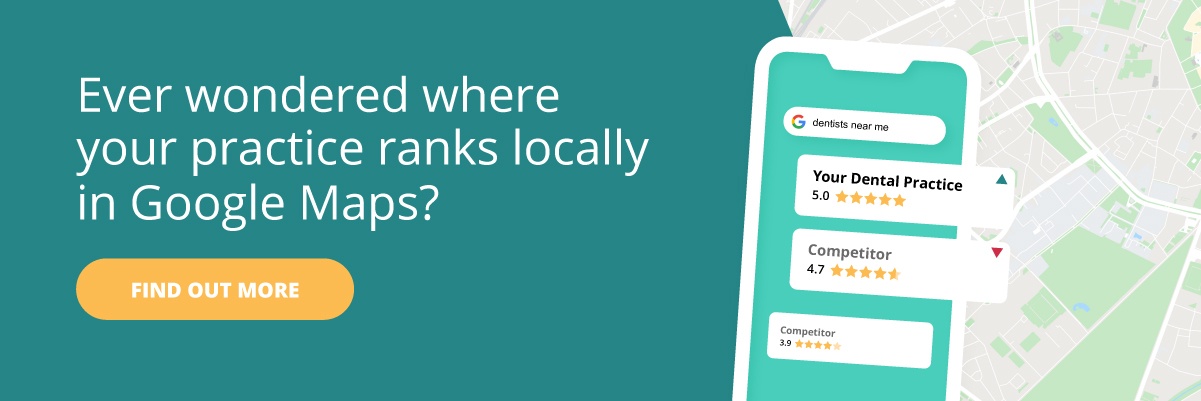
Updating your Google Business Profile with keyword-rich, natural language in your business description, services, and posts can lift both your standard search rankings and your Google Maps rankings. Because so many high-intent searches (“dentist near me,” “emergency dentist open now”) are inherently local, ranking well on Maps is often the difference between a full schedule and empty chairs. If you want to see where you currently stand, it’s worth checking how your practice ranks on Google Maps.
A few practical moves make GBP work harder for you:
- Match your profile’s language to how patients search, with services like “same-day crowns” or “kids’ dentist,” not just “restorative dentistry.”
- Keep your name, address, and phone number consistent everywhere online so Google trusts your location data.
- Use location and neighborhood terms in your description and posts to reinforce where you serve.
- Post regularly, since fresh, keyword-aware updates signal an active, relevant business.
Local search is also where reviews, photos, and consistent listings compound with your keywords. The stronger and more relevant your profile, the more often you’ll surface for nearby, ready-to-book patients.
Where Should You Place Keywords on Your Dental Website?
Finding great keywords is only half the job. They need to be woven naturally into your site so Google understands your content and patients find what they need, and they work best on a solid technical SEO foundation. Here’s where they should live.
Page titles. This is the first thing search engines and users see. Make it specific: “Family Dentist in Plano: Cleanings, Fillings & More” beats a generic “Our Services.”
Meta descriptions. These don’t directly affect rankings, but they drive clicks. Use your main term, keep it under about 155 characters, and make it compelling: “Looking for a gentle dentist in Tempe? Book your visit today with Dr. Jacobs Family Dentistry.”
Headers (H1s, H2s, H3s). Headings act as signposts for readers and Google alike. Use them to organize the page and reinforce your terms, for example, “What to Expect During a Dental Implant Consultation in Boise.”
On-page copy. This is the heart of your site and the core of your dental website content. Write the way patients talk, and use natural variations like “tooth pain relief” or “relieving dental discomfort” instead of repeating one phrase.
FAQs and blog posts. Answering the questions patients actually search is a natural way to capture long-tail keywords and prove you’re a trustworthy expert. Strong SEO copywriting ties it all together.
Avoid keyword stuffing. Cramming “dentist Salt Lake City” into every sentence doesn’t help. It actually hurts. Google is smarter than that, and so are your patients. Pro tip: read your content out loud. If it sounds robotic, rewrite it so your site sounds like a helpful, friendly dentist, not a keyword machine.
And remember, dental SEO takes time and keyword research isn’t one-and-done. Search behavior and AI-powered results shift constantly, so revisit your keywords at least quarterly to stay visible.
Let the Dental Keyword Experts Handle the Heavy Lifting
Keyword research, content, and local optimization are a lot to juggle while running a practice. Our dental SEO services find the exact terms your future patients are typing, build content that sounds like your practice, optimize your Google Business Profile for local search, and track what’s working so your rankings keep climbing.
Here’s where your search terms should live:
Frequently Asked Questions
What are the best keywords for a dental website?
The best dental keywords combine a service with local and intent modifiers, for example, “family dentist [city],” “emergency dentist near me,” “dental implants cost [city],” or “Invisalign dentist [city].” Favor the plain-language phrases patients actually type over clinical terms like “periodontal therapy.” Mix high-intent local terms with question-based, long-tail phrases to cover every stage of the patient journey.
How do I do dental keyword research?
Start with Google Search Console to see the queries already reaching your site, then expand with Google autocomplete and “People Also Ask” suggestions. List your services and specialties, add location terms, note the questions your front desk hears most, and scan competitors’ pages. Group the results by search intent so each keyword gets matched to the right content.
How many keywords should a dental page target?
Focus each page on one primary keyword and a small cluster of two to four closely related variations, rather than stuffing many unrelated terms onto a single page. For instance, a dental implants page might target “dental implants [city],” “dental implant cost,” and “tooth replacement options.” Give distinct topics their own pages so each can rank cleanly.
What's the difference between keywords and search terms?
Keywords are the strategic phrases marketers optimize a page around, like “family dentistry” or “emergency dental services.” High-end search terms, are the exact words a patient types, like “dentist open on Saturday near me.” They often differ, and the closer your keywords match real search terms, the easier patients find you.
Do keywords help my Google Business Profile and local rankings?
Yes. Adding natural, keyword-rich language to your Google Business Profile description, services, and posts can improve both your search and Google Maps rankings. Because many dental searches are local and high-intent, an optimized profile, plus consistent name, address, and phone details, helps you appear for nearby patients ready to book.
How often should I update my dental keywords?
Review your keywords and rankings at least quarterly. Search trends, patient language, and Google’s algorithms, especially with AI-driven search, change constantly, so periodic updates keep you visible and relevant. Refresh underperforming pages, add content for new questions patients are asking, and prune terms that no longer fit your services.

Adrian Lefler is the CEO and Co-Founder of My Social Practice and a recognized dental marketing expert with nearly two decades of experience. He is a trusted voice in dental marketing, AI in dentistry, and emerging technology, and he hosts BYTE SIZED, a podcast focused on dental AI, innovation, and technology.