What You’ll Learn:
- The biggest reasons dental websites fail to convert visitors into patients
- The key elements every high-performing dental website includes
- How small design and messaging changes can dramatically improve conversion
- Why trust signals like reviews and photos matter more than ever
- Simple improvements that can turn website traffic into booked appointments
Table of Contents
- The Core Problem: Your Website Is Built to Exist, Not to Convert
- Problem 1: Your Website Loads Too Slowly
- Problem 2: Your Navigation Is Confusing
- Problem 3: There Is No Real Call to Action
- Problem 4: You Are Missing Trust Signals
- Problem 5: Online Scheduling. (Or a Broken Version of It)
- The High-Converting Dental Website: What It Looks Like
- Is Your Dental Website Losing Patients?
- FAQ
Your Dental Website Gets Traffic. Here’s Why It’s Not Getting Patients.
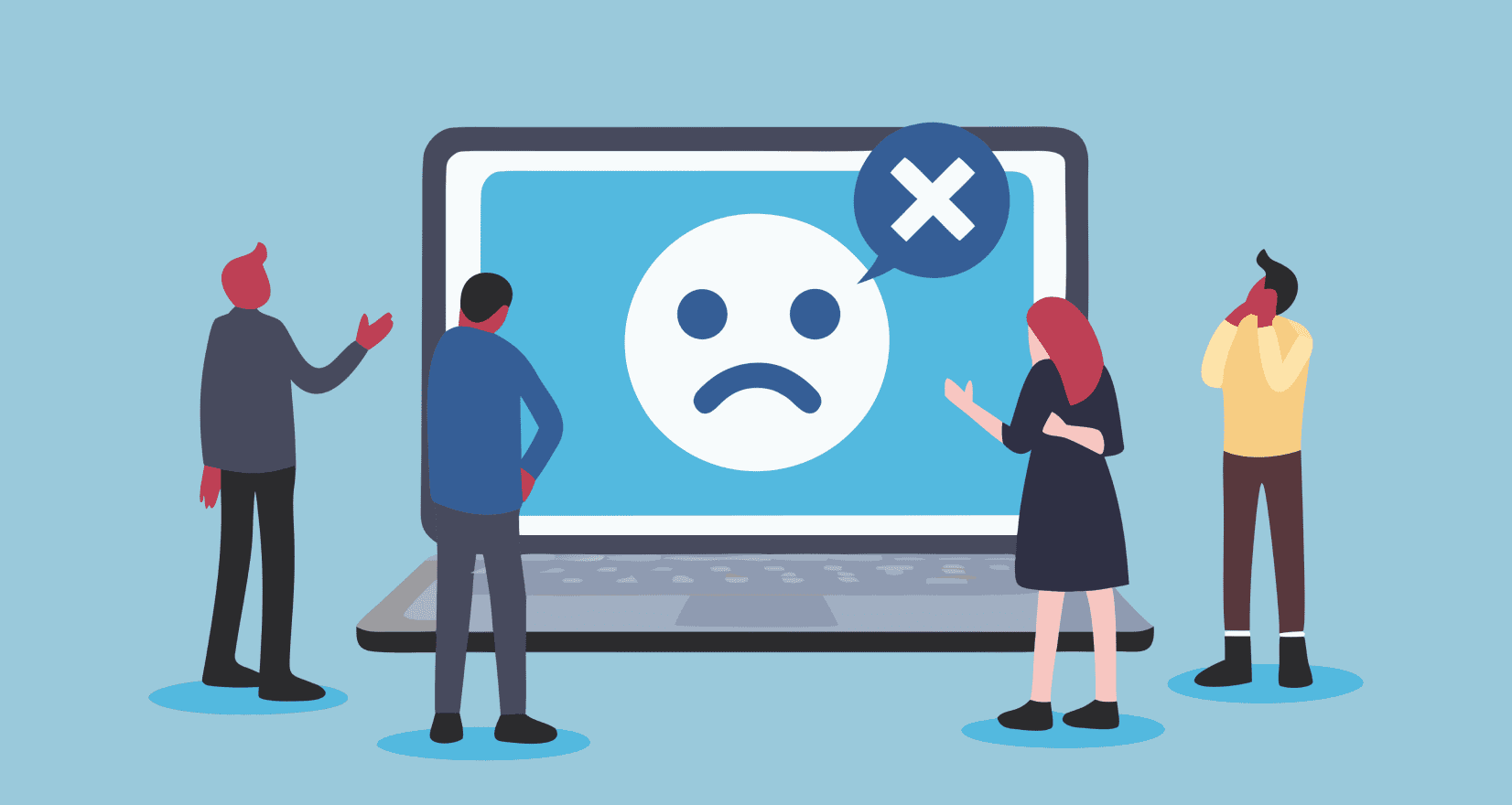
Your dental website is getting visitors. People are landing on it from Google searches, clicking through from your Google Business Profile, maybe even finding it through your social media. And then… nothing. No phone calls. No appointment requests. Just traffic that evaporates without ever turning into a patient.
This is one of the most frustrating and common problems in dental marketing. And the good news is that it is almost never a mystery. Dental websites fail to convert for predictable, fixable reasons. The less good news is that most practices don’t realize their website is the problem because the drop-off happens silently. Nobody sends an email saying “your website was confusing so I booked with someone else, lol, bye.” They just leave.
Here’s what is probably happening, and what you can do about it.
The Core Problem: Your Website Is Built to Exist, Not to Convert
Most dental websites were built to check a box. A practice needed a web presence, a site went up, and that was more or less the end of the conversation. The problem is that a website designed just to exist looks almost identical to a website designed to convert, at first glance. Both have a homepage, a services page, an about page, and a contact form. But one of them is quietly turning away patients every single day.
A high-converting dental website is a patient acquisition tool, and every element of it, from load speed to button placement to the photo on the homepage, either moves a visitor closer to booking or gives them a reason to leave.
The gap between those two types of websites comes down to a handful of specific, measurable issues.
Problem 1: Your Website Loads Too Slowly
This one is not subtle. Research consistently shows that a significant share of mobile users abandon a website that takes more than three seconds to load. For dental practices, where the majority of website visits now come from mobile devices, a slow site is not a minor inconvenience. It is a conversion killer operating at the very top of the funnel, before a patient has seen a single word of your content.
Page speed is also a Google ranking signal, meaning a slow website is not just losing patients who find it. It is making it harder for patients to find it in the first place.
What causes it: Oversized images, outdated hosting, unoptimized code, and too many third-party plugins are the most common culprits. A website built five or more years ago and never technically updated is almost certainly slower than modern standards require.
What to do: Run your site through Google’s PageSpeed Insights tool to get a baseline score. If you are scoring below 70 on mobile, it is worth a serious conversation about either technical optimization or a full website redesign. My Social Practice’s dental website design builds sites on modern infrastructure with speed as a foundational requirement, not an afterthought.
Problem 2: Your Navigation Is Confusing
A confused visitor does not convert. They leave. And a surprising number of dental websites make it genuinely difficult for a patient to find the most basic information they are looking for: what services are offered, where the office is located, what other patients have said about their experience, and how to book an appointment.
Navigation problems come in a few forms. Some sites have too many menu options, overwhelming a visitor who just wants to find the implants page or check office hours. Others bury the most important pages deep in dropdowns. And many sites have no clear visual hierarchy, meaning everything looks equally important and nothing stands out as the obvious next step.
The most common navigation failure is putting the “Contact Us” page where the “Book an Appointment” button should be. A contact form is not a booking tool. It is a waiting room.
What to do: Simplify your menu to the pages patients actually care about. Focus on services, about the team, patient reviews, insurance and fees, and a direct booking option. Make the booking button prominent, consistent across every page, and impossible to miss. Test your site by asking someone unfamiliar with it to find the new patient appointment page in under thirty seconds. If they struggle, your navigation needs work.
Problem 3: There Is No Real Call to Action
Related to navigation but worth its own spotlight, many dental websites have no clear, compelling call to action anywhere on the page. Or they have a call to action so weak that it blends into the background and goes completely ignored.
“Contact us to learn more” is not a call to action. “Request an appointment” is barely one. “Book your new patient appointment today” with a button that takes patients directly to a real-time scheduler is a call to action.
The difference matters more than most practice owners expect. A study of landing page performance across industries consistently finds that specific, action-oriented calls to action dramatically outperform vague or passive ones. Patients who have made it to your website are already interested. A clear, direct prompt to take the next step is often all that separates a bounce from a booking.
What to do: Every page of your website should have at least one clear call to action, and your homepage should have it above the fold, meaning visible without scrolling. Use direct, benefit-oriented language: “Book Your New Patient Exam” beats “Get In Touch” every single time.
Problem 4: You Are Missing Trust Signals
A new patient visiting your website for the first time doesn’t know you. They’re still evaluating whether to hand over their anxiety, their time, and their money to a stranger. The way they make that decision is by looking for social proof, and most dental websites do not give them nearly enough of it.
Trust signals are the elements of a website that tell a prospective patient, “Hey, other people have been here, they were happy, and you can feel safe making this choice.” They include:
- Patient reviews and testimonials, ideally pulled directly from Google and presented prominently
- Photos of your actual team, not stock photography of models in white coats
- Before and after photos that demonstrate the quality of your clinical work
- Video introductions from the dentist and team members
- Recognized credentials and affiliations displayed clearly
- Clear information about insurance and financing so patients do not have to wonder if they can afford care
The absence of these elements does not read as neutral to a prospective patient. It reads as a reason to hesitate. When a competing practice down the street has 200 Google reviews embedded on their homepage and photos of their warm, real team, and your site has stock images and no reviews, the choice becomes easy for the patient, and it is not in your favor.
What to do: Integrate your Google reviews directly onto your homepage and dedicate a section of your site to patient testimonials. Replace stock photography with real photos of your office, your team, and ideally your patients (with appropriate consent). Make trust-building a design priority, not a decoration.
Problem 5: No Online Scheduling (Or a Broken Version of It)
This one connects everything above. Even if your site loads fast, navigates clearly, makes a compelling case for your practice, and earns a patient’s trust, if the booking experience is clunky or nonexistent, you lose them at the finish line.
As discussed elsewhere, appointment request forms are not the same as real-time online scheduling. They introduce a delay that costs conversions. And for the growing share of patients booking outside of office hours, a phone-only practice is simply not an option they will wait around for.
What to do: Implement real-time online scheduling that integrates with your practice management system, gives patients immediate confirmation, and works seamlessly on mobile. My Social Practice’s Online Dental Scheduler is built specifically for dental practices, syncs with Dentrix, Eaglesoft, Open Dental, and others, and can be embedded directly into your website so the booking experience never takes patients off your page.
The High-Converting Dental Website: What It Looks Like
Putting it all together, here’s what separates a website that converts from one that does not:
| Element | Low-Converting Site | High-Converting Site |
|---|---|---|
| Load speed | Slow, especially on mobile | Under 3 seconds on all devices |
| Navigation | Too many options, buried booking | Simple, clear, booking always visible |
| Call to action | Vague or absent | Specific, prominent, on every page |
| Trust signals | Stock photos, no reviews | Real team photos, reviews, testimonials |
| Booking experience | Contact form or phone only | Real-time online scheduling |
| Mobile experience | Requires zooming and pinching | Fully optimized for any screen size |
| Content | Generic descriptions | Patient-focused, answers real questions |
No single item on that list requires a complete overhaul of your practice. But taken together, the gap between the left column and the right column represents the difference between a website that passively exists and one that actively grows your practice.
Is Your Dental Website Losing Patients?
If your dental website is getting visitors but not getting patients, the problem is almost certainly somewhere in this list. A slow load time, confusing navigation, a missing or weak call to action, insufficient trust signals, and no real online booking option are the five most common and most fixable conversion killers in dental web design.
The encouraging part is that none of these are permanent. A focused website audit will reveal exactly where patients are dropping off, and the fixes, whether incremental improvements or a full redesign, are well within reach.
My Social Practice’s dental website design service builds sites specifically engineered to convert, with fast load times, clear patient journeys, integrated scheduling, and the trust signals modern patients expect. If your current site is working against you, it’s worth finding out exactly how much it is costing you.
Frequently Asked Questions
How do I know if my dental website has a conversion problem?
The clearest indicators are a high bounce rate (visitors leaving quickly without taking any action), low or no appointment form submissions relative to your traffic volume, and a disconnect between the number of website visitors and the number of new patient inquiries you receive. Google Analytics can show you how long visitors are staying on your site, which pages they are leaving from, and whether they are reaching your contact or booking pages at all. If traffic is healthy but conversions are low, the problem is almost certainly the website experience rather than your marketing.
How much does website load speed actually affect new patient conversions?
Significantly. Research across industries consistently shows that conversion rates drop sharply as page load time increases, with mobile users being particularly quick to abandon slow sites. For dental practices, where a large majority of website visits come from mobile devices, even a one or two second improvement in load time can produce a meaningful increase in how many visitors stay long enough to book. Load speed is also a Google ranking factor, so a slow site is both harder to find and harder to convert from.
What trust signals matter most on a dental website?
Patient reviews are the highest-impact trust signal for most dental practices, particularly Google reviews displayed directly on the website. After reviews, real photos of the actual team and office consistently outperform stock photography in building patient confidence. Before and after photos demonstrating clinical results, clear information about insurance and financing, and visible credentials or professional affiliations round out the most effective trust-building elements. Together, these signals answer the question every new patient is really asking: “Can I trust this practice with my care?”
Is a contact form on my dental website enough, or do I need real-time online scheduling?
For practices focused on maximizing new patient conversions, a contact form alone is not enough. Contact forms introduce a delay between patient intent and confirmed appointment, and that delay is where a significant number of prospective patients disengage or book with a competitor. Real-time online scheduling, where patients can see actual availability and receive instant confirmation, produces substantially higher conversion rates and significantly fewer no-shows. If your website currently relies on a contact form or phone-only booking, switching to real-time scheduling is likely the single highest-impact change you can make.
How often should a dental practice update or redesign its website?
A full redesign every four to five years is a reasonable general guideline, but the more important question is whether your current site is performing. A modern, well-maintained website can remain effective for longer with regular content updates and technical maintenance. Key warning signs that a redesign is overdue include slow load times, a non-mobile-optimized layout, an outdated visual design, a lack of online booking integration, and stagnant or declining new patient inquiries despite consistent marketing activity.
About the Author: Megan Nielsen is an SEO strategist and the Grand Overlord of copywriting at My Social Practice. My Social Practice is a dental marketing company that offers a full suite of dental marketing services to thousands of dental practices throughout the United States and Canada.