What You’ll Learn:
- What Google’s new Ask Maps feature is and how it works
- Why AI-powered discovery is a major shift from traditional keyword search
- How Ask Maps decides which dental practices to recommend
- What dentists need to do right now to stay competitive in local search
- How reputation and Google Business Profile quality directly impact AI recommendations
Meet Ask Maps
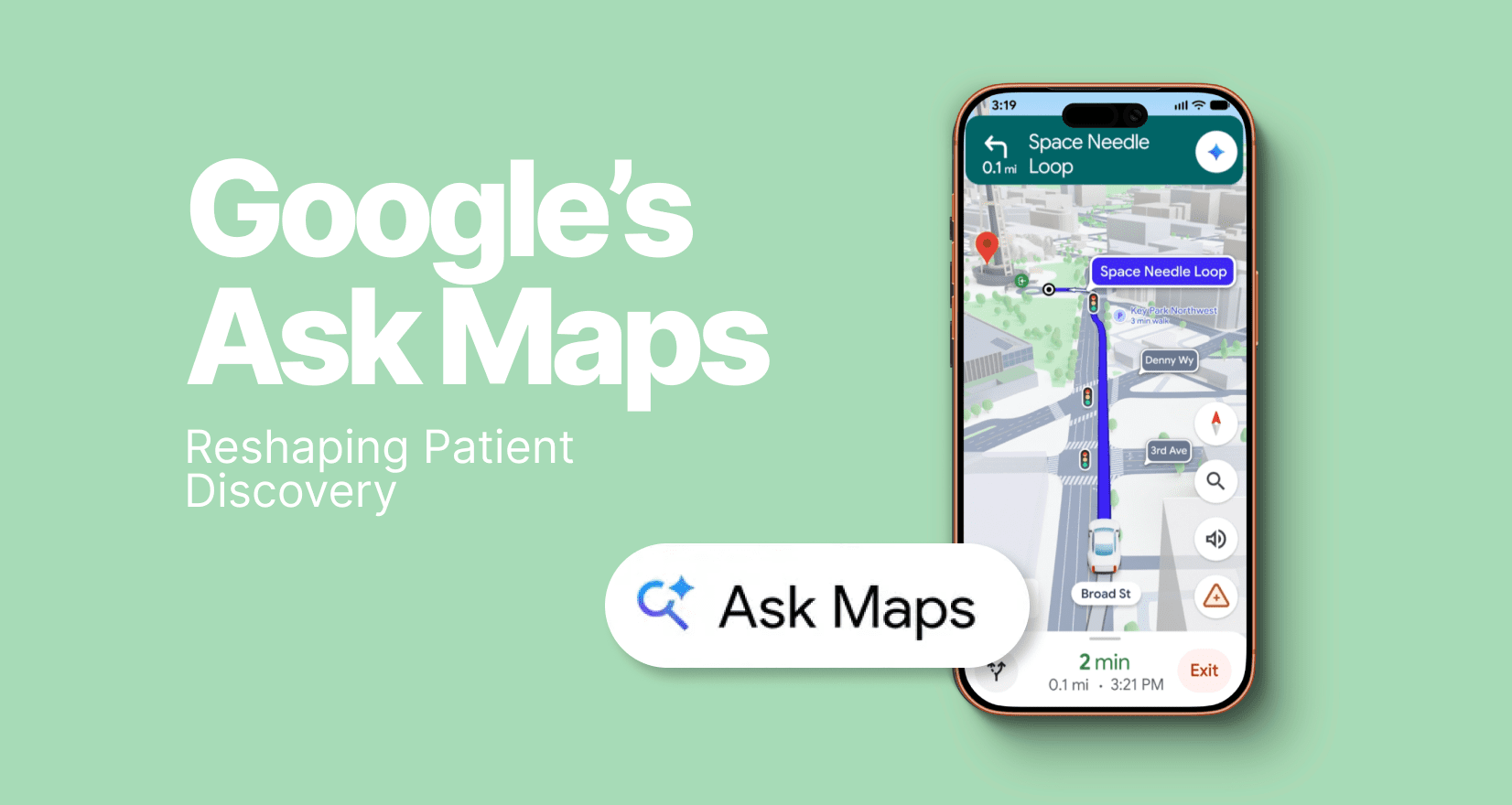
Google just quietly dropped one of the biggest changes to local search in years, and if you run a dental practice, this one is worth paying attention to. On March 12, 2026, Google officially launched Ask Maps, a conversational AI feature built on Google’s Gemini models that lets users ask complex, natural-language questions and get personalized answers right inside Google Maps.
From what we can tell, it’s like having a very well-informed local guide living inside your Maps app. Instead of typing “dentist near me” and scrolling through a list, a patient could now ask something like, “I need a dentist who takes my insurance and has evening hours near downtown” and get a direct, conversational answer with a custom map view. That’s a fundamentally different experience from anything that’s existed before, and it has real implications for how your practice gets found.
What Is Ask Maps, Exactly?
Ask Maps is rolling out now in the U.S. and India on Android and iOS (desktop is coming soon). At its core, it turns Google Maps from a directory into a dialogue. Users tap the “Ask Maps” button and ask whatever they want in plain language. The feature responds conversationally, surfaces relevant locations on a customized map, and lets users take action immediately, getting directions, saving a location, or booking directly from the response.
A few things that make Ask Maps different from a regular search:
- Personalization baked in. Ask Maps draws on a user’s search history and saved places to tailor its recommendations. If someone has been researching teeth whitening procedures and then asks for a dentist recommendation, that context can influence what they see.
- Community data at scale. Google is pulling from over 500 million contributors and information on more than 300 million places to power these recommendations. The freshness and richness of that data is a major factor in what gets surfaced.
- Direct action from the response. Users can book appointments, save locations, and share options with friends without ever leaving the conversation.
The key shift here is subtle but significant, and it means that the user is no longer hunting. The AI is doing the choosing, which changes everything for local businesses like dental offices.
From Keywords to Conversations: Why This Matters for Dentists
For years, dental SEO has been about getting your practice to rank for terms like “family dentist [city]” or “teeth whitening near me.” That model still matters, but Ask Maps introduces a layer on top of it where Google’s AI is the one interpreting patient intent and making recommendations on their behalf.
That means the old playbook of just targeting the right keywords is no longer enough on its own. The AI is making judgment calls based on the quality, completeness, and credibility of your entire Google presence.
Here is a simplified look at how the two discovery models compare:
| Factor | Traditional Maps Search | Ask Maps (AI-Powered) |
|---|---|---|
| How patients search | Keyword-based (“dentist near me”) | Conversational (“I need a dentist who…”) |
| What ranks well | SEO optimization, proximity | Profile completeness, reviews, engagement |
| Personalization | Minimal | High (based on history + saved places) |
| User action | Browse results, click | AI recommends, user acts directly |
| Review importance | Moderate | High (AI draws from community data) |
| Profile accuracy | Important | Critical |
The bottom line amounts to advice we’ve been preaching for years: the practices that get recommended by Ask Maps will be the ones with the richest, most accurate, most review-heavy Google Business Profiles. That is not speculation; that is how Google described it in their own announcement. See? We know what we’re talking about.
What Google’s AI Is Actually Looking At
When Ask Maps generates a recommendation, it’s pulling from Google’s live map data, which includes your Google Business Profile information, your patient reviews, your photos, your posted hours, and your overall engagement on the platform. The AI also weighs community contributions, meaning reviews and Q&A responses are more valuable than ever.
Think about what that means practically:
- A profile with outdated hours could get skipped over entirely
- A practice with 40 generic reviews may lose to one with 200 detailed, recent reviews
- Missing services in your profile means the AI may not match you to a relevant patient query
- Unanswered reviews or sparse Q&A sections signal low engagement
Forget about gaming the algorithm with SEO tips and tricks. Increasingly, changes being implemented by AI search and complementary tools mean that to be visible, you need to focus on genuinely being the kind of practice that shows up accurately, consistently, and credibly online. The AI is trying to give users the best answer to their question, and the best answer is the practice with the most trustworthy, complete, and current profile.
Ads Are Coming (Probably)
One more thing worth knowing: Ask Maps does not currently include ads. But Google has not ruled them out. Since Ask Maps is highly intent-rich (people are actively deciding where to go and what to do), it is exactly the kind of environment advertisers pay a premium to enter.
For dental practices already running Google Ads or local services campaigns, this is worth watching closely. When paid placement comes to Ask Maps, practices with strong organic profiles will already have a head start.
What Dentists Should Do Right Now
The good news is that preparing for Ask Maps is largely the same as doing smart local dental SEO, just with the stakes raised. Here is where to focus your energy:
Audit your Google Business Profile. Make sure every field is filled out: hours, services, specialties, photos, and contact info. Even small gaps can hurt your chances of being recommended.
Get serious about reviews. Quantity matters, but so does recency and detail. A steady flow of new, genuine reviews signals to Google that your practice is active and trusted. Tools that integrate directly with your practice management software to prompt review requests can make a significant difference here. (My Social Practice’s Reputation Management service is built specifically to help dental practices do exactly this, and has helped practices average more than one new Google review per day.)
Respond to every review. Google’s own guidance has long recommended responding to reviews promptly. With AI now drawing from this community engagement data, it matters more than ever.
Keep your profile information fresh. If your hours change, update them immediately. If you add a new service, add it to your profile. The AI rewards accuracy.
Think about the questions patients are asking. Ask Maps is built for complex, natural-language queries. Make sure your profile and website reflect the specific services, specialties, and patient experiences that match how real people talk about dental care.
The Bigger Picture
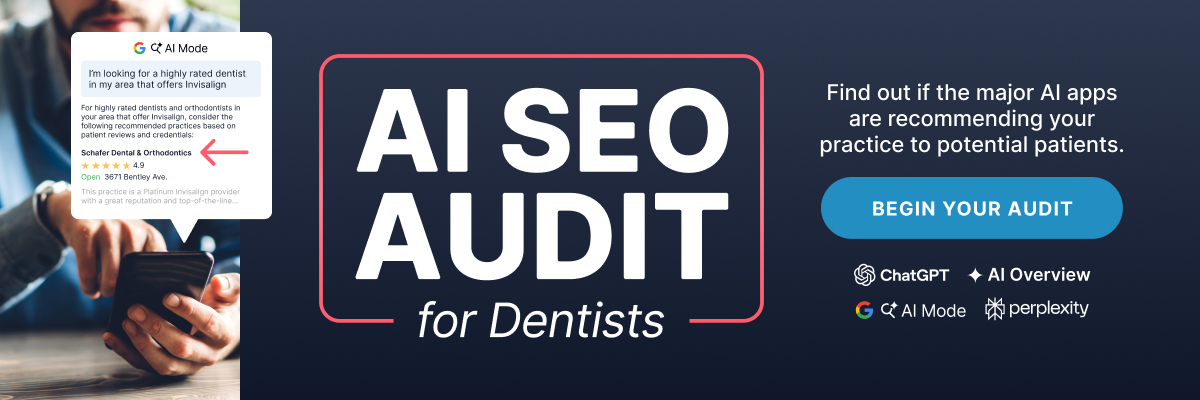
Ask Maps is part of a much larger trend in AI search. AI is increasingly becoming the middleman between patients and practices. Google is not the only player here. Apple Maps, Bing, and a growing number of AI assistants are all building similar capabilities. The practices that invest now in a strong, complete, and review-rich local presence will get surfaced when AI does the recommending.
It’s easy to think of your Google Business Profile as a back-office chore. But in 2026, it is arguably the most important piece of marketing real estate your practice owns. Ask Maps just made that even more true.
Frequently Asked Questions
What is Google Ask Maps and how does it work for local businesses like dental practices?
Ask Maps is a new conversational AI feature inside Google Maps, powered by Google’s Gemini models. Instead of typing keywords into a search bar, users can ask complex, natural-language questions and receive personalized, actionable recommendations with a custom map view. For dental practices, this means patients may soon find their next dentist through a conversation with Google rather than a traditional keyword search. The AI pulls from your Google Business Profile data, patient reviews, photos, and overall engagement to determine which practices to recommend.
How do I make sure my dental practice shows up in Google Ask Maps recommendations?
The most important factors are the completeness and accuracy of your Google Business Profile, the volume and recency of your patient reviews, and your overall engagement on Google. Make sure all profile fields are filled in (hours, services, photos, contact info), respond to all your reviews, and keep your information current. Practices with rich, detailed, and up-to-date profiles are far more likely to be recommended by Google’s AI than those with sparse or outdated listings.
How important are Google reviews for dental practices now that Ask Maps is available?
Reviews have always mattered for dental SEO, but Ask Maps raises the stakes considerably. Google’s AI draws from community data, including patient reviews, to generate its recommendations. Practices with a high volume of recent, detailed, genuine reviews are more likely to be surfaced as trusted recommendations. Implementing a system that automatically prompts patients for reviews (ideally integrated with your practice management software) can give you a significant advantage.
Will Google run ads inside Ask Maps for dental practices?
Google has not launched ads inside Ask Maps yet, but has not ruled them out. Because Ask Maps is highly intent-driven (users are actively deciding where to go), it is likely that paid placements will eventually be available. Dental practices already running Google Ads should keep a close eye on this development. In the meantime, building a strong organic presence is the best preparation for when paid options become available.
Is Ask Maps available now and what devices support it?
Yes. As of March 2026, Ask Maps is rolling out in the United States and India on both Android and iOS devices. Desktop support is expected to follow. The feature is accessed through the Google Maps app by tapping the “Ask Maps” button.
About the Author: Megan Nielsen is an SEO strategist and the Grand Overlord of copywriting at My Social Practice. My Social Practice is a dental marketing company that offers a full suite of dental marketing services to thousands of dental practices throughout the United States and Canada.