Published: Feb 2024 | Updated: Nov 2026
How do you market Invisalign to get more patients? Effective Invisalign marketing reaches adult and teen patients where they already look. Build a dedicated Invisalign page with price ranges, financing and real before-and-afters, rank in Google Maps for “Invisalign near me” searches, and earn a steady flow of recent Google reviews. Answer common aligner questions in plain language so Google’s AI Overviews and tools like ChatGPT can cite you. Add local search and social ads, short videos of real cases, and a smile simulator or virtual consult. Then follow up on every consult request within minutes, because most aligner patients compare several practices before they book.
If you’ve ever had a patient wince at the thought of being a “brace face,” you already know why clear aligners are popular. About 23 million people worldwide have been treated with Invisalign, and more general dentists and orthodontists offer aligners every year. That’s good news for patients and tougher news for you: the practices that win cases now are the ones patients find first and trust fastest. Generic marketing for dentists won’t get you there, and neither will one “we offer Invisalign” line on your services page. We pulled together the Invisalign marketing ideas that actually move consults, drawn from our work in orthodontist marketing. Below are 20 strategies, grouped by what they do: get you found, turn interest into consults, build trust, and bring in referrals.
Table of Contents:
How do patients find Invisalign providers online?
- Rank in Google Maps for “Invisalign near me”
- Earn a steady flow of recent Google reviews
- Optimize your website for Invisalign and clear aligner searches
- Make your practice easy for AI search to recommend
- Run Google and social ads for Invisalign
How do you turn Invisalign interest into booked consults?
- Build an Invisalign landing page that converts
- Add a smile simulator to your website
- Offer virtual consultations
- Lead with financing and clear offers
- Answer patient questions 24/7 with an AI chat assistant
- Follow up on every consult request within minutes
What content and social media work for Invisalign?
- Answer Invisalign questions on your blog and website
- Post short-form video on TikTok, Reels and YouTube Shorts
- Share real patient stories, behind-the-scenes moments and milestones
- Show off your aligner technology
- Offer a downloadable guide or a short webinar
Why does Invisalign need its own marketing?
Aligner patients are elective buyers who research for weeks and compare several practices, so a general “we offer Invisalign” mention rarely wins the case. They read reviews, study before-and-afters, look for prices and financing, and ask friends, Google and, more and more, AI tools. Some search “Invisalign,” and others search “clear aligners,” so your website and listings need to cover both. They also expect a fast reply. A patient who fills out three practices’ forms on a Tuesday night usually books with whoever gets back to them first. Marketing works when it covers every step, from the first search to the follow-up call.
How do patients find Invisalign providers online?
1. Rank in Google Maps for “Invisalign near me”
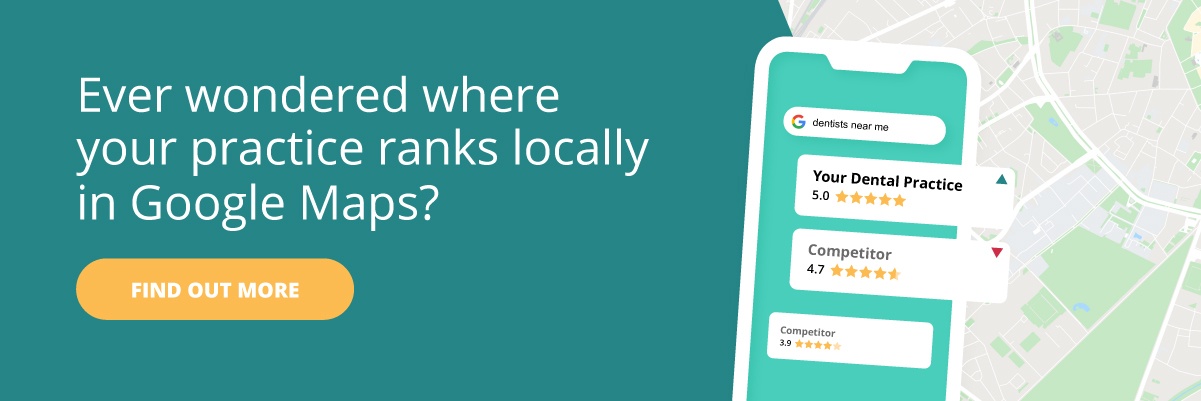
A complete Google Business Profile can help nearby patients find your practice when they search for clear aligner treatment. Google’s local results are mainly based on relevance, distance and prominence. Your practice’s location determines its distance from each searcher, but accurate information and a strong online reputation can support your visibility.
Here’s how to strengthen your profile and help prospective patients learn more:
- List your aligner services. Add “clear aligners” and, if you offer it, “Invisalign,” with a short description of each.
- Choose accurate categories. Select the primary category that best describes your practice from Google’s available options, then add only relevant additional categories.
- Upload real photos. Show your team, your scanner and completed aligner cases. Obtain appropriate written patient authorization before sharing patient images or case stories.
- Share a helpful update each month. Feature a case story, answer a common treatment question or explain payment options. Link to your website when patients need more detail.
- Encourage honest reviews. Invite patients to share their experience and respond thoughtfully, keeping patient information private.
- Keep your name, address and phone number identical across Google, Apple Maps, Yelp, Healthgrades and other local directories.
Action: Request a free Google Maps ranking report for your Invisalign keywords and see where you stand today.
2. Earn a steady flow of recent Google reviews
Recent, frequent reviews help you rank in Maps and give aligner shoppers the proof they look for before booking. A practice with a handful of reviews from last month often looks more active than one with dozens from two years ago.
- Ask every patient. Make the review request a normal part of checkout, not something saved for your happiest aligner finishers.
- Automate it. Send a text with a direct link to your review form after key appointments, like an aligner delivery or a final visit.
- Reply to every review, positive or negative, without confirming that the reviewer is a patient or mentioning any treatment details. That keeps replies HIPAA-safe.
Keep requests neutral. Google’s April 17, 2026 policy update bans asking patients for specific review content, so don’t ask people to mention Invisalign, and don’t reward staff for review counts. Aligner patients tend to mention their treatment on their own.
Our guide to orthodontic reputation management covers how to monitor and protect your ratings over time.
Action: Turn on automated review requests this week.
3. Optimize your website for Invisalign and clear aligner searches
Your website has to use the words patients type and say, because Google can only rank you for searches your pages actually answer. Patients search “Invisalign,” “clear aligners,” “Invisalign dentist” and “Invisalign [your city],” so use those terms in page titles, headings, image alt text and body copy wherever they read naturally.
Write the way people talk, too. Voice searches sound like full questions: “Who does Invisalign near me?” or “How much is Invisalign in [your city]?” Pages that answer questions in the same plain, conversational style show up for typed and spoken searches alike.
The technical basics matter just as much: fast load times on phones, a secure site, clean URLs and a separate page for each main service. Our orthodontic SEO guide goes deeper on each one.
Action: List the 10 aligner questions your front desk hears most, and make sure your site answers each one in plain words.
4. Make your practice easy for AI search to recommend
Patients now ask ChatGPT, Gemini, Perplexity and Google’s AI Overviews questions like “Who’s the best Invisalign provider near me that offers payment plans?”, and those tools favor practices with clear, specific, consistent information.
AI tools build answers from what they can read and check against other sources. Give them:
- A dedicated Invisalign page that says who you treat, what it costs (a range is fine), how long it takes and which financing you accept.
- Plain-language FAQ answers that open with the answer, not a sales pitch.
- Consistent listings, so your name, hours and services match everywhere.
- Real reviews that describe patients’ experiences in their own words.
Vague copy like “state-of-the-art smile solutions” gives an AI nothing to quote. Specific copy like “Invisalign at our practice starts at [price], with financing from [monthly amount]” does.
For more ways AI can help your practice, see our AI dental marketing ideas.
Action: Ask ChatGPT and Perplexity who offers Invisalign in your town, and note what they say about you, or whether they mention you at all.
5. Run Google and social ads for Invisalign
Google Search ads reach people already searching for Invisalign in your area, and Facebook, Instagram and YouTube ads reach them before they search.
Start with search. Bid on high-intent terms like “Invisalign near me,” “Invisalign cost [your city]” and “clear aligners dentist,” and set a tight radius around the practice, since few patients will cross the metro for regular aligner check-ins. Send every click to your Invisalign landing page (strategy #6), never the homepage.
On social, target by location and let your creative do the qualifying: real case videos, patient stories (with consent) and clear financing messages. Don’t build audiences from age, health conditions or health interests. Meta removed health-related detailed targeting options, and leaning on them can get ads rejected.
Judge every campaign on booked consults, not clicks. Connect call tracking and form tracking so you know which ad produced which consult.
Action: Check where your current Invisalign ads send people. If it’s the homepage, fix that first.
Want a team to run this for you? My Social Practice manages search and social campaigns for dental and orthodontic practices.
How do you turn Invisalign interest into booked consults?
6. Build an Invisalign landing page that converts
A dedicated Invisalign page turns ad clicks and searches into consults, because it answers cost, timing and “am I a candidate?” in one place.
Build it with:
- A price range or “starting at” figure, so shoppers don’t leave to find one somewhere else
- Your financing options and a sample monthly payment
- Before-and-after photos, each backed by a signed patient photo release
- A short FAQ: how long it takes, whether it hurts, whether teens qualify
- A consult form above the fold on mobile
- Click-to-call buttons
- Call tracking, so you know which channel sent each caller
Keep the page focused on one goal. One form, one clear button and no menu of 30 other services pulling attention away. Our guide to orthodontic websites covers the design choices that help pages like this convert.
Action: Open your Invisalign page on your phone. If you can’t see a price, a form and a call button without much scrolling, start there.
Download our free Invisalign marketing materials.
7. Add a smile simulator to your website
A smile simulator lets patients picture a possible result before they ever call, which turns “maybe someday” into a concrete reason to book. Invisalign’s SmileView tool asks for a smiling selfie and returns a simulated aligner result.
Put it where interested patients already are: on your Invisalign page, in ads and in social posts. Then give every result somewhere to go. A simple prompt such as “Like what you see? Book a consult to find out if aligners are right for you” connects the preview to a real appointment.
Be clear that the image is a simulation and that actual results depend on an in-person exam. That keeps expectations realistic and your marketing honest.
Action: Test the simulator on a phone and make sure every result screen ends with a booking button.
8. Offer virtual consultations
Virtual consults let busy or hesitant patients take the first step from home, which lowers the barrier to a yes. Many adults considering aligners aren’t ready to take time off work for an exam. A short video call or a photo-based smile assessment answers their first questions about fit, cost and timing.
Keep the process simple: a booking link on the Invisalign page, a quick intake form, and a doctor or treatment coordinator who can talk through options in 10 to 15 minutes. Ask patients to send a few smile photos ahead of time so the call is specific to them.
End every virtual consult with one clear next step: an in-office scan and exam, booked before you hang up.
Action: Add a “Start with a virtual consult” option to your Invisalign page, and track how many of those calls turn into in-person visits.
9. Lead with financing and clear offers
Cost is the most common reason aligner shoppers hesitate, so put payment options up front instead of waiting for patients to ask.
- List your financing partners and show a sample monthly payment.
- Say whether you accept HSA and FSA funds and how orthodontic insurance benefits apply.
- Use clear, time-limited offers to give undecided patients a reason to act now, such as a complimentary consult, whitening included with treatment or a set amount off.
Use the same offer everywhere it appears: ads, the landing page, social posts and follow-up emails. Mixed messages make people doubt the deal.
Any offer must follow your state dental board’s advertising rules, so check your disclosure language and any use of the word “free” before you launch.
Action: Move your financing details into the top third of your Invisalign page.
10. Answer patient questions 24/7 with an AI chat assistant
Many aligner shoppers do their research at night, so a website chat assistant that answers after hours keeps those leads from drifting to the next practice.
A good assistant answers the common questions about cost, treatment time and financing in plain language. It captures the visitor’s name and phone number, then hands the conversation to your team with the details attached so someone can call first thing in the morning. It should also know its limits: clinical questions and anything specific to a patient’s teeth go to a person.
Annie AI, My Social Practice’s virtual receptionist, does this for dental and orthodontic practices. She chats naturally, answers FAQs, books consults and passes anything she can’t answer to your front desk.
Action: Check what time of day your website forms come in. If many arrive after hours, an after-hours assistant is worth testing.
11. Follow up on every consult request within minutes
Aligner shoppers usually contact more than one practice, so the first practice to call back often wins the consult.
Set a standard: call every new Invisalign lead the same day, ideally within minutes during office hours. If no one picks up, send a text right away (“Hi Maria, this is Jen from Bright Smile Dental. You asked about Invisalign. When’s a good time to chat?”). Text again the next day, then move the lead to email.
For people who aren’t ready yet, a short email series keeps you in mind without pressure. A simple three-email sequence:
- A real patient’s story: why she chose aligners and what surprised her most.
- How treatment works: a plain walk-through from first scan to final retainer.
- An invitation: a consult offer with financing details and a booking link.
Track each lead from first contact to booked consult so you can see where people drop off.
Action: Time how long your office takes to respond to a web form this week.
What content and social media work for Invisalign?
12. Answer Invisalign questions on your blog and website
Educational content works because aligner patients research for weeks, and the practice that answers their questions earns their trust before the first visit. Write posts and short pages on the topics patients actually search:
- How much does Invisalign cost in [your city]?
- How long does Invisalign take?
- Invisalign vs. braces: which is right for me?
- Is Invisalign a good choice for teens?
- What happens if I lose an aligner tray?
Open each post with a direct answer, then explain. Turn the best posts into short videos and social clips, so one piece of research works in three places. Link every post to your Invisalign page so readers have an easy next step.
For more topic ideas, see our marketing ideas for orthodontic practices.
Action: Publish one Invisalign FAQ post a month for the next six months.

13. Post short-form video on TikTok, Reels and YouTube Shorts
Short vertical videos show what life with aligners really looks like, and that’s exactly what curious patients want to see. Try:
- “Day in the life” clips from a patient wearing aligners
- Practical tips: cleaning trays, eating out, switching to a new set
- Quick transformations (with written consent)
- The doctor answering one common question in under 30 seconds
Use relevant hashtags like #InvisalignJourney and #ClearAligners, and add captions, since many people watch with the sound off. Partnering with local micro-influencers can widen your reach, but every collaboration needs clear FTC disclosure of any payment or free treatment, plus the patient’s written consent.
Our guide to TikTok orthodontic marketing has more format ideas.
Action: Film three 20-second clips this month, each answering one patient question.
14. Share real patient stories, behind-the-scenes moments and milestones
Real stories and real people build the kind of trust that ads can’t buy. On Facebook, Instagram and TikTok, mix three kinds of posts:
- Patient stories: before-and-after photos and short testimonials, each with the patient’s written consent.
- Behind the scenes: a 3D scan in progress, a team member fitting a first set of aligners, a quick “meet the team” clip.
- Milestones: your 100th aligner patient, or an Align provider tier the practice has actually earned, named exactly the way Align names it.
Keep the look and tone consistent so people recognize your posts at a glance. Our dental branding guide covers the basics. For an early example of a practice doing this well, read about an orthodontic practice that understands social media marketing.
Action: Plan one post of each type for next month.
15. Show off your aligner technology
Technology reassures patients that treatment will be precise and comfortable, but only when you explain it in their terms. Instead of listing equipment, describe the experience: “We take a quick 3D scan instead of messy impressions, then show you a preview of how your teeth could move before you commit.”
Show it, too. A 30-second video of the intraoral scanner at work, or a screen recording of a treatment preview, does more than a paragraph of description. Put these clips on your Invisalign page and in social posts.
Watch your wording. Only an orthodontist should be described as a specialist. A general dentist can talk about training, experience and the number of aligner cases treated instead.
Action: Record a short scan-and-preview video with a willing patient this month.
16. Offer a downloadable guide or a short webinar
A free guide or webinar gives patients who aren’t ready to book a low-pressure way to learn, and gives you their contact details for follow-up.
Guide: A short PDF covering candidacy, the treatment process, aligner care, cost and financing. Offer it on your Invisalign page and in social ads in exchange for an email address, then send new contacts straight into your email series (strategy #11).
Webinar: A 20-minute live session on a weeknight, where the doctor explains how aligners work and takes questions. Record it and reuse the best clips on social.
Both work best when they’re genuinely useful and light on sales talk. Someone who finishes your guide or sits through your webinar is already halfway to a consult.
Action: Turn your five most common aligner questions into a two-page guide.
How do referrals and community build Invisalign cases?
17. Create a patient referral program
Happy aligner patients are your most believable marketing, and a simple referral program gives them a reason to talk about you. Make it easy: hand out referral cards at the final appointment, send a thank-you text with a shareable link, and mention the program in your follow-up emails.
Thank referring patients in a way that feels personal, like a handwritten note or a small gift. With permission, celebrate referrals publicly, which reminds everyone else that the program exists.
Check your state’s rules on referral rewards before offering incentives, since some dental boards limit what you can give in exchange for a referral.
Action: Add a referral ask to the aligner completion visit, when patients are happiest with their new smile.
18. Build referral partnerships with other providers
Professional referrals bring in patients who already trust the source, which makes them some of the easiest cases to start.
For orthodontists: Build relationships with general dentists who don’t offer aligners. Visit their offices, explain how you handle aligner cases, and send prompt progress updates on every patient they refer. Pediatric dentists are natural partners for teen cases, and our pediatric dentist marketing guide shows what they’re focused on.
For general dentists: Know when to refer. Send complex bite problems, severe crowding and skeletal issues to an orthodontist, and say so on your website. Patients respect the honesty, and orthodontists remember who sends them well-matched cases.
Specialists everywhere grow this way. It’s the same playbook behind good endodontist marketing and marketing for oral surgeons: make referring easy and keep the referring doctor informed.
Action: List five local practices you’d like to trade referrals with, and contact one this month.
19. Show up in your community
Local visibility builds name recognition, so when someone in town starts thinking about straighter teeth, your practice is the one that comes to mind.
Pick a few activities and do them consistently: a booth at a health fair, a short talk for a parent group about teen orthodontics, sponsorship of a school team or a local fun run. Bring something useful, like sample aligners people can hold, a sign-up sheet for smile assessments or a handout with a QR code to your Invisalign page.
Charity work belongs here too. Our post on dental marketing and charity explains how giving back builds goodwill without feeling like a sales pitch. For a look at how team culture carries into the community, read about teamwork and a social mindset at LM Orthodontics.
Action: Choose one event or sponsorship for next quarter, and give it its own QR code so you can count the consults it brings in.
Should you hire an Invisalign marketing agency?
20. Get expert help with the parts you can’t do in-house
Hire a dental marketing agency when nobody on your team has protected weekly hours for SEO, ads and reporting; keep the doctor’s voice, patient photos and phone follow-up in-house.
Good tasks to outsource:
- SEO and Google Maps optimization
- Paid search and social ads
- Landing page design and testing
- Monthly reporting on calls, forms and booked consults
Tasks to keep in-house:
- The doctor’s voice in videos and posts
- Patient photos, stories and consent forms
- Phone and text follow-up (nobody knows your schedule like your front desk)
Questions to ask before you sign:
- Do you work with aligner and orthodontic practices today?
- How do you report booked consults, not just clicks and impressions?
- Who owns the ad accounts, website and tracking numbers if we part ways?
- What does month one look like, and when will we review results together?
- Can we see results from practices like ours?
For a longer list, see our questions to ask a dental marketing company, and browse our dental marketing case studies. Running several locations? Read about the double blind problem in DSO marketing before you choose a partner.
What to expect: Quick fixes, like a complete Google Business Profile, tracked phone numbers and a working landing page, can land in the first month or two. SEO and Maps rankings usually build over several months. Be wary of any agency that promises a set number of aligner starts.
My Social Practice has helped dental and orthodontic practices grow for nearly two decades. If you’d like a team to handle SEO, ads and reporting while you focus on patients, explore our dental marketing services.
How much should you spend on Invisalign marketing?
Set the budget from the number of aligner consults you want and what each consult costs to win, not from a round number.
The math is simple:
- Budget ÷ cost per consult = consults
- Consults × acceptance rate = new aligner cases
Start with your own numbers. Pull last year’s marketing spend and booked Invisalign consults to find your cost per consult, then check how many of those consults became cases. Work backward from your goal. To get more cases, you can raise the budget, lower the cost per consult (a better landing page, faster follow-up) or raise acceptance (better consults, clearer financing).
The same math works for other elective treatments. Our dental implant marketing guide applies it to implant cases.
Review the numbers monthly, and give a new campaign a few months before you judge it.

Where should you start with Invisalign marketing?
Start with the three moves that make every other tactic work better:
- Build or rebuild your Invisalign landing page.
- Complete your Google Business Profile and turn on steady review requests.
- Set a fast follow-up standard for every consult request.
Once those are solid, add search and social ads, then short-form video. Each new channel converts better because the foundation is already in place, and you’ll be measuring booked consults at every step.
Want help building it? Adrian Lefler and the My Social Practice team work with dental and orthodontic practices every day. Request a free Google Maps ranking report to see where your practice stands.

Frequently Asked Questions
How do you promote Invisalign?
The best way to market Invisalign is to be easy to find and easy to trust. The most effective Invisalign marketing ideas are a dedicated Invisalign page with prices and financing, a complete Google Business Profile, steady recent reviews and clear answers to common aligner questions. Then add local ads, short videos of real cases and fast follow-up on every consult request.
Who is the target audience for Invisalign?
Invisalign’s audience is broader than many practices assume. It includes adults who want a discreet way to straighten their teeth, teens and the parents who make the decision and pay for treatment, and patients whose teeth shifted after braces years ago. Tailor your message to each group: appearance and convenience for adults, lifestyle for teens and parents, and a simple fix for relapse.
Is Invisalign profitable for dentists?
Invisalign can be a strong service for practices that treat it as a focus rather than an occasional case. Digital scans and treatment planning can keep chair time efficient, and each case carries meaningful value. Satisfied aligner patients also return for retainers, refinements and whitening, and they refer friends. Actual profit depends on your case volume, fees and lab costs.
Should I hire an Invisalign marketing agency?
Hire an agency if no one on your team has dedicated weekly time for SEO, ads and reporting. Outsource those technical tasks, and keep the doctor’s voice, patient photos and phone follow-up in-house. Choose a partner that already works with aligner practices, reports booked consults rather than clicks, and lets you own your ad accounts and website.
How much should a practice spend on Invisalign marketing?
A practice should set its budget from the number of consults it wants and its cost per consult, not from a round number. Divide the budget by cost per consult to estimate consults, then multiply by your acceptance rate to estimate new cases. Use your own past results as a starting point, and adjust monthly.
Can I use the Invisalign name and logo in my marketing?
Align Technology publishes brand guidelines for Invisalign providers, and practices should follow them whenever they use the Invisalign name or logo. Use the official assets from the Invisalign provider marketing site rather than recreating them, and don’t imply that Align endorses your practice. When you mean the general category, say “clear aligners.”

Adrian Lefler is the CEO and Co-Founder of My Social Practice and a recognized dental marketing expert with nearly two decades of experience. He is a trusted voice in dental marketing, AI in dentistry, and emerging technology, and he hosts BYTE SIZED, a podcast focused on dental AI, innovation, and technology.