Updated: October, 2026
Quick Answer: Oral surgeon reputation management means earning honest Google reviews and responding to every one. Ask every patient for a review, put a QR code to your Google review link at checkout, send an automated text and email within a day of treatment, and reply to all reviews without confirming patient details. Never offer discounts or gifts for reviews or ask only happy patients: Google prohibits both, and the FTC bans incentives tied to positive reviews.
Because patients often can’t tell a specialist from a general dentist, a strong review count is how an oral surgery practice proves its expertise in search. Here are six strategies that build that review count the right way.
Table of Contents
- Why do Google reviews matter so much for oral surgeons?
- 1. How should an oral surgeon ask patients for Google reviews?
- 2. How do you get your whole team asking for reviews?
- 3. Can you automate Google review requests?
- 4. How should an oral surgeon respond to reviews, including negative ones?
- 5. What does your online presence say before patients ever call?
- 6. How does the patient experience lead to better reviews?
- What should oral surgeons never do to get reviews?
- Oral surgeon reputation management: the bottom line
- Frequently asked questions
Why do Google reviews matter so much for oral surgeons?
Google reviews matter because they are often the only proof of expertise a patient sees before choosing a provider. Most patients can’t tell an oral and maxillofacial surgeon (a dental specialist with years of hospital-based surgical training) from a general dentist who offers some of the same procedures.
Picture it: a patient searches “dental implants near me” and sees a general dentist with 200 five-star reviews and an oral surgeon with 20. You know a specialist’s training improves outcomes, but a search result doesn’t show that. Like a shiny toy dangled in front of a sugar-fueled preschooler, those bright yellow stars are distractingly compelling, and the patient calls the dentist.
The numbers back this up. In BrightLocal’s survey, 75% of consumers said they always or regularly read online reviews when looking for a local business, and 59% expect a business to have between 20 and 99 reviews. That oral surgeon with 20 is sitting at the very bottom of the range. (Here are more statistics on how patients use reviews.)
Referrals don’t let you off the hook. Patients are just as likely to find an oral surgeon through Google as through a referral, and referred patients still look up the surgeon before they book. Reviews also shape who appears in local results, which is why they are central to ranking on Google Maps. That’s where oral surgeon reputation management earns its keep.
Why Are Reviews So Important?
The humble Google review might not seem critical compared to other, flashier components of oral surgery marketing. We certainly recommend a robust SEO strategy and a cohesive social media brand, but the truth is that people simply trust reviews.
When most online users search for a service, especially one related to their health, online reviews convey trustworthiness and skill. The average patient won’t understand the difference between an oral surgeon with expertise from extensive specialized training and a general dentist who performs some of the same procedures. Many times, the patient in this scenario will call a dentist with more five-star reviews rather than a specialist.
Think about it: a patient searches for “dental implants near me” and sees that a general dentist has 200 five-star reviews while the closest-ranking oral surgeon only has 20. While you know that patient outcomes are improved with an oral surgeon’s expertise, a casual Google search doesn’t always convey that! Like a shiny toy dangled in front of a sugar-fueled preschooler, those bright yellow stars are distractingly compelling.
This is where oral surgeon reputation management comes into play! It’s not enough to hope for reviews; because reviews lead to practice growth, you’ll need to seek them out to gain more. Let’s explore some of the best ways to encourage those sweet, sweet reviews to come rolling in.
1. How should an oral surgeon ask patients for Google reviews?
Ask every patient, every time, once they are alert enough to say yes. Asking only the patients you expect to be happy is called review gating, and Google prohibits it.
We know, we know. “Asking for reviews? What a revelation!” But when asking isn’t a habit, simply starting makes a surprising impact. Out of sight, out of mind: a patient who plans to review later usually forgets.
Timing matters more in oral surgery than in most dental offices. Many patients are sedated or groggy after a procedure, so don’t ask while they are recovering in the chair. Better moments include:
- At checkout, once the patient is alert and talking
- At the post-op follow-up visit, when they are feeling better
- By text after they get home (more on automation below)
Make it effortless. Google lets you share your Google review link or QR code straight from your Business Profile. Print the code and place it at reception, in the waiting room and at checkout. Our printable in-office review campaign materials make the signage easy.

Watch your wording. Ask for “a review” or “your honest feedback on Google,” never for a specific star rating. That goes for staff scripts and signage alike.
2. How do you get your whole team asking for reviews?
Make reviews a shared team goal with a short deadline and a reward for asking. Call a team meeting, set a target and brainstorm ideas. Perhaps provide donuts; we find them to be an effective motivator at the My Social Practice office.
Then turn it into a review “sprint,” a short-term push where the team works toward a number together or competes to see who gathers the most. Celebrate the win with an office party, a catered lunch or a movie night.
Two ground rules keep it clean:
- Reward the team for asking, not for ratings. Patients never receive anything.
- Keep it honest. Staff should never pressure a patient, write a review themselves or post one on a patient’s behalf.
Want the rewards to run themselves? Here’s how to automate team review rewards so each team member gets credit when a review they asked for goes live.
3. Can you automate Google review requests?
Yes. Most practice management software can text patients after treatment, so you can send every patient a review request by text and email within about 24 hours without adding work for the front desk.
Automation is the backbone of oral surgeon reputation management: it catches patients who leave before anyone asks and reaches them once the anesthesia has worn off. Two rules apply:
- Send the request to every patient.
- Link straight to Google. Routing unhappy patients to a private survey instead of your review page is gating, too.
My Social Practice’s review tool, part of our dental reputation management service, sends automated text and email requests that link directly to your Google review form. One tap opens the review box, so patients can share their thoughts in seconds. [VERIFY with Dani: confirm these tool features are current] Here’s what a request looks like on a patient’s phone:
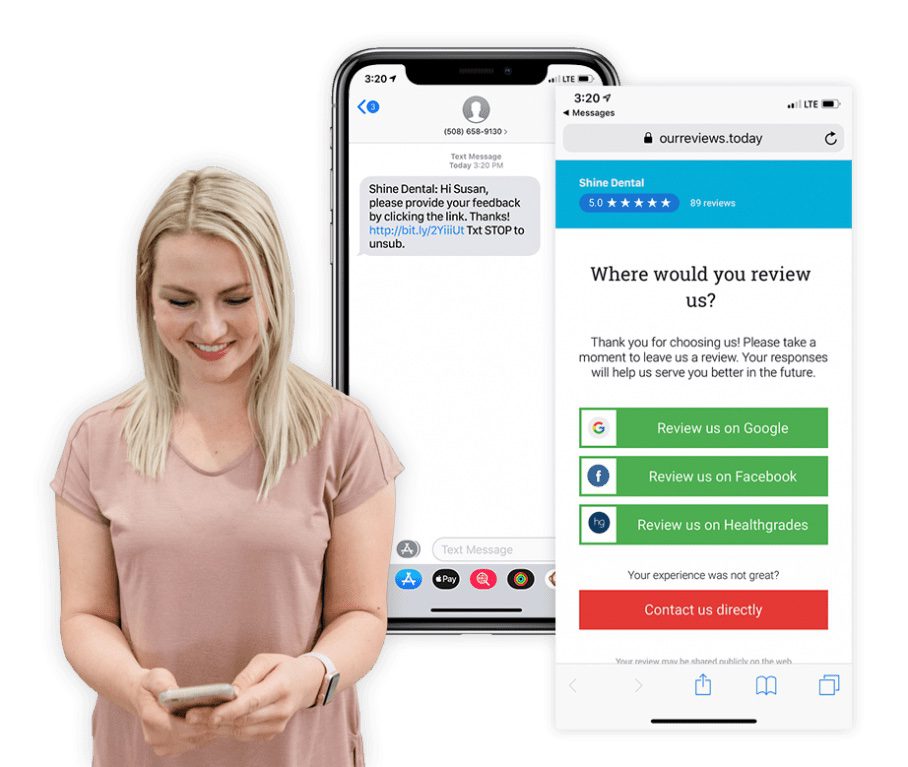
While you focus on performing an apicoectomy, your patients can focus on telling Google how awesome you are.
4. How should an oral surgeon respond to reviews, including negative ones?
Reply to every review, positive and negative, ideally within a day or two, and never confirm that the reviewer is a patient. Responding is the half of oral surgeon reputation management most practices skip, and patients notice. In BrightLocal’s survey, 88% of consumers said they would choose a business that replies to every review, compared with 47% for one that doesn’t respond at all. [VERIFY: 2024 BrightLocal figures]
For positive reviews, a short, warm thank-you is enough. Keep it general.
For negative reviews:
- Stay calm and acknowledge how the person feels.
- Apologize in general terms, such as “We’re sorry to hear you were disappointed.”
- Invite them to call the office so you can talk privately.
- Leave out every detail that confirms a patient relationship: no names, dates, procedures or outcomes. HIPAA (the federal law that protects patient health information) applies to public replies, too.
Don’t argue in public, and don’t offer anything in exchange for changing or removing a review. Google prohibits that as well.
A calm reply also reassures the next patient who reads it. For sample wording, see how to respond to Google reviews without risking HIPAA.
5. What does your online presence say before patients ever call?
Your website and social profiles tell patients what you’re like before they ever pick up the phone. A warm, professional presence makes them more likely to choose you and to leave a review afterward. Asking matters most, but organic growth plays a real part in oral surgery reputation management.
On social media, skip the trend-chasing. Short team introductions and behind-the-scenes Reels show the people behind the scrubs, which eases nerves for patients facing surgery. For more ideas, see these oral surgery marketing strategies.
Don’t neglect your website. It should look good, load fast and make booking easy, since it is often a patient’s first impression of your practice. Feature real reviews on your homepage to build credibility and remind visitors to add their own. Here’s what makes a great oral surgery website.
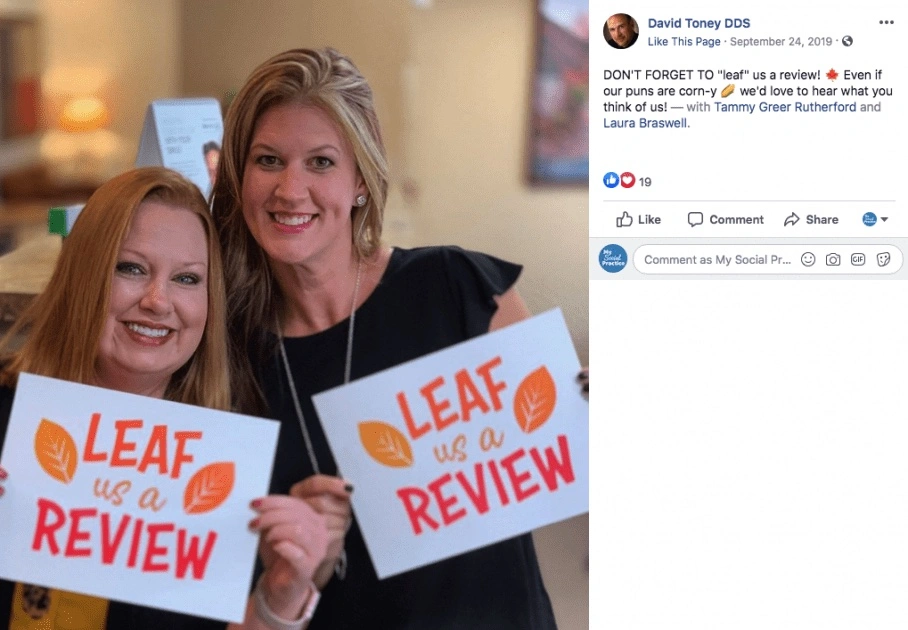
6. How does the patient experience lead to better reviews?
A patient who feels cared for is the patient most likely to leave a review. Visiting an oral surgeon is stressful, and easing that anxiety earns genuine gratitude. Help patients feel secure by:
- Greeting them by name. Show patients you know and care about them by using their names and remembering details throughout the visit. Note preferred names or pronunciations in their file.
- Making conversation. Ask friendly (non-invasive!) questions and make small talk. Do you both love Local Sports Team 1 and hate Local Sports Team 2? Great! Your patient will be pleased to know their teeth are in the hands of a fellow superior fan.
- Being professional. Patients want to trust an oral surgeon completely. Avoid swearing and hot-button topics, and be sensitive to cultural differences.
Oral surgery adds one more opportunity: aftercare. Send patients home with clear, written post-op instructions, and call the next day to check in. Patients remember who looked after them when they were anxious and sore.
A patient who just had a comfortable experience with a surgeon who genuinely cared is far more likely to scan your QR code and leave a review.
What should oral surgeons never do to get reviews?
Never trade anything for a review, filter who you ask or fake reviews. These tactics break Google’s review policies, and the FTC’s Consumer Review Rule (16 CFR 465.4, in effect since October 21, 2024) bans incentives tied to positive reviews. Don’t:
- Offer discounts, gifts, gift cards, contest entries or anything else in exchange for a review
- Ask only the patients you expect to be happy, or screen patients with a survey first
- Write reviews for your own practice, or have staff, family or an agency post them
- Use AI-generated reviews
- Offer anything to change or remove a negative review
Google can remove reviews, block new ones and even show a warning on profiles that break these rules.
Oral surgeon reputation management: the bottom line
Oral surgeon reputation management comes down to six habits: ask every patient for a review, get your team asking, automate your requests, respond to every review, keep your online presence welcoming and put patients first. These simple strategies will help you earn more oral surgery reviews and outpace the competition in no time.
So, if you like what you’ve read, why not leave us a review? After all, it never hurts to ask.
Frequently Asked Questions
How can an oral surgeon get more Google reviews?
Ask every patient, every time, and make it easy. Post a QR code to your Google review link at checkout, send an automated text or email after treatment, and get your whole team asking. A great oral surgery website that features real reviews also encourages new patients to add their own.
Do Google reviews help an oral surgeon's SEO?
Yes. Google says review count and rating factor into how it ranks local businesses in the map results, and recent reviews with owner replies help too. Review text adds relevance, because patients often mention procedures like dental implants or wisdom teeth removal in their own words. Learn more about SEO for oral surgeons.
Can an oral surgeon offer a discount or gift for a Google review?
No. Google prohibits offering anything of value in exchange for a review, and the FTC bans incentives tied to positive reviews. That includes discounts, gift cards, free whitening and prize drawings. Asking every patient for an honest review is fine; paying for one is not. You can, however, reward your team for asking.
How should an oral surgeon reply to a negative review?
Calmly, briefly and without confirming the person is a patient. Acknowledge their frustration, apologize in general terms and invite them to call the office to talk privately. Never mention procedures, dates or other treatment details, never argue publicly and never offer anything in exchange for changing or removing the review.
Why are reviews so important for oral surgeons?
Reviews build trust and visibility at the exact moment patients are choosing a provider. Most patients can’t tell an oral surgeon from a general dentist who offers similar procedures, so they compare star ratings and review counts instead. A strong review profile is how a specialist proves their expertise in search and wins the call.

Adrian Lefler is the CEO and Co-Founder of My Social Practice and a recognized dental marketing expert with nearly two decades of experience. He is a trusted voice in dental marketing, AI in dentistry, and emerging technology, and he hosts BYTE SIZED, a podcast focused on dental AI, innovation, and technology.