Last updated: August 20, 2026
Quick Answer: Your dental website needs a redesign if it isn’t mobile-friendly, loads slowly, looks dated, hides how to book, talks about you instead of your patients, has broken links or an old copyright year, ignores reviews and social proof, looks like every other template, or doesn’t rank on Google. Two or more of these signs means your site is quietly losing you new patients, and a redesign will pay for itself.
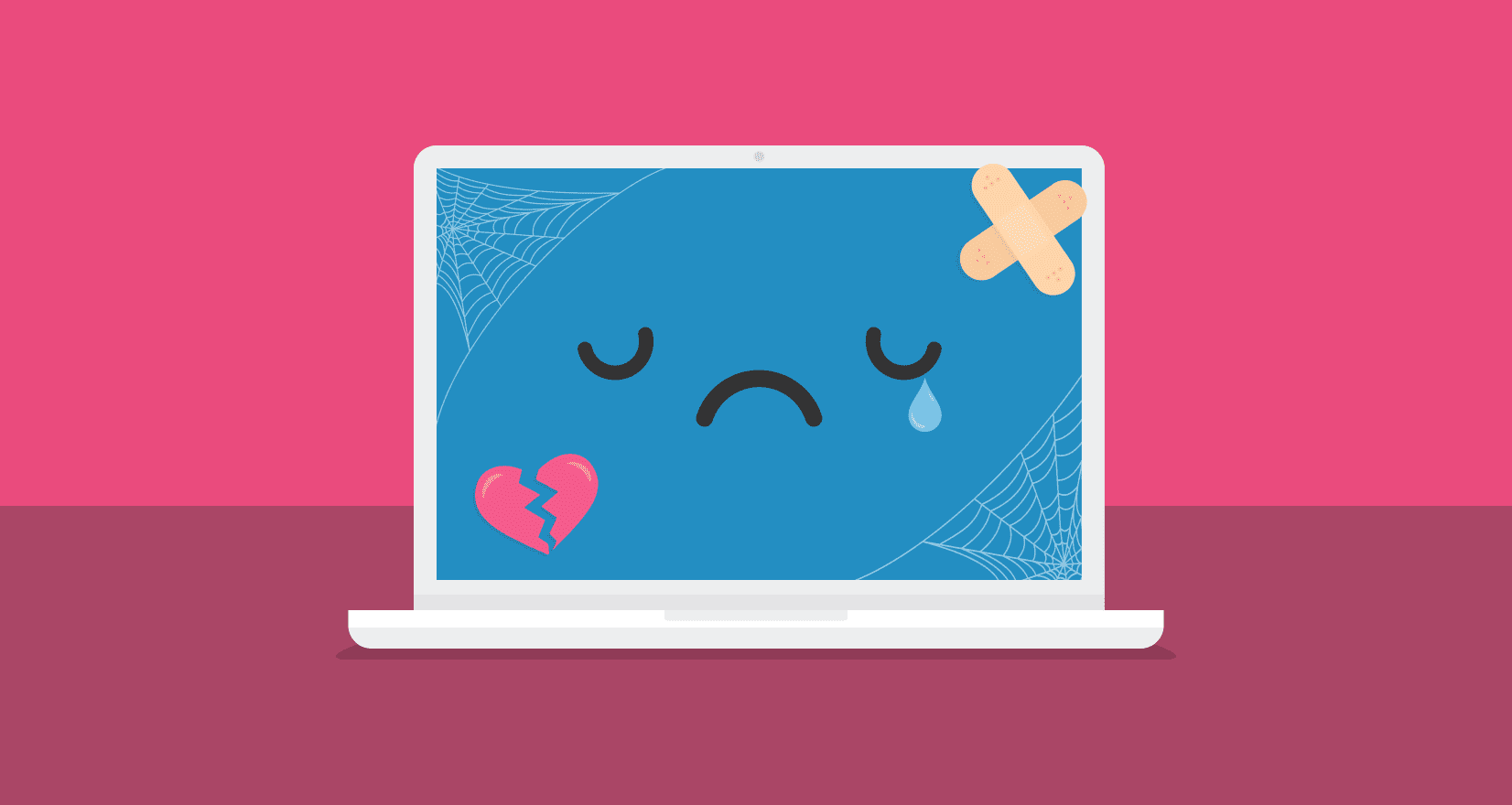
Finding new patients online is a lot like dating. Your dental website has to make a great first impression, keep the conversation going, and build enough trust that someone books a first appointment. When it fails at that, patients “ghost” you, and you never even know they were there.
So how do you know if your website needs a redesign? The clearest signs are that it isn’t mobile-friendly, it loads slowly (most people leave after about three seconds), it looks outdated, it has no easy online scheduling or clear call-to-action, its content is all about you instead of the patient, it has broken links or a copyright year stuck in the past, it ignores reviews and social proof, it looks like every other template site, and it doesn’t show up on Google. If your site shows two or more of these, keep reading. We will walk through all nine signs (and yes, we are keeping the dating metaphor).
Table of Contents
- Is your dental website outdated? How old is too old?
- Is your dental website mobile-friendly? (Or does it never text back?)
- Does your dental website look outdated? (Cargo shorts and New Balances)
- Is your dental website slow to load? (It took forever to reply)
- Does your website talk about patients, or only itself?
- Does your dental website have broken links or outdated info? (Red flags)
- Does your website make it obvious how to book? (Or is it too mysterious?)
- Is your practice invisible on social media? (Not on Instagram)
- Does your dental website look like every other template?
- Does your dental website show up on Google? (Or does it mumble?)
- Should you redesign or start from scratch?
- What does a modern dental website include?
- Frequently asked questions
Is your dental website outdated? How old is too old?
If your website is more than about three years old and hasn’t been meaningfully updated since, it is probably outdated. Top marketing brands redesign their websites roughly every two years on average (Orbit Media, 2026), and dental sites age even faster because patient expectations, Google’s ranking rules, and booking technology all keep moving. [VERIFY: Orbit Media’s 2026 research reports about 2 years 1 month for top marketing brands and 6 years 4 months across its own clients; the industry-wide average varies by sector, so treat “every 2 to 3 years” as a general benchmark, not a dental-specific figure.]
💔 A quick self-check: pull up your site on your phone right now. Does the copyright year in the footer match this year? Can you book an appointment in two taps? Does it look like it belongs in this decade? If you hesitated on any of those, your website is showing its age, and that age is costing you credibility with new patients.
1. Your Website Isn’t Mobile-Friendly → “They Never Text Back”
If your site is hard to use on a phone, it needs a redesign. Around 60% of all web traffic and 73% of local searches now happen on mobile (BrightLocal, 2026), so a site that forces people to pinch, zoom, and hunt for your phone number is turning patients away before they ever call.
Think of it like the match who never texts back. The interest was there, but the connection never happened. If patients have to fight your site on the small screen, they will simply tap over to the practice down the street whose site loads clean and books in seconds. A modern dental website is built mobile-first, not as an afterthought.

2. Your Website Looks Outdated → “They Showed Up in Cargo Shorts and New Balances”
If your design leans on grainy photos, cluttered layouts, tiny text, or dated fonts, it reads as outdated, and patients notice. Typefaces like Comic Sans, Papyrus, or Times New Roman are the web-design equivalent of wearing cargo shorts and New Balances to a first date. Not necessarily wrong, but not the impression you want to make.
Your fonts, colors, and spacing are part of your brand. A cluttered, aging look signals a practice that hasn’t kept up, even when your clinical care is excellent. Clean, modern, minimalist design with intentional white space tells patients you are current, professional, and worth trusting. If your site still has a “Microsoft Office 2010” vibe, it is time. Here is what modern dental website design looks like, and a roundup of the 10 best dental websites of 2026 for inspiration.
3. Your Website Is Slow → “They Took Forever to Reply”
If your pages take more than about three seconds to load, you need a redesign. According to Google’s research, 53% of mobile visitors abandon a site that takes longer than three seconds to load, and Google actively penalizes slow pages in search rankings.
A slow site is the date who takes three days to reply to a text. By the time it finally shows up, the patient has moved on. Speed problems usually come from oversized images, bloated themes, or cheap hosting, all of which a redesign can fix. If you are not sure where your site stands, our guide to dental website hosting covers how hosting choices affect load times.
4. Your Website Lacks Patient-Focused Content → “They Talked About Themselves the Whole Time”
If every page leads with your credentials and years in practice instead of what the patient gets, your content needs work. Patients care first about their own problem: Can you fix my toothache? Do you take my insurance? Is it going to hurt? A site that only lists degrees and equipment misses the connection.
This is the date who talks about themselves the entire time. Impressive on paper, exhausting in person. Great dental websites lead with patient benefits, answer real questions, and make the visitor feel understood. If your copy needs a rethink, start with our guide to dental website content that connects with patients.

5. Your Website Has Broken Links or Outdated Info → “They Gave Off Major Red Flags”
If clicking around your site turns up broken links, missing images, a disconnected phone number, or a copyright year that ended a few presidencies ago, those are red flags patients absolutely notice. Nothing kills trust faster than an error page or a number that goes nowhere when someone is trying to book.
On a first date, these are the little inconsistencies that make you pause. On a website, they signal neglect, and patients assume that a practice that can’t maintain its own site might not sweat the details in the operatory either. Fixing broken links and refreshing stale information (including that footer year) is one of the fastest credibility wins a redesign delivers. It also helps you steer clear of common dental website HIPAA mistakes that outdated sites often carry.
6. Your Website Lacks Clear Calls to Action → “They Were Super Mysterious”
If a visitor can’t instantly tell how to schedule, your site needs clearer calls-to-action and real online booking. “Call us to schedule” is a conversion killer. Today’s patients expect to book from their phone, on the couch, at 10 p.m., the same way they order dinner.
The overly mysterious date never says what they actually want, so nothing ever happens. Your website should never leave patients guessing about the next step. Add a prominent “Book Appointment” button, real-time online scheduling tied to your practice management system, and clear CTAs on every page. For more on this, see why your dental website isn’t converting patients.
7. Your Website Isn’t Integrated with Social Media → “I Couldn’t Find Them on Instagram”
If your website doesn’t connect to your social profiles or show off reviews, you are missing easy trust signals. Patients check Instagram, Google reviews, and Facebook before booking, the same way you would look someone up before a date. If there is nothing to find, that is a small red flag on its own.
Integrated review widgets, links to active social accounts, and real patient testimonials all reassure new patients that you are established and well-liked. A redesign is the natural moment to wire those connections in so your social proof works for you around the clock.

8. Your Website Looks Like Every Other Dental Site → “They Had a Super Generic Dating Profile”
If your site could have any practice’s name dropped into it without anyone noticing, it is too generic. Cookie-cutter templates with stock photos of models holding clipboards and impossibly white smiles make you blend in when you need to stand out.
This is the dating-app profile that looks exactly like a thousand others. Nothing memorable, nothing that says “pick me.” Swap stock imagery for authentic photos of your real team and office, and build a design that reflects your specific brand and community. If you are weighing options and budget, our breakdown of how much a dental website costs helps you plan a redesign that fits.
9. Your Website Has Bad SEO → “They Mumbled Through the Whole Date”
If patients can’t find you when they search “dentist near me,” your site has an SEO problem, and that is reason enough to redesign. Weak keywords, missing local optimization, no schema markup, and a poor Google Business Profile connection all make your site effectively invisible.
Think of it as the date who mumbles the whole time. Even if there is substance there, no one can make it out. A redesign built for search includes location-specific keywords, fast load times, schema markup, and tight Google Maps optimization so you actually rank. The numbers make the case: our dental website statistics roundup shows just how much traffic goes to practices that show up first.
Should you redesign your dental website or start from scratch?
If your site has a solid, modern foundation, targeted updates may be enough. If it is more than a few years old and showing several signs above, a full rebuild is usually faster, cheaper in the long run, and far more effective than patching a dated platform piece by piece.
A useful rule of thumb: if you find yourself fixing one problem only to uncover three more underneath it, the foundation is the problem. Starting fresh lets you build in mobile-first design, online scheduling, and SEO from the ground up instead of bolting them onto a structure that was never made for them.
What does a modern dental website include?
A modern dental website is mobile-first, fast, easy to book from, and built to rank. At minimum it should have: responsive mobile-first design, real-time online scheduling, authentic team and office photography, clear patient-focused content and service pages, integrated reviews and social proof, local SEO with schema markup, HTTPS security, and obvious calls-to-action on every page.
Get those elements right and your website stops ghosting patients and starts booking them. Think of a redesign as the makeover montage from your favorite rom-com: same great practice underneath, finally presented in a way that makes people want to say yes.
Frequently Asked Questions
How do I know if my dental website needs a redesign?
Look for these signs: it isn’t mobile-friendly, it loads slowly, the design looks dated, there is no online scheduling, links are broken, or it doesn’t rank on Google. If your site shows two or more of these, a redesign is worth it. A quick test: open it on your phone and try to book in under 30 seconds.
How often should a dental practice redesign its website?
Most dental practices should plan a meaningful refresh every two to three years and a full redesign when the site starts failing on mobile, speed, or search rankings. Patient expectations and Google’s rules change fast, so a site that felt current three years ago is often overdue now, even if nothing looks obviously broken.
How much does a dental website redesign cost?
Cost depends on scope, from a template refresh to a fully custom, SEO-optimized build with online scheduling and content. Rather than chase the lowest price, weigh the redesign against the new-patient revenue a modern site generates. Our guide to dental website costs breaks down what drives the price and what to expect at each tier.
Should I update my current dental website or build a new one?
If your site has a modern, mobile-friendly foundation, targeted updates may be enough. If it is several years old and struggling with speed, mobile, or rankings, a rebuild is usually faster and more cost-effective than repeatedly patching it. When fixing one issue keeps exposing others, that is your signal to start fresh.
Does an outdated dental website really hurt my Google rankings?
Yes. Google prioritizes fast, mobile-friendly, helpful websites, so slow load times, poor mobile design, and missing SEO elements like schema markup and a connected Google Business Profile all drag your rankings down. An outdated site can push you off the first page for “dentist near me,” which is exactly where new patients are looking.
Who should I hire to redesign my dental website?
Choose a dental marketing company that understands HIPAA compliance, dental SEO, and what actually converts dental patients, not a generalist agency learning your industry on your dime. The right partner brings dental-specific design, content, and search experience so your new site is built to attract and book patients from day one.
About the Author: Megan Nielsen is an SEO strategist and the Grand Overlord of copywriting at My Social Practice. My Social Practice is a dental marketing company that offers a full suite of dental marketing services to thousands of dental practices throughout the United States and Canada.